check

check

check

check

check

check
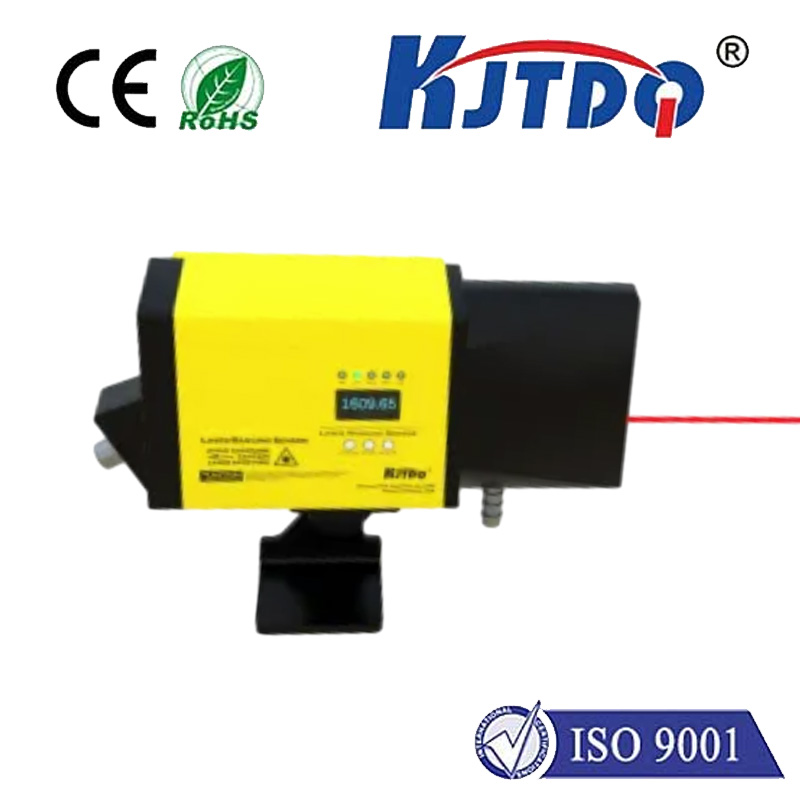
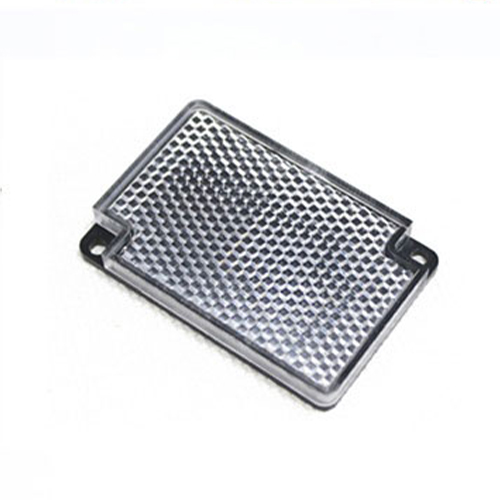
In the world of industrial automation and precision control, the ability to detect objects reliably, accurately, and at high speeds is paramount. Among the myriad of sensing technologies available, the reflective laser photoelectric sensor stands out as a critical component for countless applications. This advanced device leverages a focused laser beam to deliver unparalleled performance where standard sensors fall short. Unlike diffuse or through-beam sensors, a reflective laser photoelectric sensor, often incorporating a retro-reflector, uses its own emitted light, reflected back from a target or a dedicated reflector, to determine the presence, absence, or distance of an object.
The core principle is elegantly precise. The sensor's internal laser diode emits a highly concentrated, coherent beam of light. In a standard reflective model, this beam is directed towards a target. The light reflects off the target's surface and returns to the receiver within the same sensor housing. The onboard electronics then analyze the received signal. When the beam is broken or the reflected intensity changes beyond a set threshold, the sensor's output switches state, signaling detection. The use of a laser, as opposed to a standard LED light source, provides significant advantages. The beam is exceptionally narrow and intense, allowing for precise detection of very small objects and enabling operation over longer distances. This focused nature also minimizes the impact of background interference and ambient light, ensuring stable operation even in challenging environments.
The applications for reflective laser photoelectric sensors are vast and varied. In the electronics manufacturing sector, they are indispensable for detecting minute components on circuit boards, verifying the presence of tiny chips, or ensuring precise alignment during assembly processes. The packaging industry relies on them for high-speed label detection, cap placement verification on bottles, and counting thin, transparent films where other sensors would fail. Within automated guided vehicles (AGVs) and robotics, these sensors provide critical positioning and obstacle detection data, thanks to their long-range and spot-size accuracy. They are also fundamental in semiconductor fabrication, material handling for detecting transparent glass or vials, and in security systems for perimeter monitoring.
Selecting the right reflective laser photoelectric sensor requires careful consideration of several key parameters. Sensing range is primary; laser sensors typically offer longer ranges than standard photoelectric types. The size and nature of the target are crucial—the sensor's tiny laser spot is ideal for detecting small or low-reflectivity objects. Response time is another critical factor for high-speed production lines, with laser sensors often featuring ultra-fast switching speeds. Environmental conditions cannot be overlooked. Many industrial-grade models are built with robust housings rated IP67 or higher, protecting them from dust, water jets, and mechanical impact. Furthermore, models with built-in background suppression technology can reliably detect an object while ignoring a more distant background, a feature invaluable in complex installations.
Installation and alignment, while simplified by the visible laser beam, still demand attention. The visible red laser spot makes initial setup significantly easier than with invisible LED beams, allowing technicians to accurately aim the sensor at the desired detection point. Proper mounting ensures the beam strikes the target correctly and that the reflected light efficiently returns to the receiver. Regular maintenance involves keeping the lens clean from dust, oil, or debris that could attenuate the laser beam, and periodically checking the alignment to account for any vibration or movement in the machinery.
The evolution of this technology continues to push boundaries. Modern reflective laser photoelectric sensors now incorporate advanced features like digital displays for easy configuration, programmable logic functions, and IO-Link communication for seamless integration into Industry 4.0 and smart factory networks. This connectivity allows for remote monitoring, predictive maintenance, and real-time parameter adjustments, maximizing uptime and productivity.
In conclusion, the reflective laser photoelectric sensor is more than just a switch; it is a sophisticated tool for precision measurement and control. Its combination of a focused laser beam, long sensing range, high speed, and resistance to environmental interference makes it an irreplaceable solution for demanding detection tasks. From ensuring the quality of microscopic electronic components to guiding autonomous vehicles, its role in enhancing automation, efficiency, and reliability across industries is both profound and essential. For engineers and system integrators seeking to solve complex detection challenges, understanding and utilizing this powerful sensing technology is a key step toward building more intelligent and responsive automated systems.