check

check

check

check

check

check
In the dynamic landscape of industrial automation, the quest for reliable, precise, and versatile sensing solutions is never-ending. Among the myriad of components that keep modern production lines and robotic systems running smoothly, photoelectric sensors stand as critical pillars. The OMCH M18 Diffuse Laser Photoelectric Sensor Switch emerges as a noteworthy contender in this space, offering a blend of advanced laser technology and robust design tailored for demanding applications. This article delves into the core features, operational principles, and practical benefits of this sensor, providing a clear perspective for engineers and system integrators.
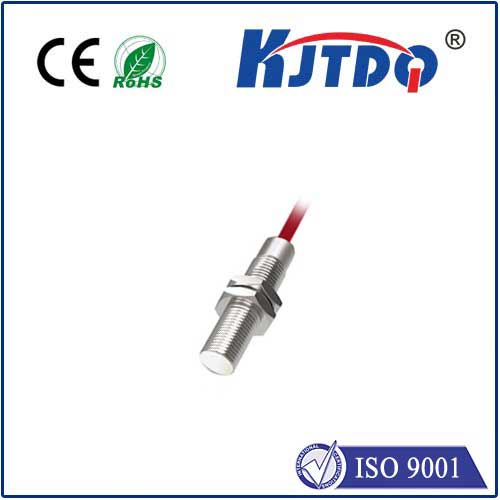
At its heart, the OMCH M18 Diffuse Laser Photoelectric Sensor is a non-contact detection device. The "M18" denotes its standardized 18mm cylindrical threaded housing, a common form factor that ensures easy integration into a vast array of industrial mounting setups. The term "diffuse" refers to its specific sensing mode. Unlike through-beam or retro-reflective sensors that require a separate receiver or reflector, a diffuse sensor houses both the light emitter and receiver in a single unit. It detects an object by measuring the light (in this case, a laser) that is reflected directly off the object's surface back to the receiver. This self-contained operation significantly simplifies installation and reduces hardware requirements.
The integration of a laser light source is a key differentiator for the OMCH M18 model. Compared to traditional LED-based diffuse sensors, laser models offer a dramatically more focused and intense beam. This results in several tangible advantages. First and foremost is enhanced precision. The extremely small, visible laser spot allows for the detection of very small objects or precise edges with high accuracy. It enables stable detection even of low-reflectivity surfaces, such as dark or matte finishes, which often challenge standard LED sensors. The focused beam also provides a longer sensing range within the same compact housing, expanding its applicability.
The operational principle is elegantly straightforward yet highly effective. The sensor's internal laser diode projects a coherent beam onto a target. When an object enters the detection field, the laser light scatters, and a portion reflects back to the sensor's phototransistor receiver. The built-in circuitry then processes this signal. A critical feature of modern sensors like this is the background suppression function, often achieved through triangulation or advanced optics. This allows the sensor to ignore distant background objects and only trigger when an object is within a preset, adjustable range. This capability is invaluable for applications requiring precise positioning or object height discrimination on conveyor belts.
Durability and environmental resilience are non-negotiable in industrial settings. The OMCH M18 sensor is typically housed in a robust metal or high-grade plastic casing, rated with a high IP (Ingress Protection) classification such as IP67. This makes it resistant to dust ingress and capable of withstanding temporary immersion in water, ensuring reliable performance in washdown areas or dusty environments. Furthermore, it is designed to withstand common industrial electrical noise and vibration, guaranteeing stable signal output without false triggers.
The application spectrum for the OMCH M18 Diffuse Laser Photoelectric Sensor Switch is remarkably broad. It is ideally suited for:
* Precision Positioning and Counting: On high-speed assembly lines for electronics or small mechanical parts.
* Object Presence Verification: Ensuring a component is present before a robotic arm performs a task.
* Height and Profile Detection: Differentiating between objects of different sizes on a conveyor.
* Wrapping and Packaging Machinery: Detecting the edge of transparent films or low-reflectivity packaging materials.
* Semiconductor and PCB Handling: Where minute components require exact detection.
When selecting a sensor for a specific task, considering the OMCH M18 Diffuse Laser Sensor involves evaluating its specifications against application needs. Key parameters include sensing distance, response time, light source type (laser, with its specific wavelength), output type (PNP/NPN, NO/NC), and supply voltage. Its laser source demands respect for safety; it is typically a Class 2 laser, which is eye-safe for incidental exposure but should not be stared into directly.
In conclusion, the OMCH M18 Diffuse Laser Photoelectric Sensor Switch represents a significant step forward in sensing technology for automation. By combining the pinpoint accuracy and range of a laser with the practical, easy-to-install diffuse sensing mode and a rugged M18 housing, it solves complex detection challenges with simplicity and reliability. For system designers aiming to enhance precision, reduce downtime, and future-proof their automation projects, integrating such a capable sensor is a strategic decision that pays dividends in operational efficiency and product quality.