check

check

check

check

check

check
In industrial and residential applications, accurate liquid level monitoring is crucial for process control, safety, and resource management. The photoelectric water tank liquid level sensor has emerged as a preferred technology for this purpose, offering a non-contact, reliable, and maintenance-friendly solution. Unlike traditional float switches or conductive probes, this sensor operates on the principle of light refraction, providing superior performance in various conditions.
The core mechanism of a photoelectric liquid level sensor involves an infrared LED and a phototransistor housed within a prismatic sensor tip. When the sensor tip is in air, the infrared light from the LED undergoes total internal reflection within the prism and is directed onto the phototransistor, resulting in a high output signal. When the sensor tip is submerged in liquid, the light refracts out into the liquid, causing a significant drop in the light received by the phototransistor. This state change is detected by the sensor's circuitry, providing a clear, switch-like output indicating the presence or absence of liquid at the sensing point.
One of the primary advantages of this technology is its non-contact sensing nature. The sensing element does not require direct mechanical movement or electrical contact with the liquid. This eliminates issues associated with moving parts, such as jamming, wear, and corrosion of mechanical components, leading to significantly longer service life and reduced maintenance costs. The sensor is ideal for monitoring water levels in tanks, reservoirs, boilers, and humidifiers.
Furthermore, photoelectric sensors are highly versatile. They can detect a wide range of clear liquids, including water, oils, and chemicals, provided the liquid is not completely opaque. Their performance is generally unaffected by factors like liquid density, conductivity, or pressure, which can plague other sensing methods. This makes them suitable for diverse applications, from simple overflow prevention in domestic water heaters to precise level control in industrial processing equipment.
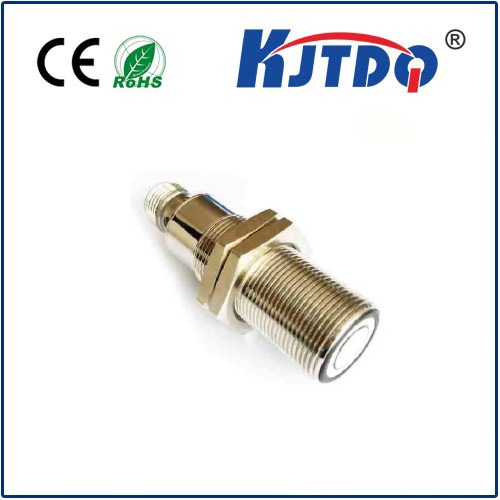
Installation and integration are straightforward. These sensors typically come in compact, threaded housings that can be easily mounted at the desired high or low level points on a tank. They output a simple digital signal (high/low or open/closed) that can be directly interfaced with PLCs, microcontrollers, alarm units, or pump controllers. Many models feature built-in reverse polarity protection and voltage surge protection, enhancing their robustness in electrical environments.
When selecting a photoelectric water tank level sensor, key specifications to consider include the sensing material compatibility (ensuring the sensor's wetted materials are resistant to the target liquid), operating voltage range, output type (NPN, PNP, or relay), and temperature ratings. Proper installation is critical; the sensor tip must be positioned correctly to avoid false triggers from splashing, turbulence, or adhesion of droplets.
In summary, the photoelectric liquid level sensor represents a modern, efficient, and dependable approach to level detection. By leveraging optical principles, it provides a clean, reliable switching action free from the drawbacks of mechanical wear. For engineers, facility managers, and product designers seeking a maintenance-light and long-lasting solution for water tank level monitoring, implementing a high-quality photoelectric sensor is a strategic choice that enhances system reliability and operational efficiency.