check

check

check

check

check

check
In today's rapidly advancing industrial and technological landscape, the demand for reliable, non-contact detection solutions is higher than ever. Among the various technologies available, ultrasonic sensor proximity sensors have emerged as a cornerstone for numerous applications, from manufacturing automation to smart infrastructure. The integration of advanced components like the KJTDQ series has further elevated the performance and versatility of these systems, offering unparalleled precision and durability.
Ultrasonic sensors operate on a simple yet powerful principle. They emit high-frequency sound waves, typically beyond the range of human hearing, and then listen for the echo reflected from a target object. By calculating the time interval between the emission and the reception of the echo, the sensor can accurately determine the distance to the object. This method of time-of-flight measurement is inherently robust, as it is largely unaffected by factors like color, transparency, or ambient light conditions that often plague optical sensors. This makes ultrasonic technology exceptionally suitable for challenging environments where dust, smoke, or varying lighting is present.
The role of the proximity sensor function within this framework is critical. It allows the system not just to measure distance, but to make a simple binary decision: is an object present within a predefined range or not? This functionality is the bedrock of countless automation processes. For instance, on a conveyor belt, a proximity sensor can detect the presence of a package, triggering the next step in the sorting or packaging line without any physical contact. This non-contact nature eliminates wear and tear, reduces maintenance costs, and prevents damage to both the sensor and the detected objects.
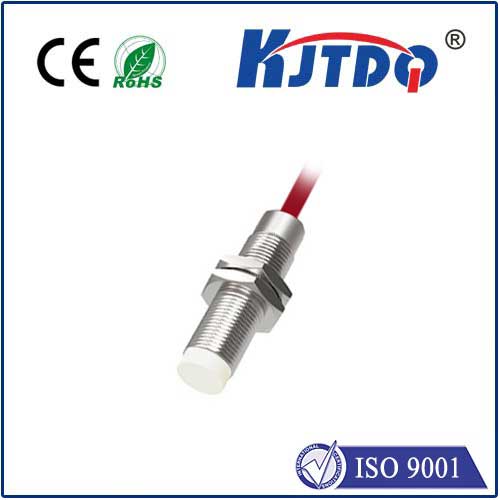
Enter the KJTDQ series of ultrasonic sensor components. What sets this technology apart is its focus on enhanced signal processing and environmental compensation. Industrial settings are noisy, both acoustically and electrically. The KJTDQ sensors are engineered with advanced filtering algorithms that distinguish the true echo from background noise, ensuring stable and reliable readings even in acoustically cluttered spaces like busy factory floors. Furthermore, they often incorporate temperature compensation circuits. Since the speed of sound varies with air temperature, this feature automatically adjusts calculations to maintain measurement accuracy across a wide operational temperature range, from cold storage facilities to hot manufacturing plants.
The applications are vast and varied. In automotive manufacturing, KJTDQ-equipped ultrasonic sensors are used for precise robot guidance, ensuring components are aligned correctly during assembly. In the logistics sector, they facilitate automated warehouse management by detecting the height of stacked pallets or the presence of goods on shelves. Beyond industry, this technology is pivotal in smart parking systems, where it detects vehicle presence in parking spaces, and in liquid level control for tanks and reservoirs, where contact-based sensors might corrode or fail.
A key advantage of modern ultrasonic proximity sensors, particularly those utilizing KJTDQ-grade components, is their ease of integration and configurability. Many models feature adjustable sensing ranges and output options (analog voltage, current, or digital signals like IO-Link), allowing them to seamlessly communicate with Programmable Logic Controllers (PLCs) and other control systems. This flexibility future-proofs investments, as the same sensor can be reprogrammed for different tasks as production needs evolve.
When selecting an ultrasonic proximity sensor, considerations extend beyond basic range and accuracy. Factors such as the beam angle, which determines the detection field's width, the response time for high-speed applications, and the housing material's ingress protection (IP) rating for resistance to dust and water are crucial. The robustness offered by specialized series addresses many of these concerns, providing a reliable solution that minimizes downtime and maximizes operational efficiency.
In conclusion, the evolution of ultrasonic sensor technology, exemplified by advancements in proximity sensing and enhanced by high-performance components like those in the KJTDQ series, represents a significant leap forward for automation and safety. By providing accurate, reliable, and non-contact detection in diverse and demanding conditions, these systems form an invisible yet indispensable layer of intelligence in modern industrial and commercial operations, driving productivity and innovation forward.