check

check

check

check

check

check
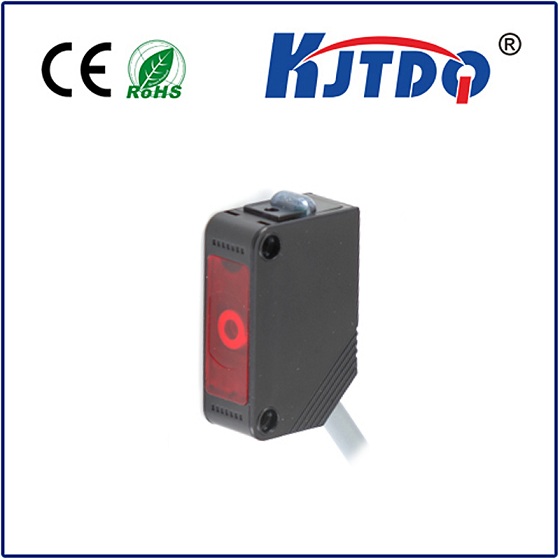
In the realm of industrial automation and smart device integration, the demand for reliable, precise, and durable sensing solutions is paramount. Among the myriad of components that drive modern machinery and electronics, the Proximity Sensor M4 LJ4A3 stands out as a critical component for applications requiring non-contact detection. This sensor, often associated with the KJTDQ series, represents a significant advancement in proximity sensing technology, offering unparalleled accuracy and robustness in challenging environments.
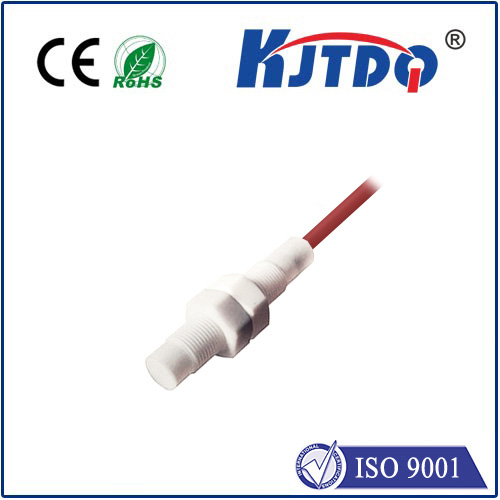
The Proximity Sensor M4 LJ4A3 is an inductive proximity sensor, a type of device that detects the presence or absence of metallic objects without any physical contact. Its operating principle is based on generating an electromagnetic field. When a metallic object enters this field, it induces eddy currents within the object, which in turn causes a change in the sensor's own oscillation amplitude. This change is detected by the sensor's circuitry, triggering a solid-state output signal. The "M4" designation typically refers to its 4mm diameter threaded barrel, a compact form factor ideal for space-constrained installations. The "LJ4A3" code often specifies key electrical characteristics, such as sensing distance, output type (likely NPN or PNP), and connection style.
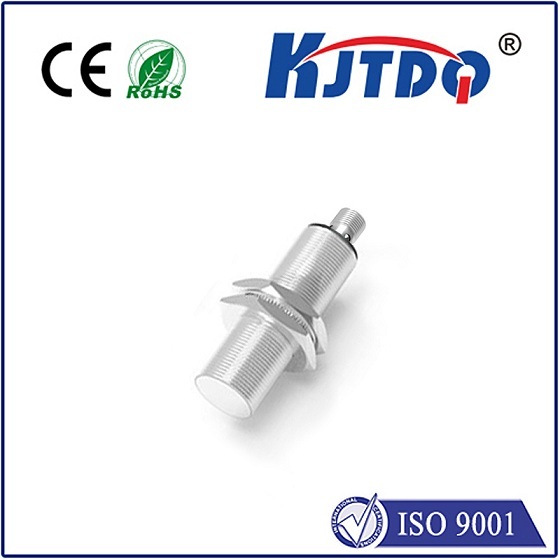
What sets the M4 LJ4A3 model apart is its exceptional performance in precision tasks. With a standard sensing distance, often around 1.5mm for such compact models, it provides highly repeatable detection. This makes it indispensable in assembly lines for verifying the presence of tiny screws, metal pins, or precise component positioning. Its all-metal stainless steel housing ensures high resistance to corrosion, oils, and coolants, granting it an IP67 or higher ingress protection rating. This durability allows it to perform consistently in harsh manufacturing settings, from automotive plants to food processing machinery where washdowns are frequent.
Integration of the KJTDQ Proximity Sensor M4 LJ4A3 into a system is straightforward due to its standardized design. It typically operates on a wide range of DC voltages, commonly 10-30V DC, ensuring compatibility with most industrial control systems like PLCs (Programmable Logic Controllers). The sensor provides a digital switch output, acting as a direct input to control circuits. Its short-circuit and reverse-polarity protection features enhance system reliability, preventing damage from accidental wiring errors. The LED status indicator is a simple yet vital feature, offering immediate visual confirmation of its operational state and detection events, which simplifies troubleshooting and maintenance.
The applications for this sensor are vast and varied. In the electronics industry, it is used on PCB assembly machines to detect the presence of components or boards. Within automated packaging lines, it ensures metallic lids or caps are correctly positioned before sealing. Robotics heavily relies on such sensors for end-of-arm tooling to confirm part pickup or placement. Even in consumer devices, similar miniaturized sensors play roles in detecting slide or flip mechanisms. The M4 LJ4A3's immunity to ambient light and its ability to detect only metallic objects make it immune to false triggers from dust, water, or non-metallic debris, a common challenge with optical sensors.
Selecting the right proximity sensor involves considering several factors beyond just size. For the M4 LJ4A3, key specifications to review include its nominal sensing distance (Sn), the type of output (e.g., NPN normally open), the supply voltage range, and its switching frequency. The housing material, thread type (e.g., M4), and cable or connector option are also crucial for mechanical and electrical integration. Ensuring the sensor is rated for the specific environmental conditions of its application—such as temperature extremes or exposure to chemicals—is essential for long-term, failure-free operation.
In conclusion, the Proximity Sensor M4 LJ4A3, particularly within the KJTDQ family, is more than just a component; it is a cornerstone of modern automated sensing. Its blend of miniaturized design, metallic-only detection, environmental resilience, and reliable electrical performance makes it a preferred choice for engineers and system integrators worldwide. By enabling precise, non-contact detection in tight spaces and tough conditions, it directly contributes to increased production efficiency, enhanced product quality, and reduced machine downtime. For any project demanding dependable proximity sensing in a compact, robust package, the M4 LJ4A3 sensor presents a proven and optimal solution.