check

check

check

check

check

check
In the world of industrial automation and machinery, precision and reliability are non-negotiable. The ability to detect the presence or absence of an object without physical contact is a cornerstone of modern manufacturing, packaging, and safety systems. This is where the inductive proximity sensor, a workhorse of the factory floor, comes into play. Among the myriad of options available, the LJ18A3-8-Z/BX model stands out as a particularly robust and versatile solution for countless applications. This guide delves into the specifics of this sensor, exploring its features, operational principles, and the tangible benefits it brings to your operations.
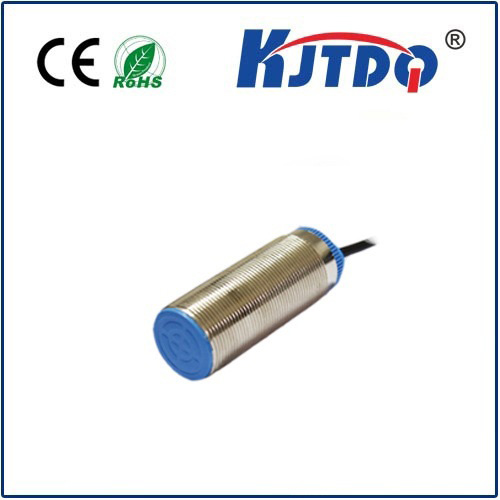
At its core, the LJ18A3-8-Z/BX is an 18mm cylindrical inductive proximity sensor. The "18" in its designation refers to its barrel diameter in millimeters, a standard size that ensures compatibility with a wide range of mounting brackets and fixtures. The "A3" typically indicates its sensing distance, which is 8mm for this model. This 8mm nominal sensing range provides an optimal balance, offering sufficient distance for reliable detection while maintaining a compact form factor. The "Z" often denotes a DC 3-wire configuration, and the "/BX" suffix usually specifies the output type and connection details—in this case, commonly a PNP normally open (NO) output with a pre-wired cable or a specific connector type. It is crucial to consult the manufacturer's datasheet for the exact specifications, as coding can vary slightly between producers.
The operational principle is elegantly simple yet highly effective. The sensor generates a high-frequency electromagnetic field from its sensing face. When a metallic object (typically ferrous metals like steel and iron, though some models detect non-ferrous metals at a reduced range) enters this field, eddy currents are induced in the target. This causes a change in the oscillation amplitude within the sensor's internal circuit. The sensor's electronics detect this change and trigger a solid-state switch, changing the state of its output signal. For a PNP normally open (NO) sensor like the LJ18A3-8-Z/BX, the output wire switches to a positive voltage (sourcing current) when a target is detected. This signal can then be read by a Programmable Logic Controller (PLC), relay, or other control system to initiate an action—stopping a conveyor, counting parts, confirming a clamp position, or activating a robotic sequence.
Why choose the LJ18A3-8-Z/BX specifically? Its advantages are clear in demanding environments. Firstly, its non-contact nature means there is no mechanical wear on the sensor itself, leading to an exceptionally long operational lifespan compared to mechanical limit switches. It is immune to issues like dirt, dust, oil, and moisture (many models feature IP67-rated enclosures, meaning they are dust-tight and can withstand temporary immersion in water), making it ideal for harsh industrial settings. The solid-state switching offers incredibly fast response times, capable of detecting objects at high speeds without missing a beat. Furthermore, its high switching frequency allows it to handle rapidly repeating tasks, such as counting small parts on a fast-moving line. The robust metal housing, typically made of nickel-plated brass or stainless steel, provides excellent resistance to physical impact and corrosion.
Practical applications for this sensor are virtually limitless. Imagine a machining center where the LJ18A3-8-Z/BX is used to verify that a metal workpiece is correctly loaded into a fixture before the machining cycle begins, preventing costly crashes. In automotive assembly, rows of these sensors ensure that car body panels are in position for welding robots. On packaging lines, they detect metallic labels or the presence of cans, triggering filling or capping operations. They are also fundamental in safety interlocks, ensuring a guard door is securely closed before a powerful press can be activated.
Installation and wiring are straightforward. The 18mm body allows it to be easily mounted using standard locknuts. The three wires—typically brown (power+), blue (power- or common), and black (output signal)—connect directly to a DC power supply (commonly 10-30V DC) and the load. Proper installation is key: ensuring the correct sensing distance, avoiding mounting flush adjacent to metal surfaces (which can reduce the effective range), and providing a stable power supply. Regular maintenance is minimal, often just a periodic wipe of the sensing face to remove any accumulated grime that could marginally reduce sensitivity.
In conclusion, the LJ18A3-8-Z/BX proximity sensor embodies the reliability and efficiency required for modern industrial control. Its durable construction, consistent 8mm sensing performance, and simple integration make it a trusted component for engineers and maintenance technicians worldwide. By enabling precise, wear-free detection of metal objects, it contributes directly to increased productivity, enhanced machine safety, and reduced downtime. When your application demands a proven solution for non-contact detection, specifying a sensor like the LJ18A3-8-Z/BX is a step toward a more robust and intelligent automation system.