check

check

check

check

check

check
In the fast-paced world of industrial automation, precision, reliability, and durability are non-negotiable. Machinery must operate flawlessly, and components must withstand harsh environments while delivering consistent performance. This is where the inductive switch proximity sensor, a cornerstone of modern control systems, proves its indispensable value. Unlike mechanical limit switches prone to wear and tear, these solid-state devices offer a contactless, maintenance-free solution for position detection and object sensing, making them the intelligent backbone of countless automated processes.
At its core, an inductive proximity sensor operates on a simple yet brilliant electromagnetic principle. The sensor generates a high-frequency oscillating electromagnetic field via a coil in its front face. When a metallic object—typically ferrous metals like steel or iron, or non-ferrous metals like aluminum, copper, or brass—enters this active field, eddy currents are induced on the object's surface. This causes a change in the oscillation amplitude within the sensor. An integrated evaluation circuit detects this change and triggers a solid-state switch, sending a clear signal to the programmable logic controller (PLC) or other control unit. The entire process happens without any physical contact, eliminating mechanical failure points.
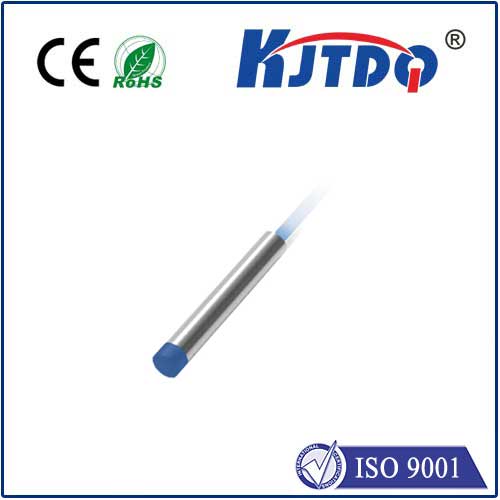
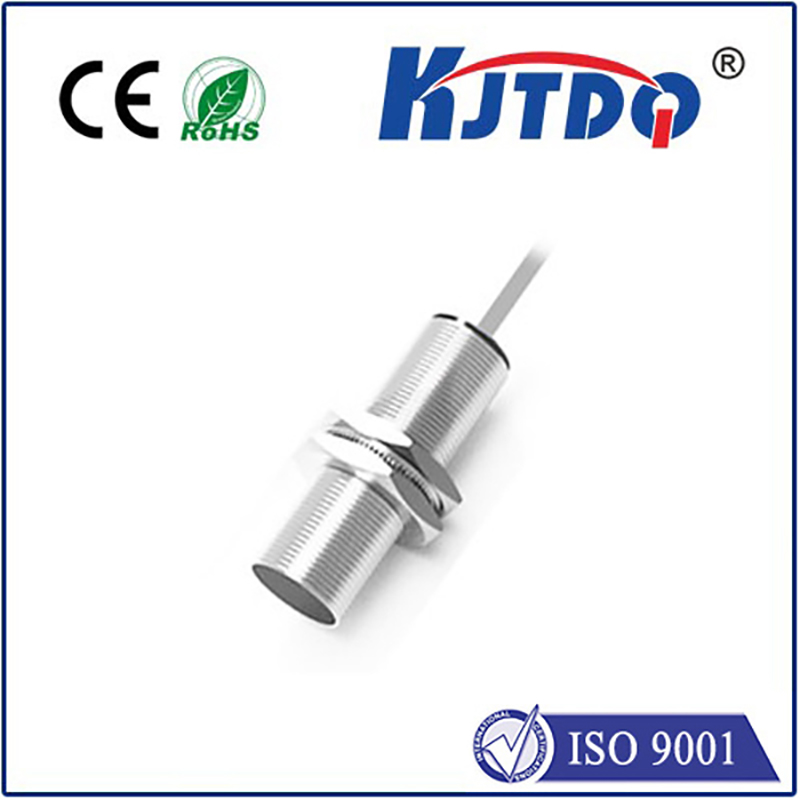
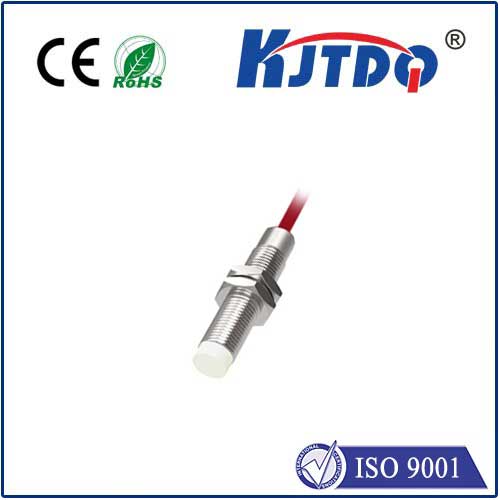
The advantages of integrating KJTDQ inductive proximity sensors into an automation setup are substantial. Their contactless nature grants them an exceptionally long operational life, as there are no moving parts to degrade. They are incredibly robust, often housed in stainless steel or nickel-plated brass bodies with high IP (Ingress Protection) ratings like IP67 or IP69K, making them resistant to dust, water, oils, coolants, and mechanical impacts. This resilience allows them to perform reliably in demanding settings such as machining centers, welding lines, material handling systems, and automotive assembly plants.
Furthermore, these sensors are known for their high switching frequency and repeat accuracy. They can detect objects at speeds and precision levels unattainable by mechanical switches. Modern variants offer diverse sensing ranges, from a few millimeters to several tens of millimeters, and come in various form factors—tubular, rectangular, or ring-shaped—to fit diverse mounting constraints. Features like short-circuit protection, reverse polarity protection, and immunity to electrical noise ensure stable operation even in electrically noisy industrial environments. The output can be configured as normally open (NO) or normally closed (NC), and in 2-wire, 3-wire, or 4-wire DC/AC versions, providing flexibility for different circuit designs.
A key application area is in machine safety and positioning. Inductive sensors are used to confirm the closed position of safety guards, detect the presence of a metal workpiece on a conveyor, signal the end-of-travel of a robotic arm, or count metal parts. In packaging machinery, they ensure precise filling levels by detecting metal containers. Within the automotive industry, they play a critical role in robotic welding stations, verifying the correct placement of car body panels before a weld is made.
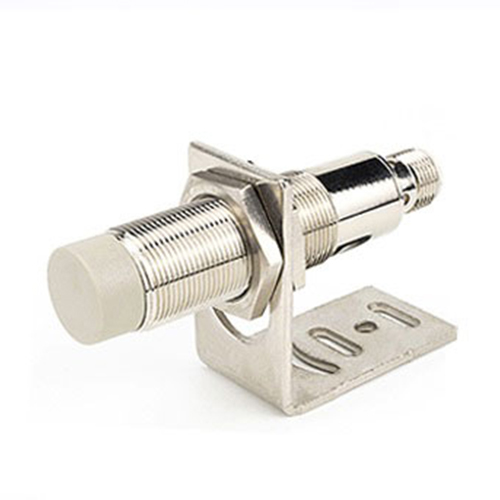
When selecting a KJTDQ inductive proximity sensor for a specific task, several technical parameters must be considered. The sensing distance, or nominal range (Sn), is specified for a standard target. It's crucial to note that the effective sensing distance can vary with the target material's type, size, and shape. For instance, steel is detected at the full nominal range, while aluminum or copper may require a reduced distance. The temperature operating range ensures the sensor functions correctly in both freezing cold and high-heat environments. The housing style and connection method (pre-wired cable or quick-disconnect) are chosen based on installation space and maintenance needs.
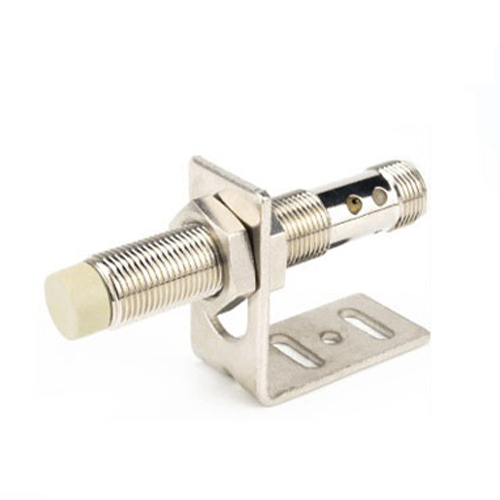
Installation and environmental factors significantly impact performance. Maintaining the proper clearance around the sensor's sensing face is vital to prevent false triggers from surrounding metal structures (mounting in non-ferrous metal may require a larger recess). For flush-mounted cylindrical sensors, this side-clearance is less critical. Ensuring a stable power supply within the sensor's voltage specification is fundamental. Regular checks for accumulated metal debris or swarf on the active face can prevent operational failures.
In conclusion, the inductive switch proximity sensor is far more than just a simple switch. It is a sophisticated, reliable, and versatile component that forms the sensory nervous system of automated industrial equipment. By choosing a high-quality KJTDQ inductive sensor, engineers and plant managers invest in reduced downtime, lower maintenance costs, and enhanced system reliability. As factories evolve towards smarter, more connected Industry 4.0 standards, the role of these robust and intelligent sensors will only become more central, providing the essential data needed for efficient, safe, and uninterrupted production.