check

check

check

check

check

check
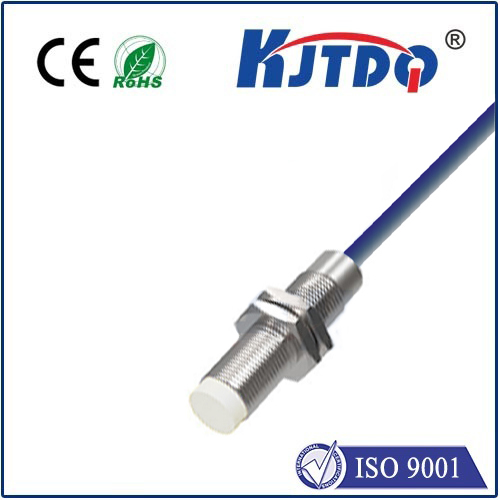
In the world of industrial automation and machine safety, the configuration of a sensor is as critical as its selection. Among the various types, the normally closed (NC) proximity sensor stands out for its specific role in enhancing system safety and reliability. Unlike its normally open (NO) counterpart, a normally closed proximity sensor is designed to complete an electrical circuit in its idle, non-activated state. This fundamental operational difference has profound implications for circuit design, safety protocols, and overall system behavior.
The core principle of a normally closed proximity sensor is straightforward. When no target is within its sensing range, the sensor's output switch remains closed, allowing current to flow through the circuit. The moment a target object enters the detection field, the sensor activates and opens the switch, interrupting the current flow. This "closed until detection" logic is the defining characteristic. It is crucial to understand that "normally" refers to the sensor's state when it is powered but not actively sensing a target—its normal, at-rest condition. This is not to be confused with a power-off state.
This configuration is frequently the preferred choice for critical safety applications. The primary reason is the concept of "fail-safe" design. In a safety circuit, such as a machine guard or an emergency stop loop, it is paramount that a wire break, a power loss, or a sensor failure results in a safe shutdown of the machine. A normally closed sensor achieves this elegantly. If the wire connecting the sensor is severed, the circuit is broken, mimicking the sensor's activated state (open circuit) and triggering the safety shutdown. Similarly, if the sensor itself fails internally, it often fails in the open state. This inherent design means that most common failure modes lead to a safe condition, making NC sensors a cornerstone of safety integrity.
Contrast this with a normally open sensor. In a NO configuration, a broken wire would leave the circuit open, which might be indistinguishable from the sensor not detecting anything. A control system might interpret this as "no object present," allowing a dangerous machine to continue operating despite a fault. Therefore, for applications where human safety or equipment protection is paramount, the normally closed configuration provides a critical layer of fault tolerance that normally open sensors do not inherently offer.
The application of normally closed proximity sensors extends beyond just emergency stops. They are ideal for presence verification where an absence indicates a problem. For instance, in a conveyor system, an NC sensor can monitor if a guarding panel is securely in place. As long as the guard is closed (target present), the sensor is activated and the circuit is open, allowing operation. If the guard is removed, the sensor returns to its normal closed state, completing a circuit that signals a fault and stops the conveyor. This ensures the machine cannot run with safety guards disengaged.
Another common use is in sequence control and jam detection. In an automated assembly line, an NC sensor might be used to confirm that a part has been successfully picked up by a robotic gripper. The sensor is positioned so the part itself is the target. When the gripper is empty (no target), the NC circuit is closed, indicating a "part missing" state. When the gripper correctly acquires the part, the sensor switches open, signaling that the process can continue. This prevents the machine from attempting an operation without the necessary component.
When integrating a normally closed proximity sensor into a control system, typically a Programmable Logic Controller (PLC), understanding the input card's logic is essential. Most modern PLC digital input cards are designed to source current. For an NC sensor, the common practice is to wire it so that the input point receives voltage (is "ON") when the sensor is in its normal, non-activated state (circuit closed). When the sensor detects an object and opens, the voltage to the input drops, turning the input point "OFF" in the PLC logic. This can seem counterintuitive at first—detection equals an OFF signal—but it is a standard and reliable practice in safety wiring. The ladder logic program is then written to interpret this OFF signal as the "active" or "tripped" condition, initiating the desired control action, such as stopping a motor.
Selecting between normally open and normally closed configurations depends entirely on the application's requirements. For non-critical sensing tasks like counting objects or initiating an action upon detection, a normally open sensor is often simpler and more intuitive. However, for any application involving personnel safety, machine protection, or where a fault must default to a safe state, the normally closed proximity sensor is the unequivocal choice. Its design philosophy prioritizes safety above all else, ensuring that the most likely failures do not lead to hazardous situations. Engineers and system designers must carefully evaluate the failure modes of their systems to make the correct choice, as this decision forms the bedrock of a safe and reliable automated environment.