check

check

check

check

check

check
In industrial automation and electronic control systems, proximity sensors play a crucial role in non-contact detection. Among the various types available, NPN Normally Closed (NC) proximity sensors offer a specific and reliable solution for many applications. This article delves into the working principle, advantages, and typical use cases of these sensors, providing a clear guide for engineers and technicians.
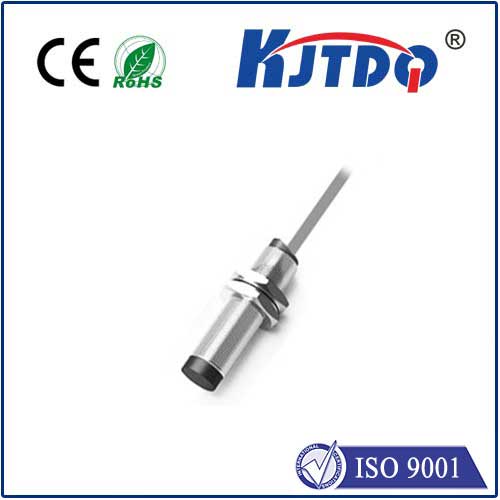
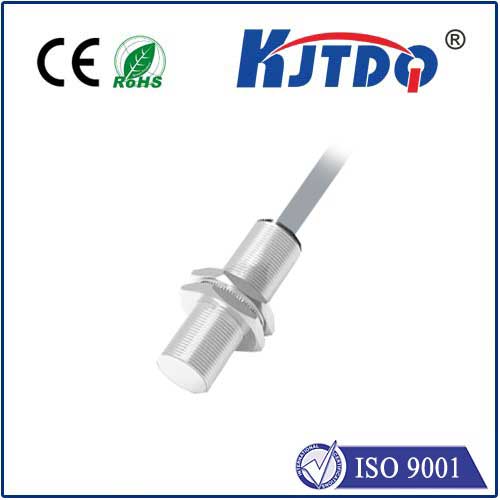
An NPN NC proximity sensor is a solid-state electronic device. The "NPN" refers to the type of transistor output it uses. In an NPN configuration, the output transistor switches the negative or ground side of the load. The "NC" or Normally Closed designation describes the default state of the sensor's output circuit. In its normal, non-activated state (when no target is present), the output circuit is closed, allowing current to flow. When a target enters the sensor's detection range, the output circuit opens, stopping the current flow. This is the opposite behavior of a Normally Open (NO) sensor.
The core technology behind these inductive proximity sensors is electromagnetic induction. The sensor generates a high-frequency oscillating electromagnetic field from its sensing face. When a metallic target enters this field, eddy currents are induced on the target's surface. This causes a change in the oscillation amplitude within the sensor's coil. The sensor's internal circuitry detects this change and triggers the switching action of the NPN output transistor, changing the state from closed to open.
One of the primary advantages of using an NPN NC configuration lies in its inherent fail-safe characteristic for certain critical applications. In a safety circuit or a monitoring system where an interrupted signal must indicate a problem or trigger an alarm, an NC sensor is ideal. If the sensor fails, the wiring breaks, or power is lost, the circuit will open (mimicking the detection state), which can be programmed to initiate a machine stop or a warning. This enhances system safety. Furthermore, NPN sensors are commonly used in systems where the common voltage reference is positive (sourcing), which is a typical configuration in many PLC (Programmable Logic Controller) input modules, especially in regions like Europe and Asia.
NPN NC proximity sensors are predominantly used for detecting ferrous and non-ferrous metals. Common applications include end-of-travel limit sensing, where the sensor confirms a machine part has fully retracted. If the part does not return, the sensor remains activated (circuit open), signaling a fault. They are also used in safety interlocks on machine guards; opening the guard door causes a target to move away from the sensor, opening the circuit and halting machine operation. Other uses include jam detection in conveyor systems, presence verification in assembly lines, and position feedback in automated machinery.
When selecting an NPN NC proximity sensor, key specifications to consider are the sensing distance, which should have a 10-20% margin from the actual application distance, the target material and size, the operating voltage range (typically 10-30V DC), and the output current rating. Environmental factors like temperature, humidity, and potential exposure to chemicals or washdowns should also influence the choice of housing material, such as stainless steel or PBT plastic.
Installation is straightforward but requires attention to detail. Ensure the sensor is mounted securely without vibration. For inductive sensors, non-metallic surroundings are necessary to prevent false triggering. Always connect the wiring according to the datasheet: the brown wire is typically for positive voltage supply, the blue wire for ground (0V), and the black wire is the NPN output signal wire. The load (e.g., a PLC input) is connected between the black wire and the positive supply. Proper shielding and separation from power cables minimize electrical noise interference.
In summary, NPN Normally Closed proximity sensors provide a robust and fail-safe oriented detection method for industrial automation. Their operation, based on opening a circuit upon detection, makes them suitable for critical safety and monitoring functions. Understanding their principle, benefits, and correct application is essential for designing reliable and efficient control systems. By choosing the correct sensor type and following installation best practices, system integrators can ensure long-term, maintenance-free operation in demanding industrial environments.