check

check

check

check

check

check
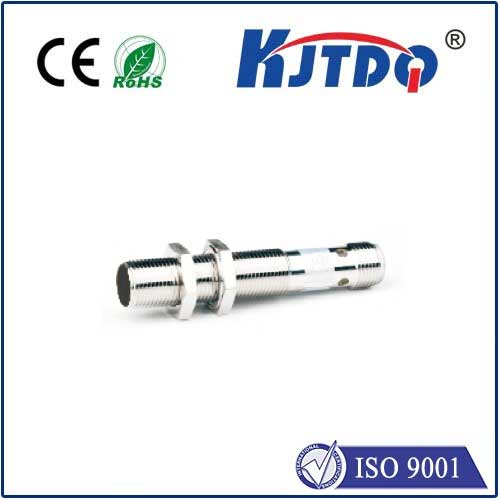
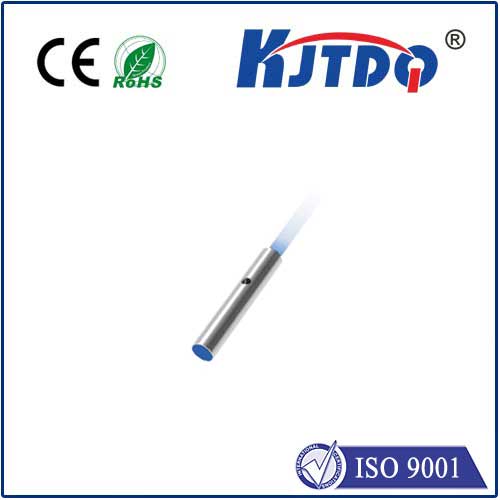
In the demanding world of industrial automation, reliability is non-negotiable. Equipment must perform flawlessly under extreme conditions, from relentless dust and moisture to constant vibration and temperature swings. This is where the KJTDQ series of inductive proximity sensors, boasting a robust IP67 rating, steps in as a critical component for modern manufacturing and machinery. Unlike optical or capacitive sensors, inductive proximity sensors are specifically designed to detect the presence of metallic objects without any physical contact. The core principle involves generating an electromagnetic field. When a ferrous or non-ferrous metal target enters this field, it induces eddy currents within the target, which in turn causes a change in the sensor's own oscillation amplitude. This change is detected by the sensor's circuitry, triggering a solid-state output signal.
The designation "IP67" is not just a marketing term; it is a definitive international standard (IEC 60529) that quantifies the sensor's resilience. The "IP" stands for Ingress Protection. The first digit, "6," signifies complete protection against dust ingress. No dust particles can enter the housing to interfere with the sensitive internal electronics, making these sensors ideal for environments like metalworking, woodworking, or cement plants. The second digit, "7," indicates protection against the effects of temporary immersion in water. A sensor with an IP67 rating can withstand being submerged in up to 1 meter of water for 30 minutes. This makes it perfectly suited for washdown applications in food and beverage processing, outdoor machinery exposed to rain, or any area where spills and splashes are commonplace.
The KJTDQ sensor leverages this rugged protection to offer unparalleled longevity and reduced maintenance costs. Its hermetically sealed housing, typically constructed from nickel-plated brass or high-grade stainless steel, shields the encapsulated electronics from corrosive fluids, coolants, and aggressive industrial atmospheres. This durability directly translates to fewer production stoppages. When sensors fail due to environmental factors, the resulting downtime for diagnosis and replacement can be incredibly costly. By specifying IP67-rated sensors like the KJTDQ series from the outset, engineers and plant managers build a foundation for continuous operation.
Beyond its environmental toughness, the inductive sensing technology itself offers significant advantages. It provides extremely fast response times, often in the microsecond range, enabling precise detection and counting of high-speed moving parts on conveyor lines or robotic arms. Furthermore, these sensors are immune to common interferences like ambient light, color, or surface texture of the target, focusing solely on the metal's presence. The KJTDQ series is available in various form factors (tubular, rectangular, ring-shaped) and sensing ranges to fit diverse applications, from detecting the position of a cylinder piston to ensuring a metal component is present before a machining cycle begins.
Installation and integration are straightforward. Many models in the KJTDQ line feature LED status indicators for easy diagnostics and come with pre-wired connectors or quick-disconnect options to simplify wiring and replacement. Their consistent performance across a wide temperature range ensures reliability whether installed in a refrigerated warehouse or near a furnace. In essence, the KJTDQ inductive proximity IP67 sensor is more than just a component; it is a strategic investment in operational resilience. It empowers industries to automate processes in the most challenging corners of their facilities with confidence, knowing that the sensor providing critical feedback will endure where others might fail. By ensuring consistent detection of metal objects in wet, dirty, or otherwise hostile conditions, it becomes a silent guardian of efficiency, quality control, and overall equipment effectiveness (OEE) on the factory floor.