check

check

check

check

check

check
In an era where miniaturization defines progress, the humble proximity sensor has undergone a remarkable transformation. Once bulky components limited to industrial safety curtains, today's small proximity sensors are engineering marvels, packing sophisticated detection capabilities into packages sometimes smaller than a grain of rice. Their proliferation is silently powering the smart, responsive, and intuitive devices that define our daily lives.
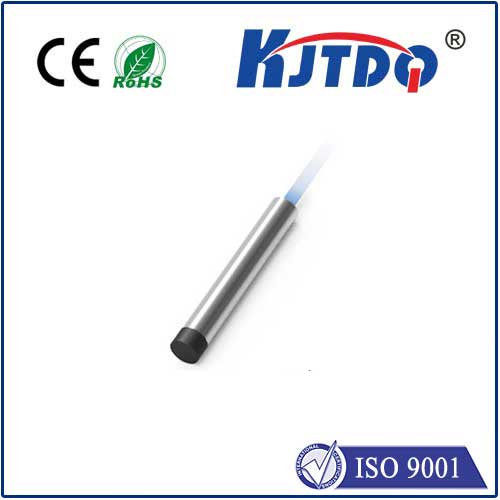
The core technology behind these tiny sentinels varies, with inductive, capacitive, and optical (IR) being the most common. Inductive sensors, detecting metallic objects, have shrunk to sub-millimeter sizes, enabling precise motor control in ultra-compact drones and wearables. Capacitive sensors, sensitive to both conductive and non-conductive materials, are the invisible force behind the touch-free faucets and sleek, button-less interfaces on modern appliances. Perhaps most ubiquitous are the miniature infrared (IR) proximity sensors. By emitting an invisible beam of light and measuring its reflection, they perform critical functions like detecting a user's ear to disable a smartphone screen during calls, conserving battery and preventing accidental touches.
The driving force behind this shrinkage is relentless innovation in Micro-Electro-Mechanical Systems (MEMS) and advanced chip packaging. Engineers have successfully integrated the emitter, receiver, and signal-processing circuitry onto a single, low-power chip. This integration is key. It reduces noise, improves response time—often to microseconds—and drastically cuts power consumption, making perpetual sensing a reality for battery-operated devices. Furthermore, modern small proximity sensors are smarter. They can differentiate between ambient light and a true object, adjust their sensitivity dynamically, and communicate digitally over efficient protocols like I²C, providing clean, processed data to a host microcontroller.
The applications are as diverse as they are impactful. In consumer electronics, they enable the bezel-less displays of smartphones by tucking the sensor into the minutest space under the screen. In smart homes, they bring intelligence to everything: a sensor in a trash can triggers the lid to open, one in a soap dispenser enables hands-free operation, and arrays in smart speakers detect a user's approach to activate voice assistants. The automotive industry relies on them for in-cabin monitoring, detecting a child left in a car seat, or enabling gesture control for infotainment systems. In industrial and medical fields, their role is equally critical, ensuring precise positioning in robotic arms and enabling non-contact operation of sensitive diagnostic equipment, upholding stringent hygiene standards.
However, designing with such small components presents unique challenges. Their minute size makes them susceptible to interference from electromagnetic noise or environmental contaminants like dust and condensation. Precise optical alignment is paramount for IR types; a fraction of a millimeter misalignment can render the sensor useless. Thermal drift can also affect performance. Consequently, successful implementation hinges not just on the sensor itself, but on thoughtful system design—incorporating proper shielding, protective housings, and intelligent firmware that can calibrate and compensate for environmental variables.
Looking ahead, the trajectory points toward even greater integration and intelligence. The next generation of small proximity sensors will likely fuse multiple sensing modalities—combining proximity, ambient light, and gesture recognition—into a single, ultra-compact module. As the Internet of Things (IoT) expands, these sensors will become the fundamental nodes for contextual awareness, allowing devices to perceive and react to their surroundings with minimal human intervention. Their small size belies their significant role; they are the essential, unseen facilitators of a more seamless and interactive world, proving that the most profound technological advances often come in the smallest packages.