check

check

check

check

check

check
In the intricate world of industrial automation and electronic control, the demand for precise, durable, and non-contact switching solutions is paramount. Among the myriad of options available, the combination of a proximity sensor utilizing a reed sensor mechanism, exemplified by models like the MK21P rated for 500W, stands out for its unique blend of simplicity and robustness. This guide delves into the core technology, applications, and critical advantages of these components, explaining why they remain a cornerstone in many design engineers' toolkits.
At its heart, a reed sensor is a magnetically actuated switch. It consists of two ferromagnetic reed contacts, hermetically sealed within a glass tube filled with an inert gas. When an external magnetic field is introduced—from a permanent magnet or an electromagnet—the reeds magnetize, attract each other, and make contact, closing the circuit. Remove the magnetic field, and the spring force of the reeds separates them, opening the circuit. This fundamental principle is elegantly simple and forms the basis of the sensor's reliability.
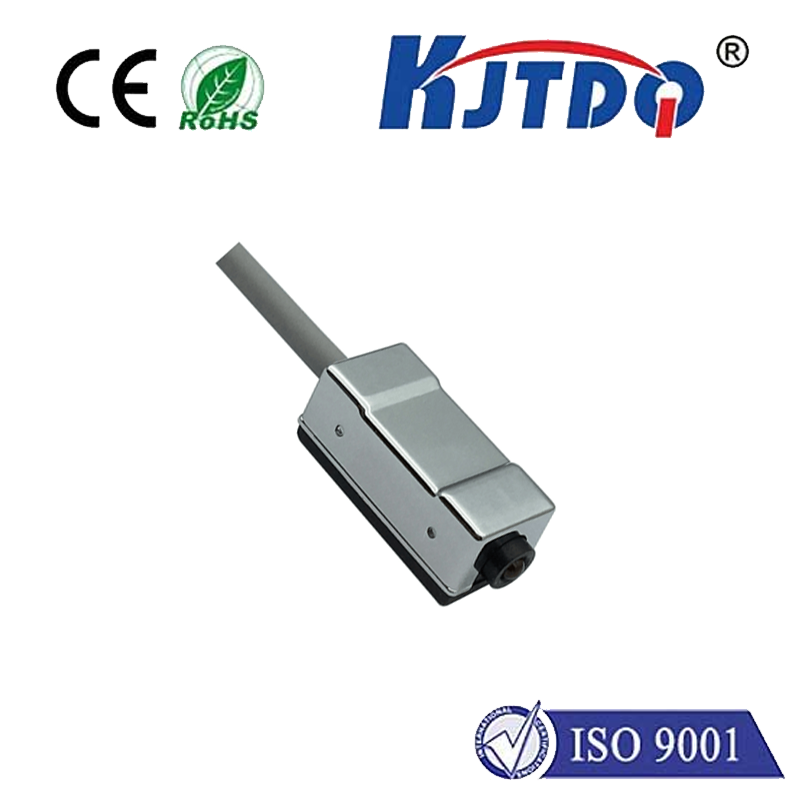
A proximity sensor built around this reed sensor principle, such as the MK21P, is designed to detect the presence or absence of a magnetic target without any physical contact. The "proximity" aspect is defined by the sensor's operational range, within which a magnetic field of sufficient strength can trigger the reed switch. The MK21P designation often refers to a specific form factor, mounting style, and electrical characteristics, while the 500W rating is a crucial specification indicating its switching capacity—500 Watts. This power handling capability typically translates to a robust ability to control higher current or voltage loads directly, often in AC or DC circuits, reducing the need for secondary relays in many applications and simplifying system design.
The applications for a proximity sensor reed sensor like the MK21P 500W are vast and varied. You will find them ensuring safety as door and window sensors in security alarms, where their sealed construction protects against dust and moisture. In automotive systems, they monitor seat belt engagement, trunk lid position, or gearbox selection. Within industrial machinery, they provide precise position feedback for cylinders, robotic arms, and conveyor systems, serving as limit switches. Their non-contact nature means no wear from mechanical actuation, leading to an exceptionally long operational life, often in the hundreds of millions of cycles. Furthermore, the hermetically sealed glass enclosure makes them resistant to environmental contaminants like oxidation, dust, and even some corrosive atmospheres, ensuring stable performance in harsh conditions.
Why choose a reed-based proximity sensor over other technologies like inductive, capacitive, or Hall-effect sensors? Each has its place. Inductive sensors detect metals, capacitive sensors detect materials with a dielectric constant, and Hall-effect sensors provide analog output related to magnetic field strength. The reed sensor MK21P, however, excels in scenarios requiring a simple, cost-effective, and electrically "clean" switch. It offers galvanic isolation between the actuating magnet and the switched circuit, excellent insulation resistance, and a very low "on" resistance when closed, minimizing voltage drop and power loss. For applications involving low-power signals or where absolute circuit isolation is needed, this is a significant advantage. The 500W rating specifically makes it suitable for directly switching motors, solenoids, or heaters of considerable power, adding to its versatility.
When integrating a MK21P 500W proximity reed sensor, several factors require consideration. First is the sensing distance, which depends on the strength of the actuating magnet and the sensitivity of the reed switch. Proper alignment between the sensor and the moving magnet is critical for consistent operation. The electrical load (whether resistive, inductive, or capacitive) must be matched to the sensor's 500W rating to avoid contact arcing and premature failure, especially when interrupting inductive loads like coils. Mounting must be secure to prevent vibration from causing false triggers or damage. Understanding these parameters ensures the sensor delivers its promised longevity and reliability.
In conclusion, the proximity sensor reed sensor, particularly in a robust specification like the MK21P 500W, represents a timeless and highly effective solution for non-contact detection and switching. Its principle of magnetic operation grants it unparalleled durability and environmental resistance. While newer technologies offer different features, the reed sensor's combination of high power handling, electrical simplicity, and proven reliability ensures it continues to be the optimal choice for countless applications across security, automotive, industrial, and consumer electronics. For engineers seeking a no-nonsense, high-performance switch that just works, year after year, this technology remains irreplaceable.