check

check

check

check

check

check
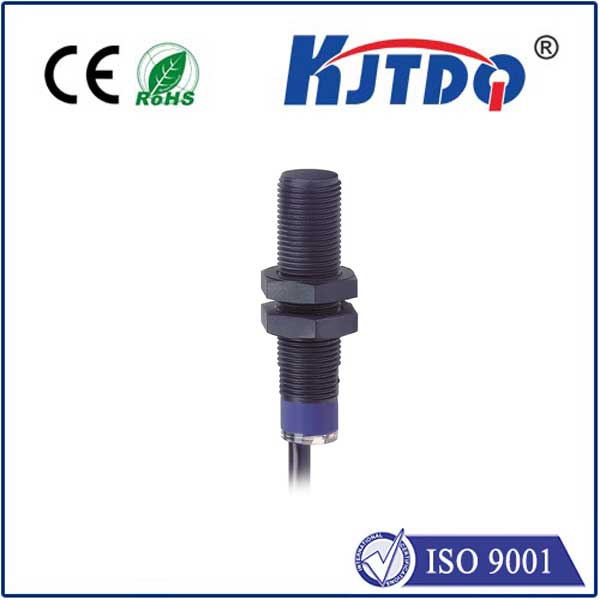
In the realm of industrial automation, precision, reliability, and durability are non-negotiable. Among the myriad of components that keep modern production lines humming, the inductive proximity sensor stands out as a fundamental workhorse. Specifically, the M18 form factor has become an industry standard, prized for its versatility and robust performance. This guide delves deep into the world of the inductive proximity sensor M18, exploring its technology, applications, and key selection criteria to empower engineers and decision-makers.
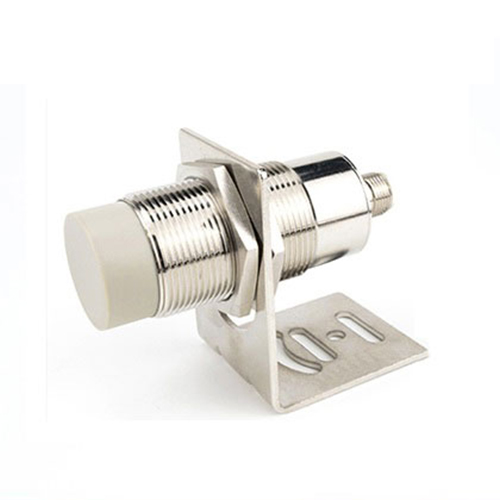
At its core, an inductive proximity sensor is a non-contact electronic device designed to detect the presence or absence of metallic objects. The "M18" designation refers to its cylindrical housing with an 18-millimeter diameter. This compact yet sturdy size makes it ideal for installations where space is at a premium but performance cannot be compromised. The operating principle is elegantly simple: the sensor generates an oscillating electromagnetic field from its face. When a ferrous or non-ferrous metal target enters this field, it induces eddy currents within the target, causing a change in the oscillation amplitude. The sensor's internal circuitry detects this change and triggers a solid-state output signal, typically as a switch to control a PLC, relay, or other controller.
The advantages of using an M18 inductive sensor are numerous. Their non-contact nature means there is no physical wear from repeated detection, leading to a dramatically longer service life compared to mechanical limit switches. They are incredibly fast, capable of detecting objects at switching frequencies up to several thousand Hertz, which is essential for high-speed counting or positioning tasks. Furthermore, they are exceptionally robust. Housed in materials like nickel-plated brass or stainless steel, M18 sensors boast high resistance to vibration, shock, and harsh industrial environments. Many models feature ingress protection ratings like IP67 or IP69K, making them resistant to dust, oils, coolants, and even high-pressure washdowns, a common requirement in food processing or automotive manufacturing.
When selecting an inductive proximity sensor M18, several technical specifications demand careful consideration. Sensing distance is paramount. For a standard M18 sensor, this typically ranges from 2 to 8 millimeters, depending on the target material and sensor model. It is crucial to note that the rated sensing distance is defined for a standard mild steel target. Factors like target size, shape, and material (aluminum, copper, stainless steel) will affect the actual sensing range, often requiring a derating factor. Another critical parameter is the output type. The two primary configurations are NPN (sinking) and PNP (sourcing) transistor outputs, with PNP being more common in many regions. The choice must align with the input requirements of the connected control system. Additionally, designers must decide between normally open (NO) and normally closed (NC) output logic based on the safety and functional needs of the application.
The applications for M18 inductive sensors are virtually limitless across factory floors. They are indispensable for precise position detection of machine parts, such as verifying if a cylinder is fully extended or retracted. On conveyor systems, they perform object counting, jam detection, and part presence verification. In metal machining centers, they are used for tool breakage detection or monitoring workpiece positioning. Their robustness also makes them perfect for use in robotic end-effectors for gripper position feedback or in automated assembly stations to confirm component placement.
Installation and maintenance, while straightforward, require attention to detail. For optimal performance, sensors should be mounted securely to minimize vibration. It is also vital to maintain the recommended clearance around the sensor's sensing face to prevent interference from the mounting bracket or adjacent metal structures, a phenomenon known as "flush mounting" or "non-flush mounting" compatibility. Regular checks for physical damage, buildup of metallic debris on the sensing face, and verification of output signals are part of a proactive maintenance routine that ensures continuous, trouble-free operation.
In conclusion, the inductive proximity sensor M18 is more than just a component; it is a critical enabler of efficiency, safety, and intelligence in automated systems. Its blend of compact design, rugged construction, and precise non-contact detection has solidified its role as a cornerstone of modern industrial control. By understanding its operating principles, key specifications, and application best practices, engineers can leverage this versatile device to build more reliable, productive, and resilient automation solutions. As Industry 4.0 continues to evolve, the humble M18 sensor will undoubtedly remain a trusted and vital link between the physical and digital worlds of manufacturing.