check

check

check

check

check

check
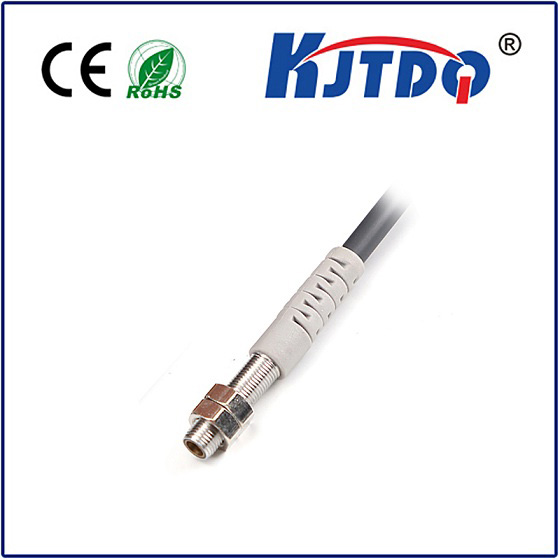
In the intricate world of industrial automation and electronic design, the quest for reliable, compact, and efficient sensing solutions is never-ending. Among the myriad of components available, the M8 5V DC proximity sensor stands out as a remarkably versatile and powerful tool. This tiny cylindrical device, typically just 8mm in diameter, is engineered to detect the presence or absence of metallic objects without any physical contact, making it indispensable in countless applications where precision, durability, and space constraints are critical.
The core of its operation lies in its electromagnetic field. When powered by a stable 5V DC supply—a common voltage level in modern digital circuits and microcontroller-based systems like Arduino or Raspberry Pi—the sensor generates a high-frequency oscillating magnetic field from its sensing face. When a ferrous metal object enters this field, eddy currents are induced on the object's surface. This causes a change in the oscillation amplitude within the sensor's internal coil, which is then detected and converted into a clear, digital output signal. This output typically switches from a high to a low state (or vice-versa), providing a clean, noise-resistant signal perfect for interfacing with programmable logic controllers (PLCs), microcontrollers, or other control systems. The non-contact nature of this detection eliminates mechanical wear and tear, ensuring a long operational life measured in millions of cycles.
Why is the 5V DC specification so significant? In today's landscape, 5V is the standard for a vast ecosystem of digital electronics. This compatibility allows the M8 5V DC proximity sensor to integrate seamlessly into existing control panels, IoT devices, and prototyping environments without the need for additional voltage regulators or complex power conditioning circuits. It simplifies design, reduces component count, and enhances overall system reliability. Furthermore, operating at a lower voltage like 5V often translates to lower power consumption, a crucial factor in battery-operated or energy-sensitive applications.
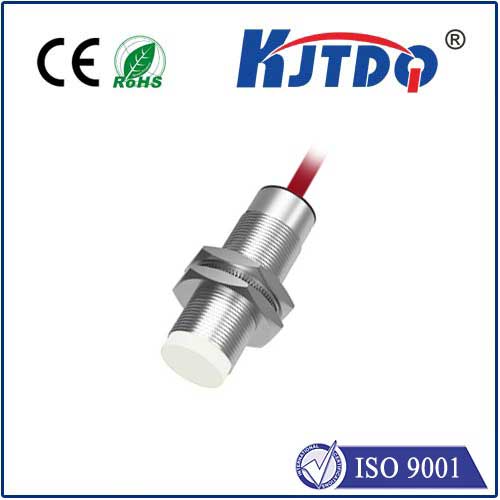
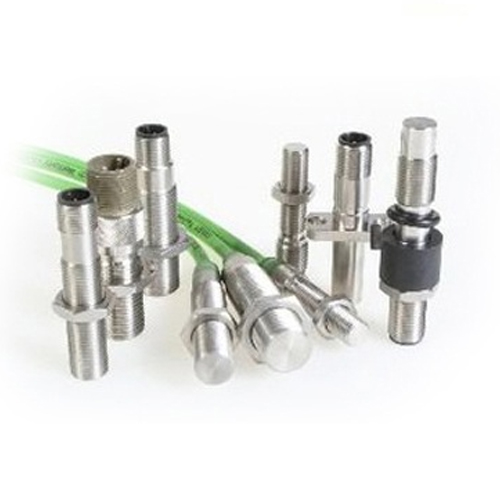
The compact M8 form factor is its other major advantage. In modern machinery, robotics, and compact assembly lines, space is at a premium. The slender cylindrical body of an M8 sensor can be easily installed in tight spaces where larger sensors simply cannot fit. Its threaded barrel allows for straightforward mounting in a drilled hole, with options for flush or non-flush mounting styles to suit different sensing ranges and installation requirements. Despite its small size, it is built to withstand harsh industrial environments. Many models feature robust housings made of nickel-plated brass or stainless steel, offering excellent resistance to oils, coolants, and dust, with high IP (Ingress Protection) ratings like IP67 ensuring reliable performance even when exposed to temporary immersion or washdowns.
Practical applications for the M8 5V DC inductive proximity sensor are virtually limitless. On a fast-moving production line, it can accurately count metal components, verify the presence of a part before a machining operation, or act as an end-of-travel limit switch on a linear actuator. In 3D printers and CNC machines, it serves as a precise homing sensor to establish a repeatable reference point. Within consumer electronics assembly, it can detect the placement of tiny metal shields or screws. Its use extends to security systems, vending machines for coin detection, and even in smart home projects for position feedback.
Selecting the right M8 5V DC sensor requires attention to a few key parameters. The sensing distance, usually specified as the nominal range (e.g., 1.5mm or 2mm for a standard M8), must be chosen based on the application. The output type is critical: NPN (sinking) or PNP (sourcing) configurations must match the input requirements of your controller. Some advanced models also offer analog output or IO-Link digital communication for richer data exchange. Always consult the datasheet for details on the target material (typically mild steel), response frequency, and temperature range to ensure optimal performance.
In conclusion, the M8 5V DC proximity sensor is a testament to the principle that great power can come in small packages. By combining direct compatibility with modern digital systems, a rugged and space-saving design, and highly reliable non-contact detection, it solves a fundamental challenge in automation. Whether you are an engineer designing a complex industrial machine, a technician maintaining equipment, or a hobbyist building an innovative project, understanding and utilizing this compact powerhouse can lead to more elegant, efficient, and robust automated solutions. Its role as a fundamental building block in the interconnected world of smart manufacturing and electronics continues to grow, proving that sometimes, the most critical components are the ones you barely see.