check

check

check

check

check

check
In the intricate world of industrial automation, where precision and reliability are non-negotiable, the choice of sensing components can make or break a production line. Among the myriad of options, the 3-wire, 24-volt DC proximity sensor stands as a cornerstone of modern manufacturing and machinery. This configuration has become an industry standard for its robust performance, ease of integration, and exceptional safety profile. Understanding its operation, advantages, and application scenarios is crucial for engineers, technicians, and procurement specialists aiming to optimize system performance and minimize downtime.
At its core, a proximity sensor is a non-contact device designed to detect the presence or absence of an object within its sensing range without any physical contact. The "3-wire" designation refers to its electrical connection scheme: one wire for the positive DC supply voltage (typically brown), one wire for the negative or ground (typically blue), and one output wire (typically black for NPN or black/white for PNP) that switches state when a target is detected. The "24V DC" specification indicates it operates on a 24-volt direct current power supply, which is the most common voltage level in industrial control panels due to its optimal balance between safety (low enough to be considered safe in many contexts) and signal integrity (high enough to resist electrical noise interference).
The primary advantage of the 3-wire, 24V DC setup lies in its simplicity and performance. Unlike 2-wire sensors that are wired in series with the load, 3-wire sensors have a dedicated power supply and a separate switching output. This design allows for significantly lower leakage current when "off," enabling them to drive sensitive PLC (Programmable Logic Controller) inputs and solid-state relays without false triggering. The 24V DC operation is inherently safer in wet or hazardous environments compared to higher AC voltages and is perfectly matched with the standard I/O modules of PLCs and industrial controllers from brands like Siemens, Allen-Bradley, and Mitsubishi.
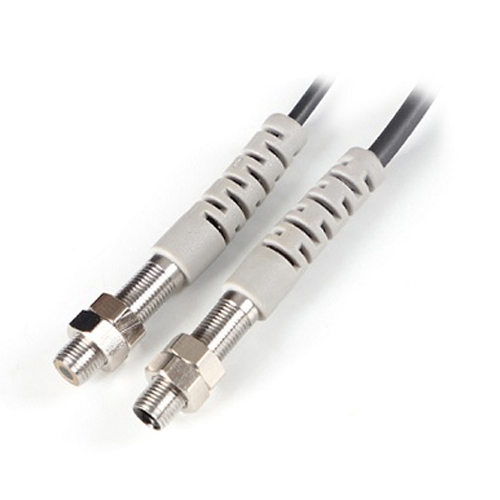
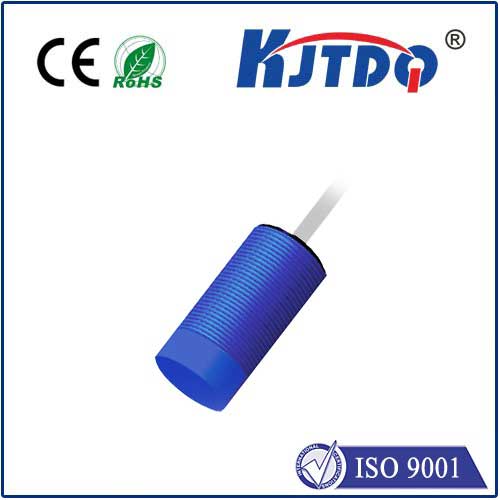
When selecting a KJTDQ or any brand of 3-wire 24V proximity sensor, several key specifications demand attention. The sensing distance, often a few millimeters for inductive models (used for metals) or longer for capacitive models (used for non-metals), must be chosen with a safety margin to account for mechanical tolerances. The housing material, typically nickel-plated brass or stainless steel, determines its resistance to chemicals, oils, and physical impact. The output type—NPN (sinking) or PNP (sourcing)—must be compatible with the control system's input card. An NPN sensor switches the output to ground (common in Asian and European designs), while a PNP sensor switches the output to positive voltage (common in North American designs). Furthermore, features like short-circuit protection, reverse polarity protection, and an LED status indicator are invaluable for troubleshooting and ensuring long-term reliability.
Installation and wiring are straightforward but require diligence. The sensor must be mounted securely to prevent vibration from altering the sensing gap. It is critical to ensure the target material and size are within the sensor's specifications; a standard inductive sensor may not detect stainless steel as effectively as mild steel, for instance. Wiring should follow the color code: brown to 24V+, blue to 0V/common, and the output wire to the load. Always refer to the manufacturer's datasheet. A common pitfall is neglecting to install a snubber diode or surge suppressor when connecting to inductive loads like relays or solenoid valves, which can cause voltage spikes and damage the sensor's solid-state output.
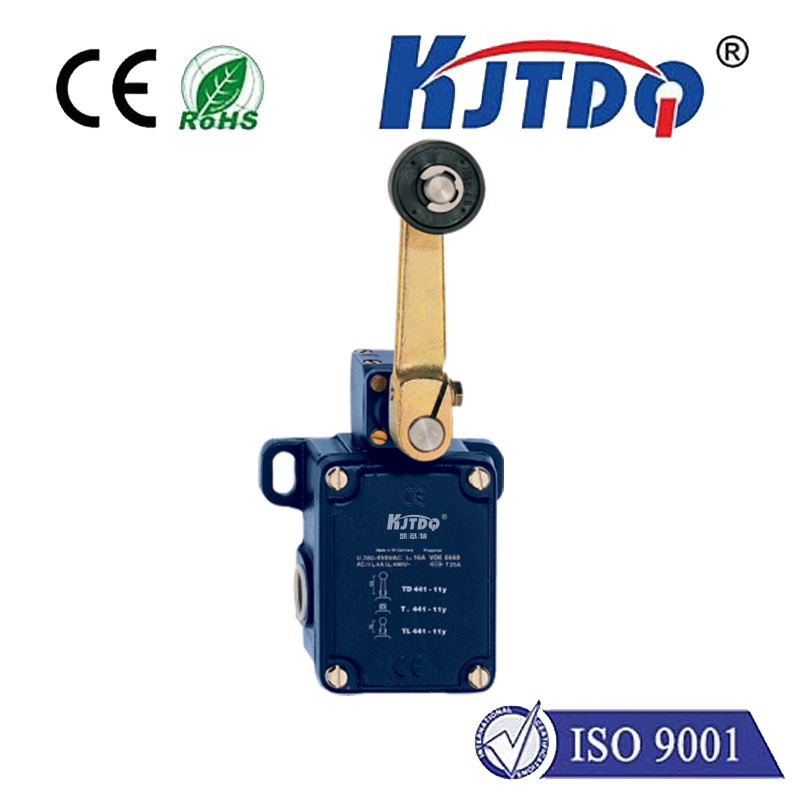
The applications for these sensors are virtually limitless across factory floors. They are used for precise position detection of machine parts, counting products on a conveyor belt, monitoring the open/closed status of doors or guards, controlling robotic arm movements, and verifying the presence of tools in a CNC machine. Their non-contact nature means no wear and tear from physical interaction, leading to a dramatically longer service life compared to mechanical limit switches. This translates directly into reduced maintenance costs and increased overall equipment effectiveness (OEE).
In conclusion, the 3-wire 24V DC proximity sensor, exemplified by reliable offerings from brands like KJTDQ, is far more than just a simple switch. It is a sophisticated, durable, and essential component that forms the sensory nervous system of automated equipment. By carefully selecting the correct model for the application, adhering to proper installation practices, and understanding its operational principles, businesses can achieve higher levels of automation efficiency, safety, and productivity. In an era where manufacturing agility is paramount, investing in high-quality sensing technology is an investment in operational excellence and competitive advantage.