check

check

check

check

check

check
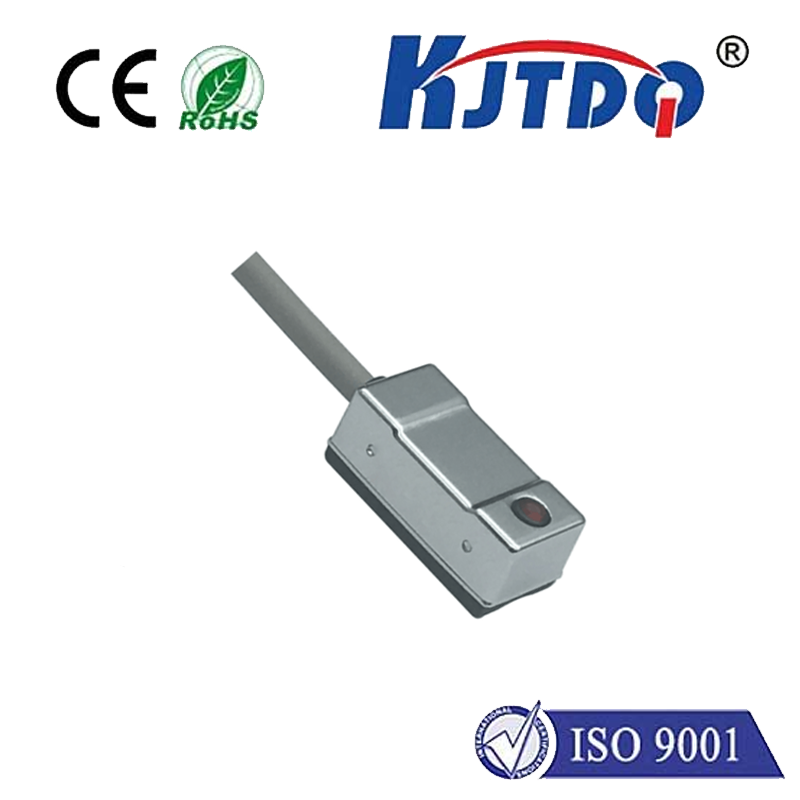
In today's interconnected world of electronics, the demand for efficient, low-power sensing components is higher than ever. Among these, the 3V IR proximity sensor stands out as a particularly versatile and widely adopted solution. This type of sensor operates on a simple yet effective principle: it emits an infrared light beam and detects its reflection from a nearby object. The "3V" designation is crucial, indicating its compatibility with low-voltage systems, such as those powered by a single lithium coin cell or integrated into portable, battery-dependent devices. This makes it an ideal choice for applications where energy conservation is paramount without sacrificing reliable performance.
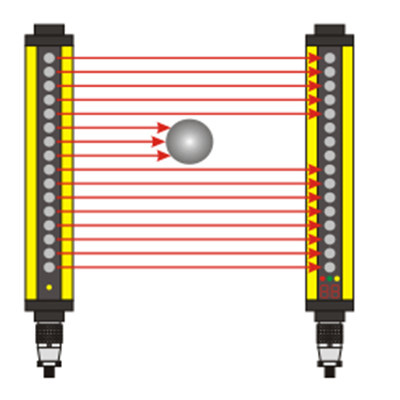
The core functionality of an IR proximity sensor revolves around an infrared LED and a photodetector, typically a phototransistor or photodiode. The IR LED emits light invisible to the human eye. When an object enters the sensor's detection range, this light reflects back and is captured by the photodetector. The sensor's internal circuitry then processes this signal, often converting it into a simple digital output—a voltage shift from high to low, or vice versa—indicating the presence or absence of an object. The 3V operating voltage specifically optimizes this process for minimal power draw, allowing for longer battery life in consumer electronics like smartphones, tablets, and wearable devices, where these sensors commonly manage features like automatic screen dimming during calls.
One of the primary advantages of the 3V IR proximity sensor is its compact form factor and design simplicity. Engineers and hobbyists appreciate its ease of integration. It typically requires only a few supporting passive components to function, connecting directly to a microcontroller's GPIO pin. This simplicity accelerates prototyping and reduces overall system complexity. Furthermore, these sensors are generally insensitive to ambient visible light, focusing specifically on the infrared spectrum, which enhances their reliability in various lighting conditions. However, their performance can be influenced by the color and reflectivity of the target object; dark, non-reflective materials may reduce the effective detection range.
The applications for 3V IR proximity sensors extend far beyond consumer electronics. In robotics, they serve as basic obstacle detection and avoidance sensors, helping autonomous robots navigate their environment. In industrial settings, they can be used for simple object counting on conveyor belts or detecting the presence of items in assembly lines. Home automation systems utilize them to trigger lighting or security alerts when motion is detected in a specific zone. Their low-voltage nature also makes them perfect for Internet of Things (IoT) nodes, which are often deployed in remote locations and rely on battery power or energy harvesting for extended periods.
When selecting a 3V IR proximity sensor for a project, several key specifications must be considered. The detection range is paramount, often adjustable from a few centimeters up to several tens of centimeters depending on the model and lens configuration. The response time determines how quickly the sensor can react to a change in proximity, which is critical for high-speed applications. Current consumption, already low due to the 3V operation, varies between models and directly impacts battery longevity. Finally, packaging options, such as surface-mount or through-hole, offer flexibility for different PCB designs. For optimal performance, careful placement on the circuit board is necessary to avoid interference from other IR sources or physical obstructions.
In conclusion, the 3V IR proximity sensor represents a fundamental building block in modern electronic design. Its blend of low power consumption, straightforward interface, and reliable non-contact detection empowers a vast array of innovations across consumer, industrial, and hobbyist domains. As devices continue to trend towards greater miniaturization and energy efficiency, the role of these compact sensors is set to become even more integral, quietly enabling smarter interactions between technology and the physical world.