check

check

check

check

check

check
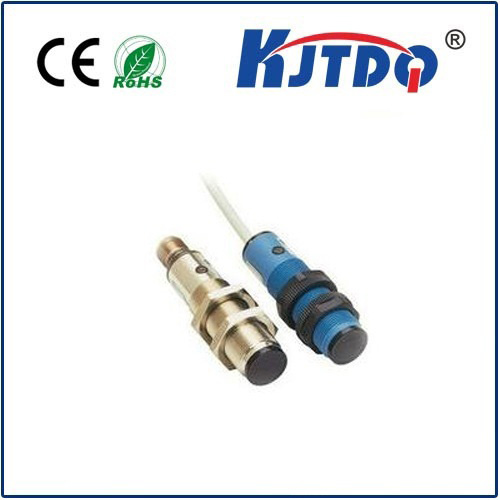
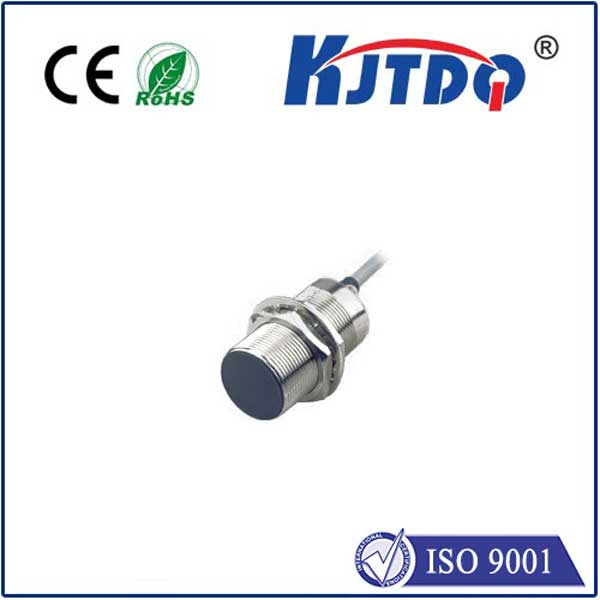
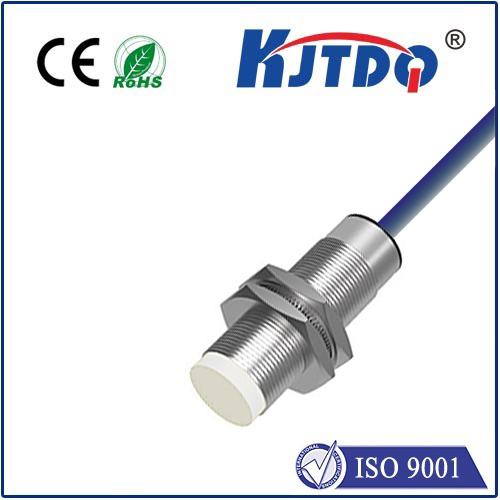
In the world of industrial automation and machine safety, precision and reliability are non-negotiable. Among the myriad of components that keep systems running smoothly, the Proximity Sensor M18 stands out as a workhorse for non-contact object detection. This cylindrical sensor, defined by its 18mm threaded barrel, is a cornerstone in countless applications, from packaging lines and CNC machinery to automotive assembly and material handling. Its widespread adoption is no accident; it is the result of a robust design that delivers consistent performance in challenging environments.
Unlike mechanical limit switches that require physical contact, an M18 proximity sensor operates on the principle of electromagnetic induction or capacitive coupling. Inductive models, the most common type, generate an oscillating electromagnetic field from their sensing face. When a metallic target enters this field, eddy currents are induced within the target, causing a change in the sensor's oscillation amplitude. This change is detected by the internal circuitry, which then triggers a solid-state output switch. This entire process happens without a single moving part, leading to exceptional longevity, high-speed operation, and immunity to wear and tear. Capacitive M18 sensors work on a similar principle but can detect both metallic and non-metallic materials, such as plastics, liquids, or wood, by sensing changes in capacitance.
The "M18" designation refers specifically to the sensor's housing diameter and thread size, conforming to an international metric standard. This standardized form factor is a key advantage. It allows for easy installation and replacement across different manufacturers' products, providing flexibility and reducing downtime. The threaded barrel enables secure mounting in a drilled and tapped hole, often with locknuts for adjustment and stability. Beyond the standard shielded (flush-mountable) or unshielded (non-flush) versions, these sensors come in various sensing ranges, output configurations (NPN/PNP, NO/NC), and connection types (pre-wired cable or quick-disconnect).
Selecting the right Proximity Sensor M18 requires careful consideration of several parameters. The sensing distance, typically ranging from 2mm to 8mm for inductive models, must be chosen with a safety margin to account for target material, temperature variations, and installation tolerances. The target material itself is critical; standard inductive sensors are optimized for mild steel, and the effective sensing range reduces for non-ferrous metals like aluminum or copper. Environmental factors cannot be overlooked. Many M18 sensors boast IP67 or IP68 ingress protection ratings, meaning they are dust-tight and can withstand temporary or prolonged immersion in water, making them suitable for washdown areas in food and beverage plants. They are also engineered to resist common industrial hazards like cutting fluids, oil sprays, and vibration.
The benefits of integrating these sensors into a system are substantial. Their non-contact nature eliminates mechanical stress on both the sensor and the target, leading to virtually maintenance-free operation and a dramatically longer service life compared to contact switches. They can detect objects at very high speeds—often in the kilohertz range—enabling precise timing and counting in fast-paced production lines. Furthermore, their solid-state design provides a high degree of reliability and repeatability, which is essential for quality control and process consistency. This reliability directly translates to reduced machine downtime and lower total cost of ownership.
From detecting the position of a metal piston in a hydraulic cylinder to ensuring a bottle cap is present on a filling line, the applications are virtually limitless. In automotive manufacturing, they verify the placement of components. In conveyor systems, they count boxes and control sorting gates. In automated storage and retrieval systems, they ensure precise positioning. The robust M18 housing allows it to perform these duties reliably even in the presence of dirt, dust, and moisture.
When sourcing a Proximity Sensor M18, it is imperative to partner with a reputable supplier or manufacturer. Look for products that comply with international standards and carry relevant certifications for your industry. Ensure the technical specifications precisely match your application needs regarding voltage, output current, temperature range, and housing material. A correctly specified and installed M18 proximity sensor is not just a component; it is a critical investment in the efficiency, safety, and productivity of any automated system. Its simple, rugged design belies its sophisticated functionality, making it an indispensable tool for engineers seeking dependable, non-contact detection solutions.