check

check

check

check

check

check
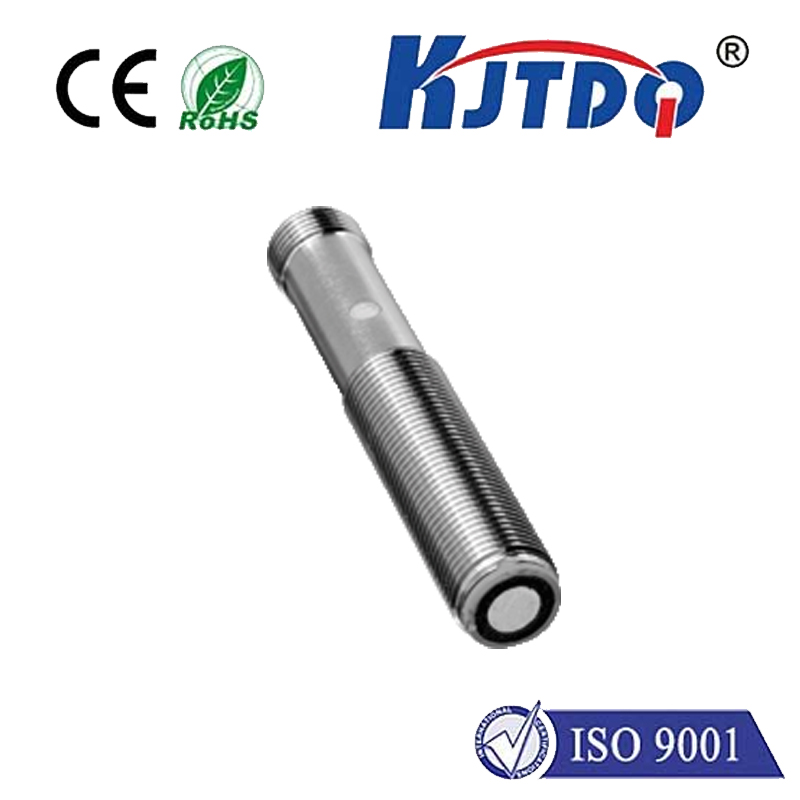
In the seamless interaction between humans and technology, a silent, unseen component often plays a pivotal role. The infrared optical proximity sensor, a marvel of modern micro-optics and electronics, has become an indispensable feature in countless devices, from smartphones and tablets to robotics and industrial equipment. This technology operates on a simple yet brilliant principle: it emits an invisible beam of infrared light and measures the reflection to detect the presence, absence, or distance of an object without any physical contact.
At the heart of this sensor lies an infrared LED (Light Emitting Diode) and a photodetector. The LED pulses out infrared light, which is outside the visible spectrum for humans. When an object comes within the sensor's field of view, this light reflects back and is captured by the photodetector. The sensor's integrated circuitry then analyzes the intensity of the reflected signal. A stronger reflection typically indicates a closer object, while a weaker or absent signal means no object is near. This fundamental operation enables a wide array of smart functionalities that enhance user experience, conserve energy, and improve safety.
One of the most common and noticeable applications is in smartphones. Here, the infrared optical proximity sensor performs a crucial task during phone calls. When you hold the phone to your ear, the sensor detects the proximity of your head and automatically turns off the touchscreen display. This prevents accidental cheek touches from muting the call or pressing other buttons, ensuring a seamless conversation. Simultaneously, it saves significant battery power by disabling the screen when it's not needed. This small component is fundamental to the device's intuitive behavior.
Beyond consumer electronics, the utility of these sensors expands into more demanding environments. In industrial automation, they are deployed for precise object detection on assembly lines, ensuring correct positioning and counting of components. Their non-contact nature makes them ideal for detecting delicate or sensitive materials. In robotics, proximity sensors act as a primary form of short-range obstacle detection, allowing robots to navigate and interact with their surroundings safely, preventing collisions. They are also integral to modern automotive systems, used in features like automatic trunk opening when a foot gesture is detected underneath the rear bumper.
The advantages of using an infrared optical proximity sensor are manifold. Their non-contact operation eliminates mechanical wear and tear, leading to exceptional longevity and reliability. They are not affected by the surface color or material of most objects, as they rely on light reflection rather than physical properties. Modern versions are incredibly compact, allowing integration into increasingly slim devices without compromising performance. Furthermore, they consume very little power, a critical factor for battery-operated gadgets, contributing directly to extended device battery life.
When selecting an infrared optical proximity sensor for a project, several key specifications must be considered. The detection range defines how far the sensor can reliably sense an object. The response time indicates how quickly it can detect a change in proximity, which is vital for high-speed applications. Package size is crucial for space-constrained designs. Additionally, features like ambient light rejection are important; a good sensor can distinguish its own IR signal from background infrared noise (like sunlight), ensuring stable and accurate readings in various lighting conditions.
As technology evolves, so do these sensors. Future iterations are focusing on even greater miniaturization, lower power consumption, and enhanced intelligence. We are moving towards sensors that can not only detect presence but also recognize simple gestures or determine the composition of an object. The integration of proximity sensing with other sensor data (like ambient light sensors) on a single chip is creating more context-aware systems. This evolution will unlock new levels of interaction, making our devices more responsive, efficient, and intuitive than ever before.
In essence, the infrared optical proximity sensor is a perfect example of how a small, focused innovation can have an outsized impact. It works tirelessly in the background, enabling features we often take for granted. From preventing pocket dials to guiding autonomous machines, this invisible guardian is a cornerstone of smart, responsive technology, bridging the gap between the digital world and the physical one with silent, efficient precision.