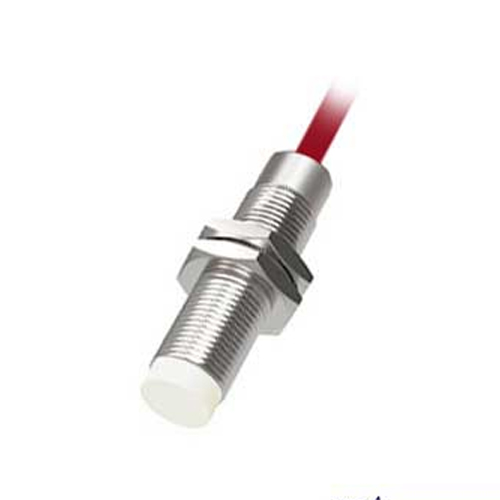
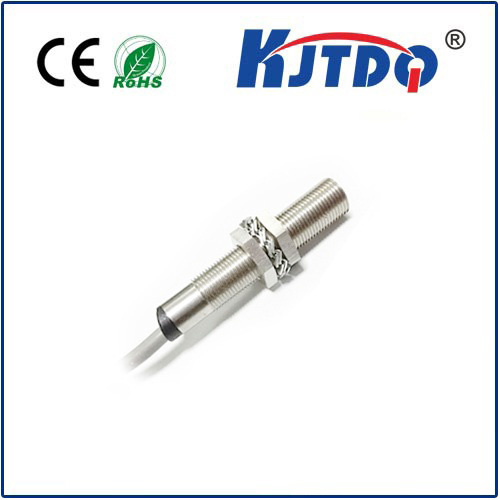
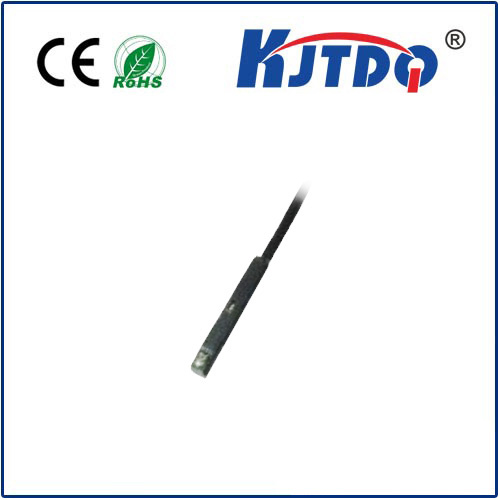
BES0122 proximity sensor
- time:2025-10-16 11:10:58
- Click:0
BES0122 Proximity Sensor: The Unseen Guardian of Modern Automation
Imagine a world where machines possess a subtle sixth sense, detecting nearby objects without physical contact. This isn’t science fiction; it’s the everyday reality powered by proximity sensors like the BES0122. These compact electronic sentinels operate silently, enabling countless industrial processes, enhancing safety features, and contributing to the seamless automation we often take for granted. The BES0122 proximity sensor stands as a specific, robust example of this foundational technology, designed to deliver reliability where it matters most.
Understanding the Core: What is a Proximity Sensor?
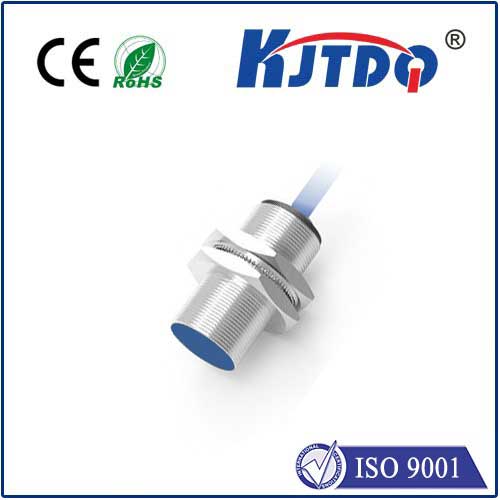
At its essence, a proximity sensor is a device that detects the presence or absence of an object within its sensing range without needing physical contact. It achieves this by emitting a field (electromagnetic, electrostatic, or ultrasonic) or beam of radiation (like infrared) and monitoring changes in the field or the return signal when an object enters its vicinity. The BES0122 belongs to a predominant category: the inductive proximity sensor.
Decoding Inductive Proximity Sensing
Inductive proximity sensors, like the BES0122, specifically detect metallic objects. Here’s how they work their magic:

- Generating the Field: Inside the sensor’s sensing face lies an oscillator circuit that generates a high-frequency electromagnetic field.
- Field Interaction: When a conductive metal object enters this field, eddy currents are induced on the surface of the metal object.
- Energy Drain: These eddy currents draw energy from the sensor’s oscillating circuit, effectively damping the oscillation’s amplitude.
- Detection Trigger: The sensor’s circuitry continuously monitors the oscillation amplitude. When the damping (caused by the metal object) reaches a predefined threshold, the sensor triggers a state change.
- Output Signal: This state change is reflected in the sensor’s output signal – typically switching a solid-state transistor (PNP or NPN) from OFF to ON, or vice-versa. This provides a clear, electrical signal indicating detection (e.g., object present/not present).
The BES0122 Proximity Sensor: Engineered for Performance
While generic proximity sensors are widely available, the BES0122 designation represents a specific model with particular characteristics optimized for demanding environments. Key features typically associated with a sensor like the BES0122 include:
- Robust Construction: Designed to endure the harsh realities of industrial settings – resistant to vibration, shock, dust, and moisture (often conforming to IP67 or higher ratings).
- Non-Contact Operation: Zero physical wear and tear on the sensor or target object, ensuring exceptional longevity and maintenance-free operation.
- High Switching Frequency: Capable of detecting rapidly moving or vibrating objects, making it ideal for high-speed production lines or position feedback. The BES0122 typically offers a reliable frequency suitable for many industrial tasks.
- Short-Circuit & Reverse Polarity Protection: Vital safety features built-in to prevent damage from wiring errors or electrical faults, enhancing system reliability and reducing downtime.
- LED Status Indicator: Provides immediate visual confirmation of power status and switching state, crucial for setup, diagnostics, and troubleshooting.
- Specific Sensing Range: Tailored for optimal detection within a defined distance (e.g., a few millimeters). The BES0122 boasts a calibrated sensing distance suited to its intended applications.
- Output Configuration: Available in different variants (e.g., Normally Open (NO), Normally Closed (NC), PNP, or NPN) to seamlessly integrate into various control systems (PLCs, controllers, drives).
Where the BES0122 Proximity Sensor Excels: Diverse Applications
The BES0122 proximity sensor finds its home in numerous industrial and automation scenarios. Its reliability and precision make it indispensable for:
- Position Verification: Confirming the presence or correct positioning of parts on assembly lines, pallets, or fixtures. “Is the component in place before the welding robot starts?”
- Object Counting: Tallying products on conveyor belts or packages passing a checkpoint.
- End-of-Travel Detection: Signaling when a cylinder has fully extended or retracted, or when a machine guard is properly closed.
- Speed Monitoring: Detecting teeth on rotating gears (tachometry) to monitor rotational speed.
- Level Sensing: Detecting the presence or absence of metal objects within bins or containers.
- Machine Safety: Serving as a critical component in safety interlock circuits (e.g., confirming a guard door is securely closed before machine operation can commence).
- Automotive Manufacturing: Used extensively in production lines for part positioning, robotic guidance, and quality control checks on metal components.
- Material Handling: Monitoring conveyor belt operations, detecting metal objects in chutes, or signaling package positions.
Choosing and Implementing the BES0122 Effectively
Selecting the right sensor, including the BES0122, requires careful consideration:
- Target Material: Inductive sensors only detect metals. Ensure your target object is ferrous or non-ferrous metal. The BES0122 performs consistently with compatible metals.
- Sensing Distance: Choose a sensor with a nominal sensing range (Sn) slightly larger than the required actual operating distance to account for installation tolerances and environmental factors. Know the specified Sn for your BES0122 model.
- Operating Environment: Factor in temperature extremes, potential chemical exposure, washdown requirements, or explosive atmospheres. The BES0122’s rugged design addresses common industrial challenges.
- Output Type: Ensure compatibility (PNP/NPN, NO/NC) with your control system’s input module.
- Mounting: Consider flush or non-flush mounting capabilities and required dimensions. Proper mounting is critical for achieving the specified sensing range.
Installation involves securing the sensor correctly, ensuring the target approaches the sensing face perpendicularly within the specified range, and connecting wiring according to the datasheet (paying close attention to voltage requirements and output polarity). Always consult the specific datasheet for the BES0122 variant you are using, as detailed specifications (voltage range, current rating, housing material, exact sensing distance, temperature rating) can differ slightly between models sharing the base designation.
Conclusion
Invisible yet indispensable, proximity sensors form the backbone of detection and automation across industries. The BES0122 proximity sensor embodies this critical role, offering a blend of robustness, reliability, and precision tailored for industrial use. Its ability to detect metal objects non-invasively, withstand challenging conditions, and provide a clear electrical signal makes it a trusted component on countless factory floors and within complex machinery. By understanding its inductive operating principle, key features, and diverse applications, engineers and technicians can effectively leverage the BES0122 to enhance efficiency, ensure safety, and drive automation forward, one non-contact detection at a time.