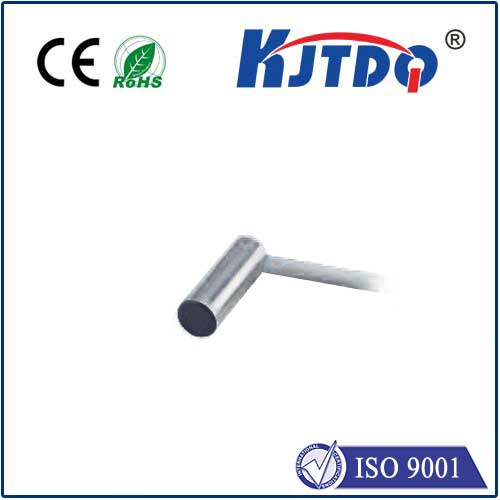
button photoelectric sensor
- time:2025-09-12 01:03:32
- Click:0
Button Photoelectric Sensors: Compact Detection Powerhouses for Tight Spaces
In the intricate dance of modern automation, where every millimeter counts and reliability is non-negotiable, space is often the ultimate luxury. How do you integrate precise object detection into the most cramped corners of machinery or delicate assembly lines? The answer frequently lies in a remarkably compact yet robust solution: the button photoelectric sensor. These diminutive devices pack the sophisticated detection capabilities of traditional photoelectric sensors into a form factor barely larger than a standard push-button, making them indispensable for countless applications where real estate is at a premium.
Unlike their bulkier counterparts, button photoelectric sensors are specifically engineered for size optimization. Their defining characteristic is a shallow sensing head – often resembling a flat cylinder or puck – with a remarkably slim profile. This design is not merely aesthetic; it directly addresses critical installation challenges in robotics, semiconductor handling, packaging machines, and medical equipment, where the proximity of components or confined spaces rules out conventional sensors. The ability to fit directly onto mounting surfaces or utilize specialized brackets allows effortless integration into existing setups, minimizing design overhauls and saving valuable time and cost.
Functionally, button sensors rely on the same fundamental principle as other photoelectric sensors: the emission and reception of light. Most commonly, they utilize the diffuse reflective mode. Here, a single compact unit houses both the light emitter (typically an LED) and the receiver. The emitted light beam travels outward. When an object enters the detection zone, this light strikes the object’s surface and diffusely reflects back towards the sensor head. The integrated receiver detects this reflected light, triggering a switching signal output. This self-contained operation simplifies wiring and installation significantly. While diffuse reflection is dominant, miniature versions of retro-reflective or even through-beam models can sometimes be found in specialized button formats.
Key specifications differentiating button sensors often revolve around their compactness and ruggedness:
- Minimalist Dimensions: Housing diameters commonly range from 12mm down to an astonishing 4mm (micro button sensors), with depths often under 10mm.
- Robust Build: Despite their size, they feature sturdy metal (stainless steel or brass) or high-grade plastic housings, designed to withstand industrial environments.
- Ingress Protection: High IP ratings (like IP67, IP69K) are standard, ensuring resilience against dust, cleaning chemicals, washdowns, oils, and coolants – essential for food processing, pharmaceutical, and harsh manufacturing settings.
- Precise Focus: Engineered optics deliver a tightly focused beam, enabling reliable detection of small objects and minimizing false triggers from background surfaces or stray light.
- Versatile Outputs: Standard offerings include NPN/PNP transistors or digital outputs, compatible with PLCs and controllers. Some variants feature IO-Link for enhanced diagnostics and configuration.
- Short Sensing Ranges: Due to their size and optics, typical detection distances for diffuse models range from a few millimeters up to 100-300mm. Their strength lies in close-proximity detection, not long-range scanning.
Why choose a button sensor over a small standard photoelectric sensor or a proximity sensor? The advantages are compelling in specific scenarios:
- Space Constraints: When mounting depth and/or lateral space are severely limited, a low-profile button sensor is often the only viable solution.
- Surface Mounting: Their flat back facilitates easy mounting onto plates or machine frames, often requiring only a single mounting hole or adhesive.
- Reliability Close-Up: For detecting objects very near the sensor face, their focused diffuse beam can offer superior performance and stability compared to standard photoelectric sensors needing more clearance.
- Versatility Compared to Proximity: Unlike inductive proximity sensors, button photoelectric sensors detect any object that reflects light, regardless of material (metal, plastic, glass, etc.), offering broader application scope.
The applications where button photoelectric sensors shine are diverse:
- Robotics: End-of-arm tooling (EOAT) on robots demands miniature sensors for part presence verification, gripping confirmation, and collision avoidance within the tight confines of the gripper assembly.
- Semiconductor & Electronics Manufacturing: Detecting tiny components on PCBs, verifying wafer cassette positioning, monitoring pick-and-place operations – all require the non-contact precision of a compact photoelectric sensor.
- Packaging Machinery: Monitoring small packaging components (caps, lids, seals), verifying label presence, detecting misfeeds in cartoning machines, and guaranteeing product count on high-speed lines.
- Medical Devices: Ensuring the presence of vials, syringes, or test tubes in analyzers and filling machines within sterile and compact equipment housings.
- Automotive Assembly: Verifying small part insertion (clips, pins, springs), detecting fluid levels in reservoirs, and confirming component seating on engine blocks or transmissions.
- Printing and Paper Handling: Detecting paper edges, verifying sheet count, and monitoring gripper bar engagement on printing presses and cutters.
Selecting the right button photoelectric sensor requires careful consideration:
- Detection Range: Precisely measure the required distance to the target object. Don’t over-specify; choose a sensor rated for slightly more than the maximum needed distance.
- Object Properties: Consider the object’s size, color, reflectivity, and surface texture. Dark or matte objects reflect less light, demanding sensors with higher sensitivity or shorter effective ranges.
- Environmental Factors: Prioritize IP rating based on exposure (dust, liquids, chemicals, temperature extremes). Metal housings are preferred for high pressure washdowns (IP69K).
- Electrical Requirements: Match the sensor’s output type (NPN/PNP) and voltage supply to the control system. Consider IO-Link for smart capabilities.
- Mounting & Clearance: Double-check the physical dimensions and ensure sufficient clearance around the mounting location for the sensor body and any required cabling. Confirm the required mounting method (thread, adhesive, bracket).
In essence, the button photoelectric sensor represents an elegant engineering solution to the pervasive challenge of space limitation. Its compact form factor, robust construction, focused detection capabilities, and ease of installation make it not just a niche component, but a fundamental enabling technology for countless modern automated systems. From the intricate world of microelectronics assembly to the demanding environments of food packaging, these unassuming “buttons” provide the reliable, non-contact sensing essential for efficiency, quality control, and machine uptime. Their unique blend of size and performance ensures they will remain a critical tool in the automation engineer’s toolkit wherever precise detection in confined spaces is paramount.