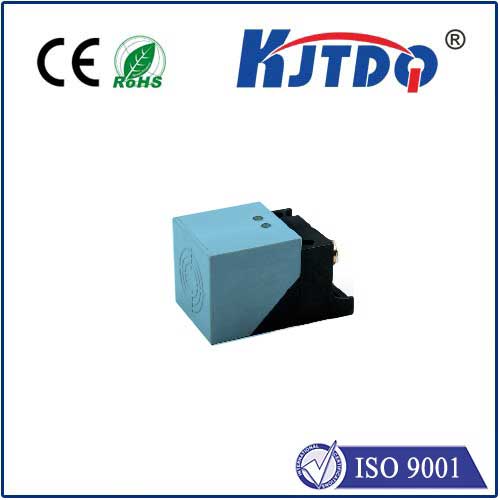
roller limit switch
- time:2025-08-04 09:49:39
- Click:0
Roller Limit Switches: The Essential Guardians of Mechanical Movement
In the intricate dance of automated machinery and industrial processes, where precision and safety are paramount, an unsung hero often stands watch: the roller limit switch. These seemingly simple electromechanical devices play a critical and often safety-critical function, monitoring the position or presence of moving parts and bringing operations to a controlled halt before disaster strikes. Far from just a simple on-off mechanism, the roller limit switch is a fundamental building block in the world of automation and machine safety, offering a reliable, robust, and relatively low-cost solution for countless applications. Understanding how they work, where they excel, and their undeniable importance is key for engineers, technicians, and anyone involved in machinery maintenance or design.
So, what exactly is a roller limit switch? At its core, it’s a type of switch designed to detect the physical movement or position of an object. Its defining feature is a lever arm terminating in a small roller wheel. This roller is strategically positioned to be contacted by a moving part – a machine carriage, a door, a gate, a cylinder rod, or even a product on a conveyor. When the moving object physically pushes against the roller lever, it pivots the arm. This mechanical action directly actuates switch contacts housed within a sturdy enclosure. Depending on the design, this contact actuation can either make (close) or break (open) an electrical circuit.
The beauty lies in this direct mechanical linkage. No sophisticated electronics (in the basic models), no complex programming – just dependable physical interaction triggering an electrical response. This inherent simplicity translates to significant advantages:
- Robustness & Reliability: Constructed from metal and rugged plastics, roller limit switches are built to withstand harsh industrial environments – dust, moisture, vibration, and temperature variations (often specified by IP ratings like IP65 or IP67 for ingress protection). Their mechanical nature makes them highly resistant to electrical interference.
- Clear Physical Feedback: The visible movement of the roller lever provides immediate and unambiguous feedback to operators or technicians about whether the switch has been actuated or not, aiding diagnostics.
- Cost-Effectiveness: Compared to many electronic sensors, basic roller limit switch models offer a very economical solution for position detection and safety interlocks.
- High Current Handling: Many roller limit switches can directly switch relatively high currents (several Amperes), allowing them to control motors, solenoids, or indicator lights without needing additional relays in many scenarios.
- Versatility: Available in countless configurations – different lever arm lengths and materials, various roller sizes and types (standard, fork, side-push), different contact arrangements (SPDT, DPDT), and diverse mounting options. This makes them adaptable to a vast range of applications.
The industrial applications for roller limit switches are incredibly diverse, cementing their status as indispensable components:
- Conveyor Systems: Defining the start and end points of travel for pallets or products, preventing jams and overruns. Monitoring the position of diverters or lifts. Acting as a safety stop switch if personnel access gates are opened.
- Machine Tools: Setting precise travel limits for milling tables, lathe carriages, or presses. Ensuring guards are closed before machine operation can commence.
- Material Handling: Controlling the open/close limits of automated doors, gates, and hatches. Positioning cranes, hoists, and elevators.
- Packaging Machinery: Detecting the presence of a carton at a specific station, confirming filler head position, or indexing turntables.
- Automotive Lines: Verifying fixture positions on assembly lines, confirming robotic arm retraction, or detecting the end-of-stroke for clamping cylinders.
- Agricultural Equipment: Monitoring the position of harvesters, balers, or other moving implements.
Choosing the right roller limit switch requires careful consideration of several critical operating parameters:
- Operating Force: How much force is required to reliably actuate the roller lever? This must be less than the force exerted by the moving part it will encounter. Too light, and it might trigger accidentally; too heavy, and it might not actuate reliably or could cause damage.
- Travel/Pretravel: The distance the roller lever must move before the electrical contacts change state. Ensure this distance is compatible with the application’s movement range and required precision.
- Electrical Rating (Voltage & Current): The switch contacts must safely handle the electrical load (resistive or inductive) of the circuit they are controlling. Exceeding these ratings is a major cause of premature failure.
- Environmental Rating (IP Code): Crucial for longevity. Select an IP rating suitable for the environment – dust, water spray, washdowns. IP65 is common for general industrial use, while IP67 or IP69K are needed for harsher, wet conditions.
- Duty Cycle: How frequently will the switch be actuated? Standard switches might be rated for millions of operations, but high-cycle applications require specific high-endurance models.
- Lever Type & Roller: Select the lever arm length and style (straight, offset, fork) and roller type (size, material) that best allows contact with the target object in the available space. Fork levers help avoid missed actuation if alignment isn’t perfect.
The role of the roller limit switch in safety cannot be overstated. While they are excellent for routine position control, their primary safety function often comes as part of an interlock system. For example, a roller limit switch mounted on a machine guard door can be wired so that opening the door (actuating the switch) immediately cuts power to the hazardous motion within. This makes them fundamental components in achieving compliance with machinery safety standards worldwide. They provide a hardwired, positive-action safety disconnect.
Like any mechanical component, roller limit switches require attention for long life and reliable operation. Key maintenance practices include:
- Regular Inspection: Visually check for damage to the roller, lever arm, housing, or wiring. Ensure mounting remains secure.
- Cleaning: Remove accumulated debris, grease, or moisture that could impede lever arm movement, especially crucial in environments like food processing or foundries.
- Operational Check: Manually actuate the switch periodically to verify it clicks positively and that the electrical response is correct.
- Replacement: If the roller becomes excessively worn, the lever arm bent, or the contacts fail to conduct reliably, replacement is necessary. Do not attempt to repair a safety-critical switch; replace it with an identical or suitable equivalent rated for the application.
From the repetitive precision of a bottling line to the powerful movement of a hydraulic press, the humble roller limit switch silently performs a vital role. Its robust mechanical design, versatility across countless industrial applications, and critical contribution to safety make it far more than just a simple component. Understanding its operation, careful selection based on operating parameters, and diligent maintenance ensures this essential guardian continues to protect equipment, processes, and personnel, enabling smooth and safe industrial operations day in and day out.