check

check

check
check
check
check
check
check

check

check
Imagine a world where machines know their limits without ever touching them. In the intricate dance of industrial automation, where milliseconds and millimeters matter, reliably detecting the presence, absence, or position of objects is fundamental. This is where the optical limit switch shines – a cornerstone technology offering non-contact precision that mechanical switches simply can’t match. Serving as the silent sentinels on assembly lines, robotic arms, and packaging systems, these photoelectric sensors provide the critical feedback loops that keep modern manufacturing humming efficiently and safely.
Understanding the Optical Limit Switch
At its heart, an optical limit switch is a type of photoelectric sensor. Unlike traditional mechanical limit switches that require physical contact to trigger, optical versions operate contactlessly using a beam of light. This fundamental difference unlocks significant advantages, particularly in demanding or sensitive applications.
The Core Principle: Light Interruption
The operation is elegantly simple:
Key Configurations: Through-Beam vs. Retro-Reflective
While all optical limit switches rely on beam interruption, their physical implementation varies:
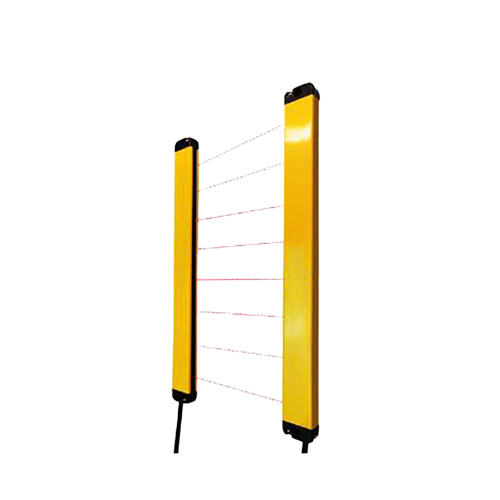
Through-Beam (Opposed Mode): This is often considered the most reliable configuration. The emitter and receiver are separate units, installed directly opposite each other. The light beam travels directly from the emitter to the receiver. Detection occurs when an object physically breaks this beam. Through-beam sensors offer the longest sensing ranges and are highly immune to environmental factors like target color, reflectivity, or surface finish. However, installation requires wiring and mounting two separate components precisely aligned.
Retro-Reflective (Reflex Mode): This design combines the emitter and receiver into a single housing. A special reflector (often a prismatic retro-reflector designed to bounce light directly back to its source) is mounted opposite the sensor unit. The light beam travels from the emitter, hits the reflector, and bounces straight back to the receiver within the same unit. Detection occurs when an object breaks the beam path to the reflector. Retro-reflective sensors simplify installation (only one device to wire and mount, plus the reflector), offering a good balance of range and ease of use. However, they can be confused by highly reflective objects that might bounce light back without the reflector, potentially causing false triggers.
Why Choose Optical Over Mechanical? The Compelling Advantages
The shift towards optical limit switches in countless applications is driven by distinct benefits:
Where Optical Limit Switches Make a Critical Difference
The versatility and reliability of optical limit switches see them deployed across countless industrial sectors:
Essential Considerations for Implementation
To ensure optimal performance:
The Unseen Enabler of Modern Automation
From safeguarding intricate robotic assemblies to ensuring your online order is packaged correctly, optical limit switches are indispensable workhorses. Their contactless operation, inherent reliability, high-speed detection, and versatility provide the precise feedback modern automated systems demand. As industries push for greater efficiency, speed, and uptime, the role of these sophisticated photoelectric sentinels, silently monitoring positions without a touch, becomes ever more crucial in defining the boundaries of safe and productive machine operation.