check

check

check

check
check
check
check
check

check

check
Imagine a factory floor humming with automated precision. Robotic arms weld with uncanny accuracy, conveyor belts glide seamlessly, and packaging lines operate at blinding speed. Behind this intricate dance of metal and motion lies a critical, yet often overlooked, component: the proximity sensor. Specifically, the PNP and NPN varieties form the backbone of countless detection tasks, silently enabling machines to “see” and react to their environment. Understanding the difference between these two fundamental types isn’t just technical jargon – it’s essential knowledge for anyone designing, installing, or troubleshooting modern industrial systems. Choosing incorrectly can halt production lines, damage equipment, and cause significant downtime.
The Inductive Proximity Sensor: Sensing Without Touch
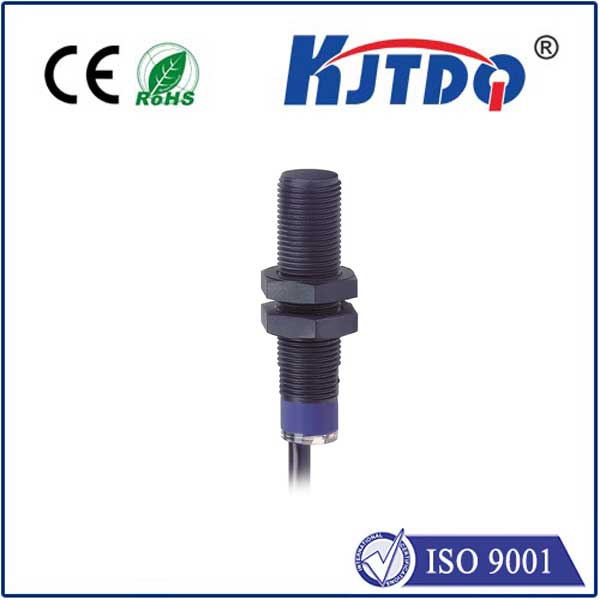
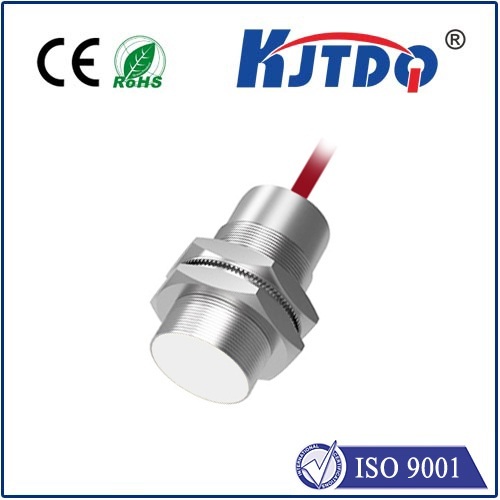
Before diving into PNP and NNP distinctions, let’s establish the common ground. Most industrial proximity sensors discussed in this context are inductive proximity sensors. Their core function is to detect the presence or absence of metallic objects (like steel, iron, aluminum, brass, copper) without physical contact. How do they achieve this? An electromagnetic field generated by an oscillator coil at the sensor’s face interacts with the approaching metal target. This interaction causes eddy currents within the metal, leading to a dampening of the oscillator’s energy. An internal circuit detects this change in oscillation amplitude and triggers the sensor’s switching output.
The Heart of the Matter: PNP vs. NPN Explained
The crucial difference between PNP sensors and NPN sensors lies entirely in their output configuration and how they switch the electrical signal to the connected load (e.g., a PLC input, relay, or indicator light). This difference stems from the type of transistor used internally as the switch – PNP referring to Bipolar Junction Transistors with a P-N-P semiconductor structure, and NPN referring to those with an N-P-N structure. Their switching behavior dictates how we wire them into a circuit.
Visualizing the Difference: Wiring Diagrams
Imagine a simple circuit with a proximity sensor, a DC power supply (+V and 0V/GND), and a load (like a PLC input module with an internal resistor or lamp).
When active, +V flows OUT of the black wire, through the load, and down to 0V.
NPN Wiring:
Selecting the Right Type: PNP or NPN?
This isn’t a matter of one being inherently better; it’s about compatibility with your control system’s input circuitry.
Where Do They Shine? Common Applications
PNP and NPN proximity sensors are ubiquitous in automation due to their robustness, contactless operation, and speed. You’ll find them performing critical tasks like:
Choosing the correct sensor type – PNP or NPN – is a fundamental step in deploying an effective proximity sensing solution. Grasping the core concept of sourcing (PNP) versus sinking (