check

check

check

check
check
check
check
check

check

check
Think about the last time a sink faucet magically turned on as you reached for it, or a soap dispenser released a bubble of liquid without a touch. Chances are, a proximity sensor – but crucially, not one hunting for metal – made it happen. These unsung heroes are changing the game in countless applications where metal sensing simply doesn’t fit the bill. Welcome to the essential world of non-metal proximity sensors.
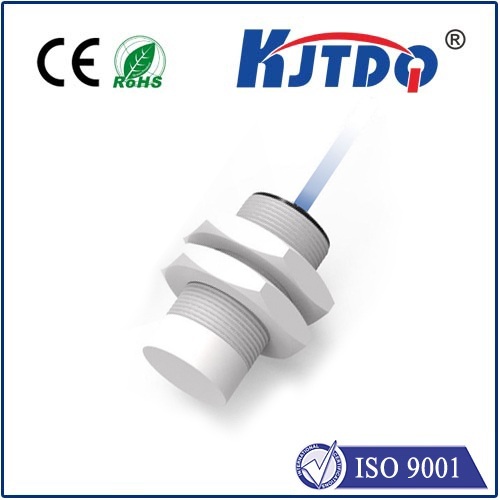
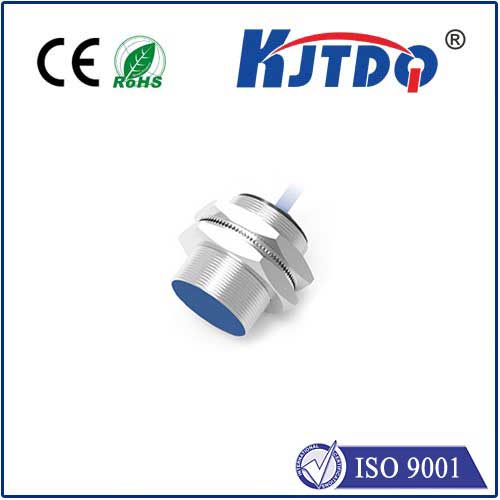
While conventional inductive proximity sensors excel at detecting ferrous and non-ferrous metals through changes in a magnetic field, they meet their match with non-conductive targets like plastic, wood, glass, liquids, powders, or even a human hand. That’s where the distinct capabilities of non-metal proximity sensors become indispensable. Primarily utilizing capacitive sensing technology, these devices unlock a vast array of detection possibilities previously inaccessible.
Understanding the core principle of capacitive proximity sensors reveals their power. They operate by generating an electrostatic field. When any object – regardless of whether it’s conductive or merely has a different dielectric constant than the surrounding air (which almost all materials do) – enters this field, it causes a measurable change in the sensor’s capacitance. This shift is precisely detected by the sensor’s internal circuitry, triggering its output signal. The fundamental relationship governing this is:
Capacitor Current (I) ∝ Capacitance © * Rate of Voltage Change (dV/dt)
Simply put, introducing an object alters ‘C’, leading to a detectable change in the current or the sensor’s oscillation characteristics. This principle enables reliable detection of diverse non-metals.
Why choose a non-metal proximity sensor over its inductive counterpart? The advantages are compelling:
The versatility of non-metal proximity sensors drives their adoption across a remarkably broad spectrum of industries:
Low Power Consumption & Miniaturization: Advancements in IC design have led to capacitive proximity sensors with remarkably low power requirements. This makes them exceptionally well-suited for battery-powered devices and portable electronics, enabling longer operational life where mains power is impractical. Coupled with ongoing miniaturization, this allows for integration into increasingly compact and power-sensitive applications like IoT sensors and wearable tech.
From the mundane magic of hands-free faucets to the complex orchestration of automated factories producing life-saving pharmaceuticals or our morning coffee, non-metal proximity sensors are indispensable enablers. By harnessing the power of capacitive fields to see beyond metals, they offer a unique blend of versatility, resilience, and non-contact operation. As technology progresses, driving lower power consumption and smaller footprints, we can anticipate these sensors finding even more ingenious applications, quietly but profoundly shaping the interaction between machines and the non-metallic world around us.