check
check

check

check
check
check
check
check

check

check
When you press the accelerator pedal, how does the engine precisely sense changes in rotational speed? Why do the numbers on the dashboard's tachometer jump in real time? Behind this lies a crucial component—the engine speed sensor. As the “nerve endings” of modern automotive powertrains, it builds a digital bridge between the engine control unit (ECU) and mechanical motion by collecting data thousands of times per second.
I. The Core Mission of the RPM Sensor
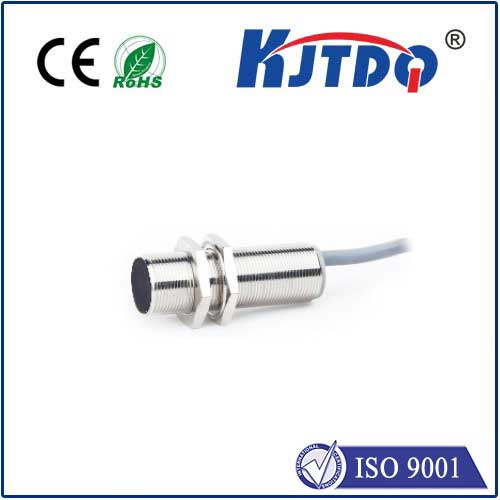
In the engine's precision operation, monitoring crankshaft position and rotational speed directly influences core control logic such as fuel injection volume, ignition timing, and turbocharger engagement. Traditional mechanical tachometers rely on physical connections to the drive shaft, while modern electronic RPM sensors use non-contact detection to convert rotational motion into electrical signals, reducing error rates to within ±1 rpm. Magnetoelectric sensors utilize the principle of variable reluctance. When a toothed target wheel passes the sensing probe, magnetic field changes generate an alternating voltage signal. These sensors offer advantages in high-temperature resistance (operating up to 150°C) and vibration tolerance, though signal strength weakens at low speeds. Hall-effect sensors detect magnetic field strength variations to output square wave signals, maintaining high precision even at idle speeds. They are widely adopted in direct-injection engines.
II. Performance Breakthroughs in Technological Evolution
With the implementation of China VI emission standards, sensor accuracy requirements have been elevated from the initial ±5% to ±0.5%. A German brand's newly developed dual-channel redundant sensor employs two independent signal output channels. Should the primary channel fail, it automatically switches to the backup channel, reducing failure rates by 72%. In material innovation, aluminum nitride ceramic encapsulation technology extends sensor temperature tolerance beyond 200°C, enabling successful application in turbocharged engine high-temperature environments. Experimental data from a Japanese manufacturer shows that the new ceramic substrate reduces signal drift to one-third that of traditional metal-encapsulated products during 100,000-kilometer endurance testing.
III. Typical Failure Symptoms and Diagnostic Logic
When sensors malfunction, engines may exhibit intermittent stalling, sluggish acceleration, or cold-start difficulties. Repair platform statistics indicate that 32% of P0335 engine fault codes (crankshaft position sensor failure) actually stem from wiring harness oxidation rather than sensor damage. Professional diagnostics require signal waveform analysis: Capture sensor output waveforms with an oscilloscope. A normal magnetic-electrical sensor should exhibit a sine wave with peak voltage increasing with RPM; a Hall-effect sensor should output a regular square wave. In one case, technicians identified waveform glitches, ultimately tracing them to abnormal clearance caused by 0.2mm axial displacement in the flywheel target wheel.
IV. Golden Rules for Maintenance
Regularly cleaning oil residue from sensor probe surfaces prevents 85% of premature failures. For sensors near oil pans, inspect O-ring seals every 30,000 km. Testing shows fluorocarbon rubber seals extend leak-proof life to 2.5 times that of standard nitrile rubber. Air gap adjustment is a critical installation technique. A U.S. vehicle maintenance manual explicitly stipulates: The gap between magnetic sensors and target wheels must be controlled between 0.5-1.5mm. When using non-magnetic feeler gauges for measurement, residual magnetism effects must be eliminated. Hall-effect sensors are sensitive to installation angle; deviations exceeding 5° may cause signal loss.
V. Innovation Directions in the Intelligent Era
In response to electrification trends, speed sensors are evolving toward multi-parameter integrated detection. A supplier's newly released smart sensor module simultaneously outputs three parameters—speed, vibration spectrum, and temperature—achieving a 10Mbps data transmission rate via CAN FD bus. In predictive maintenance, machine learning-based fault prediction models are gaining traction. By analyzing changes in harmonic components within speed signals, the system can issue bearing wear warnings 200 hours in advance. Field data from a commercial fleet demonstrates this technology reduces unplanned downtime by 41% and lowers maintenance costs by 28%. From mechanical to intelligent, the engine speed sensor has consistently served as the “gatekeeper” of the powertrain system. As we enjoy the precise power response of modern vehicles, we should not overlook the technological weight carried by this palm-sized component—it uses electronic pulses from the microscopic world to precisely map every detail of macroscopic mechanical motion.