check

check

check

check

check

check
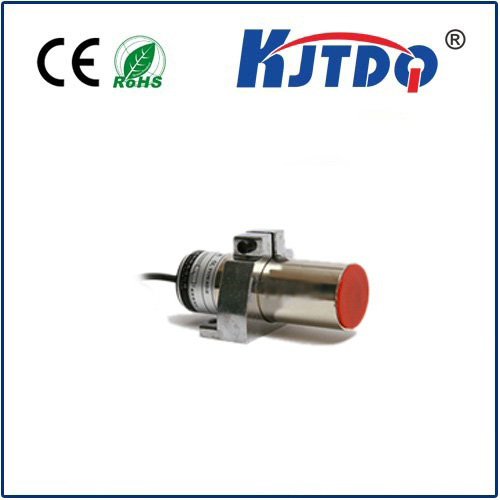
In the relentless world of industrial automation, where machinery operates under extreme pressures and within tight tolerances, the reliability of every component is non-negotiable. Sensor failure in a high-pressure environment isn't just an inconvenience; it can lead to catastrophic downtime, safety hazards, and significant financial loss. This is where precision engineering meets rugged durability, embodied in solutions like the KJTDQ BD3-P3-M14S High Pressure Proximity Sensor. Designed to perform flawlessly where others falter, this sensor represents a critical advancement for engineers and maintenance professionals seeking unwavering performance.
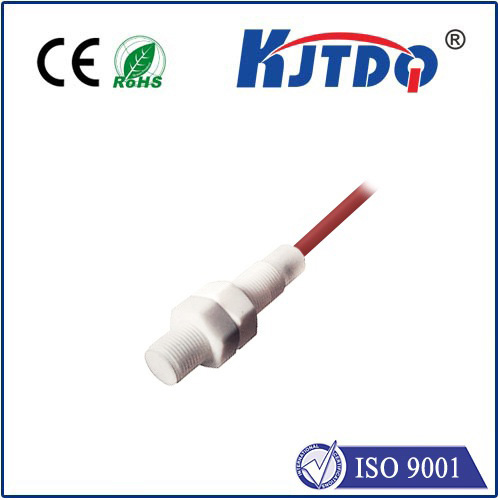
The core challenge in high-pressure applications—common in hydraulic systems, die-casting machines, plastic injection molding, and heavy-duty press lines—is the constant assault of intense physical forces. Standard inductive proximity sensors can deform, leak, or simply fail when subjected to sustained high pressure, compromising the entire control loop. The BD3-P3-M14S is engineered from the ground up to conquer this challenge. Its defining feature is a housing and sensing face constructed from high-grade, pressure-resistant stainless steel. This isn't merely a coating; it's a monolithic design that can withstand continuous exposure to pressures that would cripple conventional sensors, ensuring the integrity of the sensing chamber and the longevity of the internal electronics.
Beyond its robust physical construction, the sensor incorporates a fully-potted electronic module. This process involves encapsulating the circuit board in a solid compound, making it impervious to shock, vibration, and moisture ingress. This is crucial in environments where high-pressure lines may vibrate or where washdowns are necessary. The M14S threaded barrel design allows for quick and secure installation, providing a reliable mechanical seal. The sensing technology, typically based on a robust inductive principle, offers a stable switching point for metallic targets, ensuring repeatable detection of piston positions, valve closures, or part presence even when lubricants or minor contaminants are present.
Operational performance is where the BD3-P3-M14S truly proves its value. It delivers a consistent and precise switching signal, a fundamental requirement for the precise timing and sequencing critical in automated high-pressure processes. Whether it's confirming the end position of a hydraulic cylinder in a log splitter or detecting a mold plate in an injection molding machine, the sensor provides the control system with a trustworthy digital heartbeat. This reliability directly translates to reduced machine stoppages, fewer false triggers, and a lower total cost of ownership by minimizing unplanned maintenance and production rejects.
For system integrators and plant engineers, selecting the BD3-P3-M14S is a strategic decision for risk mitigation. Its application extends to any scenario where pressure ratings are a concern. This includes offshore equipment, mining machinery, and automotive manufacturing test rigs. By specifying a sensor built for high-pressure endurance, teams can design more resilient systems, simplify their spare parts inventory with a versatile component, and ultimately enhance overall plant safety and productivity. The sensor acts as a vigilant sentinel, ensuring that high-force operations proceed only when conditions are correctly confirmed.
In conclusion, navigating the demands of modern industry requires components that are not just adequate but exceptional. The KJTDQ BD3-P3-M14S High Pressure Proximity Sensor stands as a testament to targeted engineering, solving a specific and critical problem with elegant efficiency. It moves beyond being a simple detection device to become a foundational element for system reliability. For professionals who cannot afford compromise in their high-pressure applications, integrating this sensor is a clear step towards achieving greater operational certainty, safeguarding equipment, and ensuring a smooth, uninterrupted production flow.