check

check

check

check

check

check
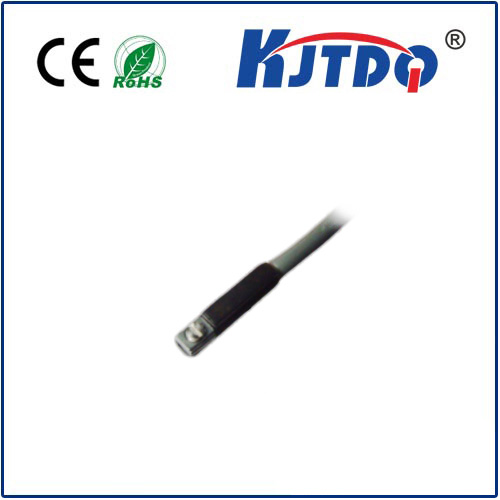
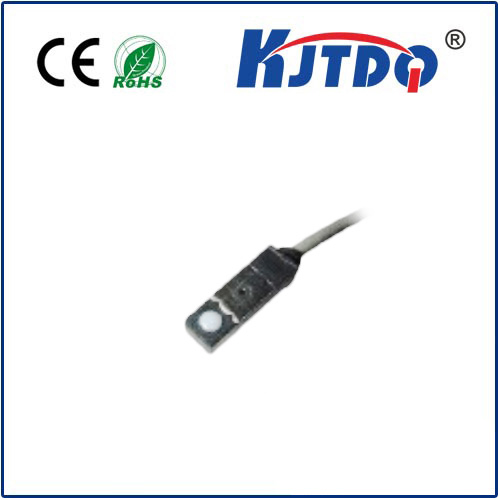
In industrial automation, harsh environments demand sensors that can withstand extreme pressures while delivering unwavering accuracy. The KGG13L3KPC High Pressure Proximity Sensor emerges as a robust solution engineered for reliability where others may fail. This comprehensive guide explores its core technology, standout features, and the critical applications it serves, providing a clear understanding of why it is a preferred choice for engineers and system integrators.
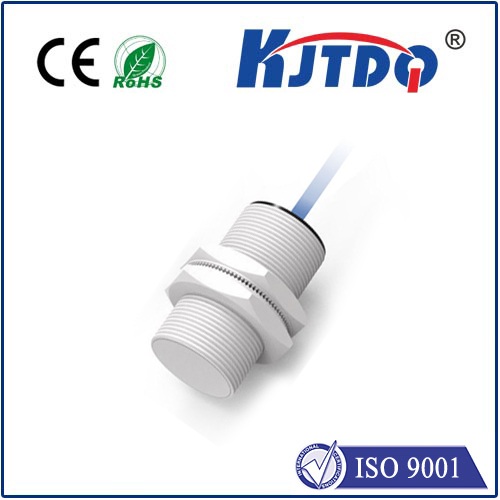
At its heart, the KGG13L3KPC is an inductive proximity sensor. It operates on a fundamental principle: generating an electromagnetic field from its sensing face. When a metallic target enters this field, eddy currents are induced within the target, causing a change in the sensor's internal oscillation amplitude. This change is detected by the circuitry, triggering a solid-state switching output. What sets the KGG13L3KPC apart is its specialized design to perform this function consistently under exceptionally high ambient pressures, a condition that can compromise standard sensors.
The defining characteristic of the KGG13L3KPC is its high-pressure resilience. Engineered with a reinforced housing and sealed construction, it is built to operate reliably in environments such as deep-sea equipment, high-pressure hydraulic systems, or pressurized vessel monitoring. This durability ensures signal integrity and prevents failure due to casing deformation or seal breaches. Alongside this, the sensor offers a stable sensing range, typically up to 13mm, providing a dependable detection distance for metallic objects. Its high switching frequency allows for the detection of rapidly moving parts, which is essential in dynamic production lines. Furthermore, features like short-circuit protection, reverse polarity protection, and an LED status indicator enhance its operational safety and simplify installation and troubleshooting.
The practical applications of the KGG13L3KPC are found in industries where pressure and reliability intersect. In offshore and subsea engineering, it is used for position feedback on remotely operated vehicles (ROVs), valve position sensing in underwater manifolds, and depth-related equipment monitoring. Within hydraulic press systems and injection molding machinery, it provides precise detection of piston or platen positions under intense fluid pressure, ensuring cycle accuracy and safety. The sensor also plays a vital role in the oil and gas sector, monitoring equipment within pressurized pipelines and drilling apparatus. Additionally, it finds use in specialized heavy machinery and automated test stands that simulate high-pressure conditions.
Selecting and installing the KGG13L3KPC requires attention to key specifications. Engineers must verify the sensor's rated pressure range against their application's maximum operating pressure. The supply voltage (commonly 10-30V DC), output type (typically PNP normally open or closed), and housing material (often stainless steel) must align with the control system and environmental conditions. Proper installation is straightforward but critical: ensuring the sensor is mounted securely, with the correct orientation and gap to the target, and that electrical connections are made according to the datasheet wiring diagram. For optimal performance in challenging settings, it is advisable to use shielded cables and secure cable glands to maintain the integrity of the pressure seal.
When compared to standard inductive sensors or alternative technologies like capacitive sensors, the KGG13L3KPC's value proposition is clear. Standard sensors may malfunction or have reduced lifespan under high pressure. While other technologies might detect non-metallic objects, they often lack the same combination of pressure tolerance, mechanical robustness, and cost-effectiveness for metallic target detection. The KGG13L3KPC fills this niche, offering a specialized tool that guarantees system uptime and reduces maintenance costs in critical high-pressure applications.
In conclusion, the KGG13L3KPC High Pressure Proximity Sensor is more than just a component; it is a reliability enabler for automation systems operating under duress. Its specialized design to withstand high ambient pressures, coupled with the proven reliability of inductive sensing, makes it an indispensable asset. For projects demanding faultless detection where pressure is a constant factor, integrating the KGG13L3KPC is a strategic decision that enhances system resilience, safety, and long-term operational efficiency.