check

check

check

check

check

check
In the relentless world of industrial automation, where machinery operates under extreme pressures and within tight tolerances, the failure of a single component can cascade into costly downtime, safety hazards, and production losses. This is where sensor reliability transcends from a feature to a fundamental requirement. The BHS002Y High Pressure Proximity Sensor emerges as a cornerstone technology, engineered specifically to deliver unwavering performance where conventional sensors falter. Its design philosophy centers on resilience, precision, and seamless integration, making it an indispensable asset for sectors like hydraulic systems, heavy machinery, die-casting, and high-pressure testing applications.
Traditional inductive or capacitive proximity sensors often reach their operational limits when confronted with environments where pressure ratings exceed 10 bar or where media like hydraulic oil, coolants, or compressed gases are present. The BHS002Y shatters these limitations. Its core innovation lies in a hermetically sealed, stainless-steel housing rated for exceptionally high pressures, often exceeding the thresholds found in standard industrial settings. This robust construction does more than just contain pressure; it acts as a formidable barrier against ingress from oils, coolants, and particulate matter, ensuring the internal electronics remain protected and functional. The sensing face is specifically designed to maintain stable detection characteristics even when submerged in or exposed to aggressive media, eliminating false triggers and signal drift that plague lesser sensors.
Precision is non-negotiable in automated processes. The BHS002Y delivers consistent and accurate detection of metallic targets, thanks to its advanced oscillator and evaluation circuitry. This translates to repeatable switching points, which is critical for applications such as monitoring piston position in hydraulic cylinders, confirming the closure of high-pressure valves, or detecting the presence of metal components in pressurized molding machines. The sensor provides a clear, binary signal—whether through a robust PNP or NPN output—enabling straightforward integration into existing Programmable Logic Controller (PLC) systems without the need for complex signal conditioning. This plug-and-play capability significantly reduces commissioning time and complexity.
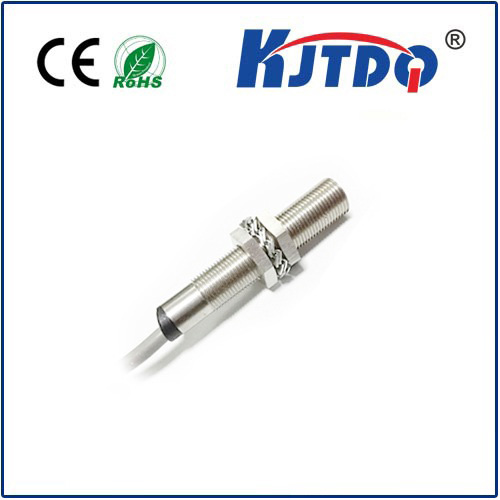
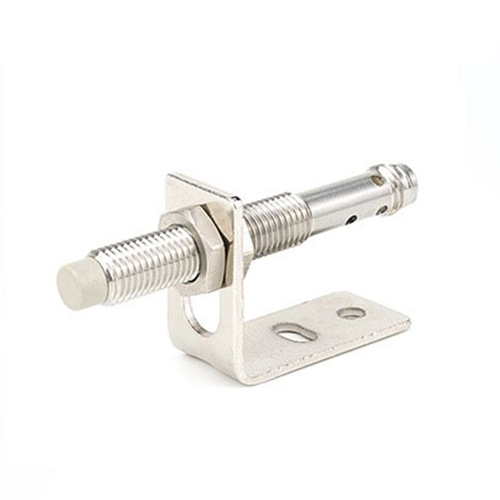
Beyond its core sensing function, the BHS002Y is built for longevity and ease of maintenance. The use of high-grade materials, including corrosion-resistant stainless steel, ensures a long operational life even in environments with high humidity, temperature fluctuations, and exposure to chemicals. Many models feature an LED status indicator, providing immediate visual confirmation of the sensor's operational state and output signal, which is invaluable for rapid troubleshooting. Its compact and often cylindrical form factor allows for installation in space-constrained locations, a common challenge in densely packed machinery. The sensor's design also typically incorporates protection against short-circuits, overload, and reverse polarity, safeguarding both the sensor and the control system from electrical faults.
The practical applications of the BHS002Y are vast and critical. In hydraulic power units, it reliably monitors cylinder end positions, preventing over-travel and damage. Within plastic injection molding or die-casting machines, it ensures molds are securely closed under immense pressure before the injection cycle begins, a vital safety and quality check. For high-pressure pumps and compressors, it can detect the presence of components or confirm valve states, contributing to system efficiency and preventing catastrophic failures. In test stands for automotive or aerospace components, where systems are subjected to extreme pressures, the BHS002Y provides the reliable feedback needed for accurate and safe testing procedures.
Selecting the right high-pressure sensor requires careful consideration of several parameters. Key specifications for the BHS002Y include its specific pressure rating (which should exceed the maximum operating pressure of the application), the sensing distance, the type of output (e.g., DC 3-wire), the operating voltage range, and its environmental protection rating (typically IP67 or higher). Ensuring compatibility with the target material (usually ferrous metals) and the ambient temperature range is also crucial. Consulting technical datasheets and, when necessary, application engineers, ensures the selected model is perfectly matched to the task, guaranteeing optimal performance and durability.
Ultimately, the BHS002Y High Pressure Proximity Sensor represents more than just a component; it is a strategic investment in operational integrity. It addresses the core challenges of modern, high-demand industrial applications by providing a blend of ruggedness, reliability, and precision that standard sensors cannot match. By eliminating a common point of failure in harsh environments, it enhances overall equipment effectiveness (OEE), reduces maintenance costs, and fortifies safety protocols. For engineers and system integrators tasked with building or maintaining systems where pressure is a constant factor, the BHS002Y offers a proven, dependable solution that ensures processes run smoothly, efficiently, and without interruption.