check

check

check

check

check

check
In the intricate world of industrial automation, the reliability of a single component can dictate the efficiency of an entire production line. The OBE500-R3F-S photoelectric switch stands as a critical component in this ecosystem, engineered to deliver unwavering performance in diverse and demanding environments. This comprehensive guide delves into the core features, operational principles, and practical applications of this advanced sensor, providing essential insights for engineers and system integrators.
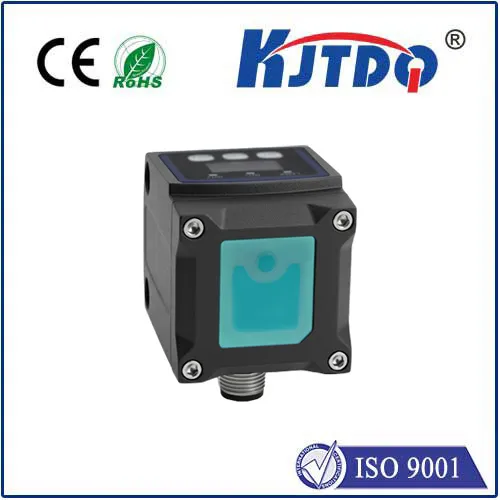
At its heart, the OBE500-R3F-S is a retro-reflective photoelectric sensor. This design utilizes a built-in light emitter and receiver. The emitter projects a modulated light beam towards a specialized reflector. When an object interrupts this beam, the light fails to return to the receiver, triggering a swift output signal change. The "R3F" designation typically indicates a focused, precise sensing mode, often with a fixed sensing distance and a robust housing rated for industrial durability. The "S" suffix commonly relates to specific output configurations, such as a solid-state NPN or PNP transistor switch, ensuring seamless compatibility with programmable logic controllers (PLCs) and other standard control systems.
The operational principle hinges on advanced optoelectronics. Unlike through-beam sensors requiring separate units, or diffuse sensors relying on object reflectivity, the retro-reflective model offers an optimal balance. It provides a longer sensing range than diffuse types and simplifies installation compared to through-beam setups. The OBE500-R3F-S often incorporates features like background suppression or precise optical alignment, enabling it to detect objects reliably regardless of surface color, texture, or ambient light interference. This makes it exceptionally versatile for tasks requiring high positional accuracy.
Key technical specifications define its capability. Expect a sensing distance tailored for mid-range applications, often up to several meters with a reflector. Its response time is remarkably fast, capable of detecting objects moving at high speeds, which is crucial for packaging, sorting, and assembly lines. The housing is invariably rugged, featuring an IP67 or higher protection rating, making it resistant to dust ingress and water jets. This resilience allows deployment in challenging settings like woodworking, material handling, and automotive manufacturing, where exposure to particulates, coolants, or vibrations is common.
Practical applications for the OBE500-R3F-S are extensive across factory floors. It is indispensable for precise object detection on conveyor belts, ensuring products are correctly positioned for robotic pick-and-place operations. In packaging machinery, it verifies the presence of boxes or bottles before sealing or labeling. It acts as a safety interlock, confirming guard doors are closed before activating heavy machinery. Furthermore, it can count items, control stacking height, and detect jams in automated systems. Its reliability in distinguishing objects from background structures prevents false triggers, a common pain point in automated logistics and warehousing.
Selecting and installing the sensor correctly maximizes its lifespan and accuracy. Critical considerations include the required sensing distance, the size and material of the target object, and the environmental conditions. Mounting must be secure to minimize vibration-induced misalignment. The reflector should be positioned squarely opposite the sensor, free from obstructions and highly reflective stray surfaces that could cause erratic behavior. Regular maintenance involves keeping the lens clean from oil, dust, or debris to maintain optimal optical performance. Understanding the wiring diagram—connecting the brown wire (typically +V), blue wire (0V), and black wire (output signal) to the correct power supply and load—is fundamental for safe operation.
Compared to alternative sensing technologies like inductive proximity sensors (which only detect metals) or capacitive sensors, the OBE500-R3F-S offers distinct advantages for non-metallic object detection over longer ranges. Its non-contact nature eliminates mechanical wear, ensuring a long operational life with minimal downtime. When integrated into a networked industrial environment, it contributes valuable real-time data for process monitoring and predictive maintenance strategies.
In conclusion, the OBE500-R3F-S photoelectric switch is more than just a component; it is a cornerstone of modern industrial sensing. Its precision, durability, and adaptability solve complex detection challenges, enhancing both productivity and safety. For professionals designing or maintaining automated systems, mastering the implementation of such sensors is key to building resilient and intelligent manufacturing operations. By leveraging its capabilities, businesses can achieve new levels of operational consistency and quality control.