check

check

check

check
check
check
check
check

check

check
In the intricate world of industrial automation, the reliability of a single component can dictate the efficiency of an entire production line. Among these critical components, photoelectric switches stand as silent sentinels, ensuring precision, safety, and seamless operation. The RL105-3063PK photoelectric switch emerges as a noteworthy solution in this domain, offering a blend of durability and advanced sensing technology designed for demanding environments. This guide delves into the features, applications, and benefits of this specific model, providing essential insights for engineers and procurement specialists.
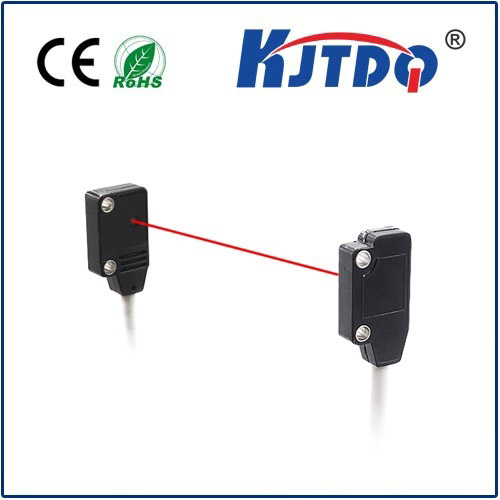
The RL105-3063PK is a diffuse reflective photoelectric sensor. This operating principle means it detects objects by emitting a light beam (typically infrared or visible red) and measuring the light reflected back from the target itself. Unlike through-beam sensors that require separate emitter and receiver units, this all-in-one design simplifies installation and reduces wiring complexity. The "PK" suffix often denotes a specific housing style, connector type, or output configuration, making it crucial to verify datasheet specifications for exact parameters like sensing range, light source, and housing material.
A primary strength of the RL105-3063PK lies in its construction. Engineered for industrial settings, it typically features a robust housing resistant to dust, moisture, and mechanical impact. Many models in this category boast an IP67 protection rating, meaning they are dust-tight and can withstand temporary immersion in water. This makes the switch suitable for challenging environments such as packaging machinery, material handling conveyors, and automotive assembly plants where exposure to oil mist, coolant, or debris is common.
The sensing performance of the RL105-3063PK is tailored for consistent detection. Key operational characteristics often include a adjustable sensing distance, allowing technicians to fine-tune the sensor for specific object sizes and colors. Advanced models may incorporate background suppression technology, which helps ignore distant objects or the background, focusing detection only within a defined zone. This is invaluable for applications like detecting transparent bottles on a conveyor or ensuring a robot gripper has correctly picked up a component. The output is typically a solid-state transistor (PNP or NPN), providing a fast, bounce-free signal to programmable logic controllers (PLCs) or other control systems.
Practical applications for the RL105-3063PK photoelectric switch are vast across multiple industries. In manufacturing, it is used for object presence detection, counting parts on a line, verifying the correct positioning of components, and triggering robotic actions. In logistics and packaging, it ensures carton presence for labeling machines, controls fill levels, and detects jams. Its reliability also makes it a fit for safety interlocks on machinery guards, ensuring a door is closed before operation commences.
Selecting and implementing the RL105-3063PK requires attention to detail. Engineers must consider the sensing range required for their application, the size and color of the target objects, and the environmental conditions. Proper alignment, although simpler than through-beam setups, is still crucial for diffuse sensors. Mounting the sensor at the correct angle and distance ensures optimal reflectivity from the target. Regular maintenance, such as cleaning the lens from accumulated dust or grime, preserves long-term accuracy and prevents false triggers.
When compared to other sensing technologies like inductive proximity sensors (which only detect metals) or ultrasonic sensors, the RL105-3063PK photoelectric switch offers distinct advantages for non-metallic object detection. It provides faster response times than ultrasonic sensors and can detect a wider variety of materials, including plastic, wood, glass, and liquids, provided there is sufficient reflectivity. This versatility is a key driver for its widespread adoption.
In conclusion, the RL105-3063PK represents a specific, application-driven tool in the photoelectric sensing arsenal. Its diffuse reflective design, rugged construction, and adaptable sensing capabilities make it a dependable choice for automating repetitive detection tasks with high reliability. For system integrators and maintenance teams, understanding its specifications and optimal use cases is fundamental to designing robust and fault-resistant automated systems. By choosing a well-engineered component like this, businesses can minimize downtime, enhance product quality, and maintain a smooth, efficient operational flow.