check

check

check

check
check
check
check
check

check
check
In the world of industrial automation and machinery control, precision and reliability are not just preferences; they are absolute necessities. Among the myriad of components that ensure seamless operation, the photoelectric switch stands out as a critical sensor for non-contact detection. The E3F-DS10N12 photoelectric switch, in particular, has established itself as a cornerstone in this domain. This comprehensive guide delves into the features, applications, and technical specifications of this robust sensor, explaining why it is a preferred choice for engineers and system integrators globally.
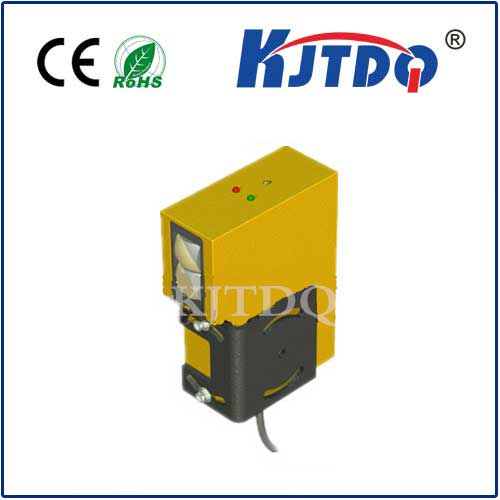
At its core, the E3F-DS10N12 is a diffuse reflective photoelectric sensor. This means it operates by emitting a beam of light from its built-in LED and detecting the light that is reflected back from a target object. Unlike through-beam sensors that require separate emitter and receiver units, this model integrates both functions into a single, compact housing. This design simplifies installation and reduces wiring complexity. The "N12" in its model number typically indicates a 12mm sensing distance, a common and versatile range for many mid-range detection tasks. The sensor is designed to detect objects regardless of their material, color, or surface texture, although highly reflective or dark surfaces may require adjustments to the sensing sensitivity, a feature often available via a potentiometer on the unit.
The construction of the E3F-DS10N12 is geared towards harsh industrial environments. It commonly features a rugged ABS or metal housing with an IP67 protection rating. This ingress protection rating signifies complete protection against dust and the ability to withstand temporary immersion in water up to 1 meter deep. This makes it suitable for washdown areas in food and beverage processing, outdoor applications, or any setting exposed to dust, oil, or moisture. The sensor typically operates on a wide range DC voltage, such as 10-30V DC, ensuring compatibility with standard industrial power supplies. Its output is usually in the form of an NPN transistor, a common configuration that provides a sinking output signal compatible with most programmable logic controllers (PLCs) and control systems.
The applications for the E3F-DS10N12 are vast and varied. In packaging lines, it is used to detect the presence of boxes on a conveyor belt, triggering the next step in the process, such as labeling or sealing. In assembly machinery, it can verify if a component is correctly placed before a robotic arm proceeds. It is instrumental in material handling for counting products, monitoring fill levels in bins, or ensuring proper positioning. The automotive industry relies on such sensors for part verification and safety interlocking. Its reliability in detecting small objects and its fast response time make it indispensable for maintaining high-speed production efficiency without compromising safety or accuracy.
When integrating the E3F-DS10N12 into a system, several best practices ensure optimal performance. First, correct mounting is crucial. The sensor should be securely fixed to minimize vibration, which can cause false triggering. The sensing face must be positioned perpendicular to the expected path of the target object for maximum reflectivity. Environmental factors like ambient light can interfere with performance. While these sensors are designed to resist such interference, installing light shields or using models with modulated LED light (which the E3F-DS10N12 often employs) can further enhance stability. Regular maintenance, including cleaning the lens from dust or grime, is simple yet vital for long-term, trouble-free operation. Understanding the load specifications and ensuring proper wiring according to the datasheet—connecting the brown wire to positive voltage, the blue wire to negative, and the black wire as the output signal—is fundamental.
Choosing the E3F-DS10N12 over other sensing technologies like inductive proximity sensors or ultrasonic sensors comes down to the application's specific needs. Photoelectric sensors excel at detecting non-metallic objects, which inductive sensors cannot do. They also offer longer sensing distances compared to many inductive models. Compared to ultrasonic sensors, photoelectric switches like the E3F-DS10N12 generally have a faster response time and are less affected by temperature variations or air turbulence, though they may struggle with transparent objects unless specifically tuned.
In conclusion, the E3F-DS10N12 photoelectric switch represents a perfect blend of durability, versatility, and precision. Its robust design allows it to thrive in demanding conditions, while its straightforward principle of operation ensures reliable performance in countless detection scenarios. For engineers seeking a proven, cost-effective solution for object detection, part presence verification, or counting applications, this sensor provides a dependable foundation. By adhering to proper installation and maintenance guidelines, the E3F-DS10N12 will deliver consistent, accurate sensing, contributing significantly to the efficiency and reliability of any automated system it serves.