check

check

check

check
check
check
check
check

check
check
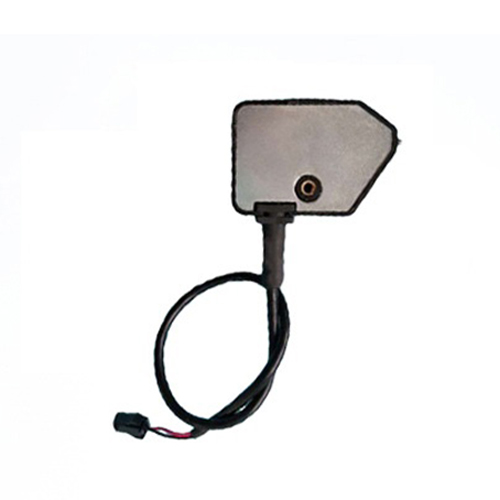
In the world of industrial automation and machinery control, precision and reliability are non-negotiable. The E3JK-DN12-C photoelectric switch stands as a cornerstone component for countless applications demanding accurate object detection. This versatile sensor operates on a fundamental yet powerful principle: it emits a beam of light, typically infrared, and detects changes in the received light to sense the presence or absence of an object. Its "through-beam" design, where the emitter and receiver are separate units, offers one of the most reliable and long-range sensing solutions available, making it indispensable for conveyor systems, packaging machinery, and safety interlocks.
What sets the E3JK-DN12-C apart in a crowded market is its robust construction and consistent performance. Housed in a durable, compact body, it is built to withstand the harsh environments commonly found in factories—resistant to dust, moisture, and vibration. The "DN12" designation often refers to a 12mm sensing distance or lens diameter, a common and practical size for general-purpose detection tasks. Users benefit from its straightforward installation and alignment, thanks to a clear indicator LED that signals both power status and output activation. This immediate visual feedback drastically reduces setup time and troubleshooting, ensuring minimal downtime.
The operational flexibility of this photoelectric sensor is a key driver of its widespread adoption. It typically features a selectable light-on/dark-on mode, allowing it to be configured to output a signal either when the light beam is received (dark-on) or when it is interrupted (light-on). This adaptability lets engineers tailor the sensor's behavior to the specific logic of their control system, whether it's a PLC, relay, or microcontroller. Furthermore, its fast response time enables the detection of high-speed objects on fast-moving production lines, a critical requirement for maintaining efficiency and product quality.
When integrating the E3JK-DN12-C into a system, proper consideration of its electrical characteristics is vital. It commonly operates on a 10-30V DC supply, making it compatible with standard industrial control voltages. The output is often in the form of an NPN or PNP transistor (sourcing or sinking), which interfaces seamlessly with programmable logic controllers (PLCs). Ensuring correct wiring—connecting the brown wire to positive voltage, the blue wire to common negative, and the black wire as the output signal—is a fundamental step for safe and reliable operation. Environmental factors like ambient light, target material, and background surface must also be evaluated during installation to prevent false triggers and ensure stable sensing.
Beyond basic presence detection, the E3JK-DN12-C enables more advanced automation functions. It can be used for counting products on a line, positioning items for robotic pick-and-place, verifying that a part has been ejected from a mold, or acting as a safety curtain to halt machinery when a beam is broken. Its reliability translates directly into reduced waste, fewer machine stoppages, and enhanced overall equipment effectiveness (OEE). For maintenance teams, the sensor's simplicity and durability mean lower lifetime costs and fewer spare parts to inventory.
In conclusion, the E3JK-DN12-C photoelectric switch is more than just a component; it is a fundamental enabler of modern automated processes. Its blend of durability, precision, and ease of use makes it a trusted choice for engineers and technicians across industries. By providing a dependable "yes" or "no" signal about the physical world, it forms a critical link between mechanical actions and electronic control, driving productivity and innovation on the factory floor. Selecting the right sensor, like the E3JK-DN12-C, is a strategic decision that underpins the reliability and intelligence of any automated system.