check
check
check
check
check
check
In the rapidly evolving landscape of industrial automation, precision is not merely a desirable attribute—it is an absolute necessity. The demand for reliable, accurate, and robust sensing technology has never been higher, driving innovation in components that form the backbone of modern manufacturing and quality control systems. Among these critical components, the OD1-B035H15U25 laser sensor stands out as a premier solution, engineered to meet the stringent demands of diverse industrial applications.
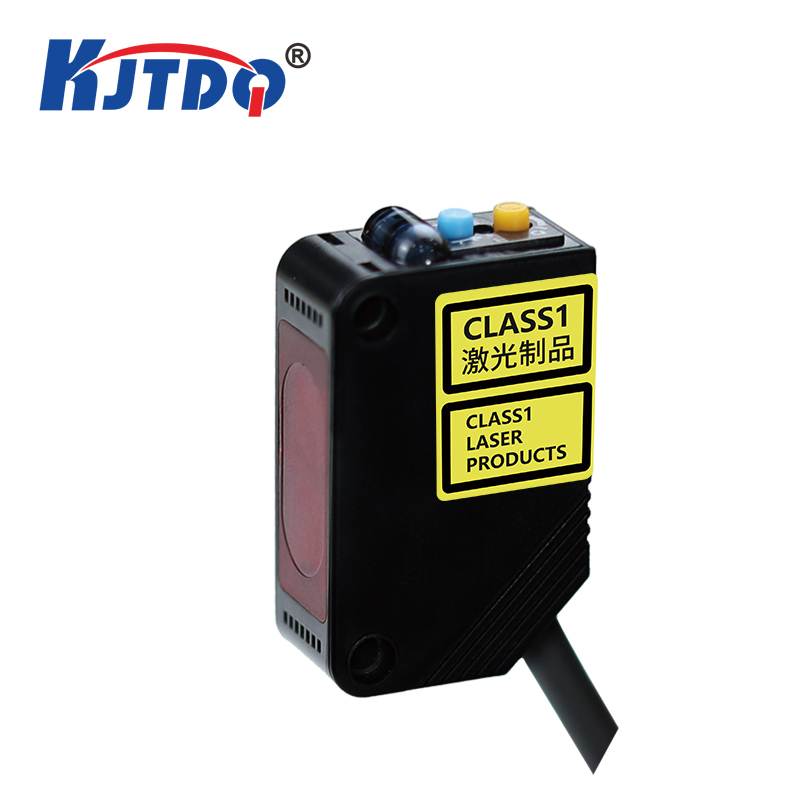
The OD1-B035H15U25 is a state-of-the-art laser sensor designed for high-precision distance measurement and object detection. Its core functionality leverages advanced laser triangulation principles. The sensor emits a focused laser beam onto a target surface. The reflected light is then captured by a high-resolution receiver element within the sensor. By precisely calculating the angle of the reflected beam, the sensor's internal processor determines the exact distance to the target with exceptional accuracy. This method allows for non-contact measurement, which is crucial for inspecting delicate surfaces, monitoring fast-moving objects, or operating in environments where physical contact could cause contamination or damage.
Key technical specifications of the OD1-B035H15U25 underscore its capability. It typically offers a measuring range suitable for close-to-mid-range applications, with a resolution in the micrometer range, ensuring that even the most minute variations are detected. The response time is exceptionally fast, enabling integration into high-speed production lines without becoming a bottleneck. Furthermore, it is built with industrial-grade durability, often featuring robust housing rated for IP67 protection against dust and water ingress, ensuring reliable operation in harsh factory conditions involving coolant, oil mist, or vibration.
The practical applications for this sensor are vast and varied. In automated assembly lines, it is indispensable for precise positioning of robotic arms, verifying the presence and correct placement of components. In the electronics industry, it can measure the height of solder paste or the thickness of circuit boards with micron-level precision. Within the automotive sector, it facilitates gap and flush measurement between body panels, a critical factor in vehicle quality and aesthetics. Logistics and packaging systems utilize such sensors for accurate box dimensioning, palletizing, and level detection in silos. Its versatility also extends to 3D profiling and contour scanning, providing valuable data for reverse engineering and quality assurance.
Integrating the OD1-B035H15U25 into an existing control system is typically straightforward. It commonly features multiple output options, such as analog voltage/current, digital switches (NPN/PNP), and serial communication interfaces like RS-422 or IO-Link. The IO-Link capability, in particular, offers significant advantages for Industry 4.0 environments. It allows for seamless parameter setting, real-time diagnostics, and condition monitoring directly from the PLC, simplifying maintenance and reducing downtime. Many models also come with intuitive configuration software, enabling engineers to easily set measurement windows, thresholds, and filtering parameters without complex programming.
When selecting a laser sensor like the OD1-B035H15U25, several environmental and target-specific factors must be considered to ensure optimal performance. The color, reflectivity, and surface texture of the target object can influence the sensor's reading. Highly reflective or glossy surfaces may require specific calibration or the use of a diffused laser model to avoid signal saturation. Conversely, dark or absorbent materials might necessitate a sensor with higher output power. Ambient light interference, especially from strong industrial lighting, is mitigated through sophisticated optical designs and modulation techniques inherent in high-quality sensors.
Compared to alternative technologies such as ultrasonic or inductive sensors, laser sensors provide superior accuracy and a much smaller, more focused measurement spot. This allows for inspecting very small features or distinguishing between closely spaced objects. While the initial investment might be higher than some other sensor types, the return on investment is realized through improved product quality, reduced material waste, enhanced production speed, and lower rejection rates.
In conclusion, the OD1-B035H15U25 laser sensor represents a critical tool for engineers and system integrators aiming to push the boundaries of automation efficiency and quality control. Its blend of high precision, speed, robustness, and smart connectivity features makes it a future-proof choice for modern industrial applications. By enabling accurate, non-contact measurement in challenging environments, it helps build smarter, more responsive, and more reliable automated systems, directly contributing to operational excellence and competitive advantage in the global market.