check
check
check
check
check
check
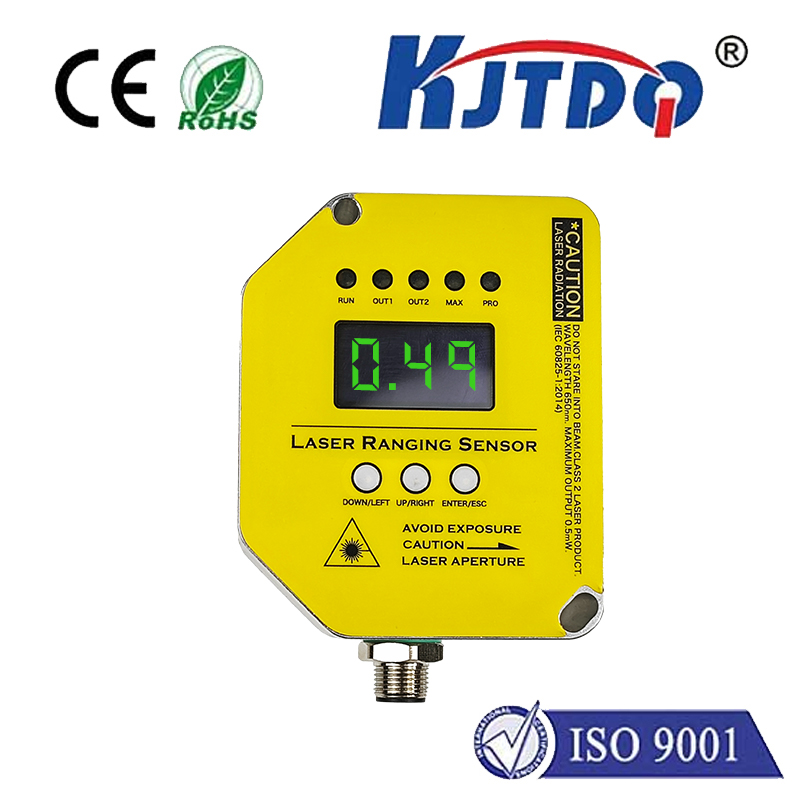
In the rapidly evolving landscape of industrial automation, the demand for sensors that deliver unwavering accuracy, reliability, and durability has never been higher. The PRO2-N100B25A1 laser sensor emerges as a pivotal solution, engineered to meet the rigorous demands of modern manufacturing, logistics, and quality control environments. This device represents a significant leap in sensing technology, offering a blend of high performance and practical functionality that addresses core challenges in automated systems.
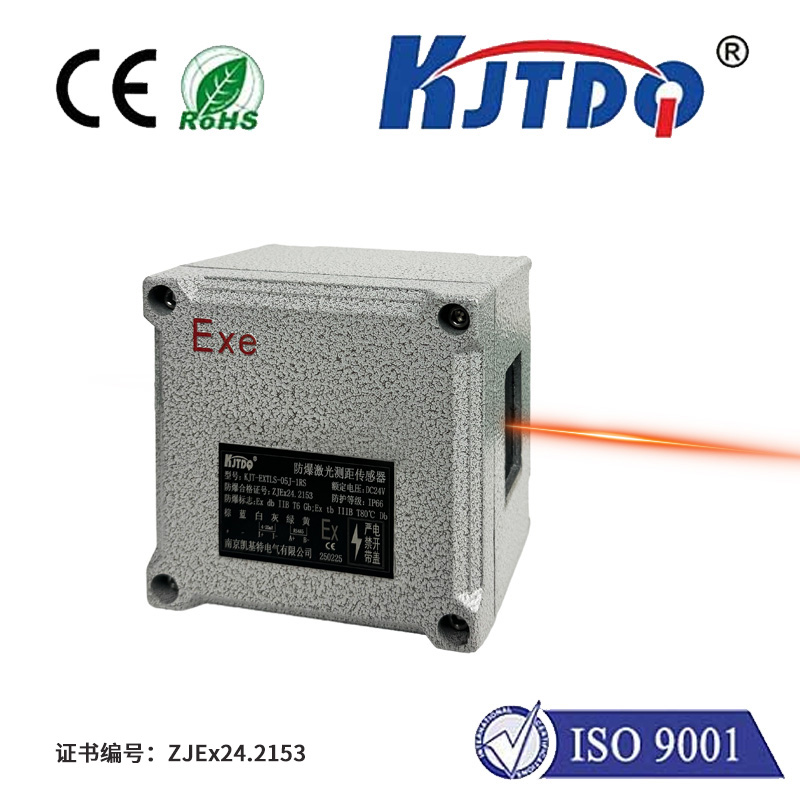
At its core, the PRO2-N100B25A1 is a diffuse-reflective laser sensor designed for precise distance measurement and object detection. Its operation is based on the principle of laser triangulation. The sensor emits a focused, visible red laser beam onto a target object. The light reflected from the object's surface is then captured by a high-resolution receiving element within the sensor. By calculating the angle of the reflected beam, the sensor's internal processor can determine the exact distance to the object with exceptional accuracy. This method allows for non-contact measurement, which is crucial for applications involving delicate, hot, or fast-moving items where physical contact could cause damage or inaccuracies.
One of the standout features of the PRO2-N100B25A1 is its impressive measurement range and resolution. With a sensing distance of up to 100mm and a high repeatability, it can detect minute variations in position or height. This capability is indispensable in assembly line tasks such as verifying component presence, checking fill levels in containers, or controlling the precise positioning of robotic arms. The sensor's compact and robust housing, typically rated with a high IP degree of protection, ensures stable operation even in challenging conditions characterized by dust, moisture, or mechanical vibrations commonly found in industrial settings.
Integration into existing control systems is streamlined through multiple output options. The sensor commonly provides both analog (e.g., 4-20mA, 0-10V) and discrete (PNP/NPN switch) outputs. This flexibility allows it to communicate measurement values directly to Programmable Logic Controllers (PLCs), human-machine interfaces (HMIs), or data acquisition systems. For instance, in a packaging line, the analog output can continuously relay the height of stacked products, enabling real-time adjustments, while a switch output can trigger an alarm if a product is missing from a conveyor belt.
The practical applications of the PRO2-N100B25A1 laser sensor are vast and varied. In the automotive sector, it is used for gap and flush measurement between body panels, ensuring premium build quality. In electronics manufacturing, it verifies the precise placement of surface-mount devices on circuit boards. Within the pharmaceutical industry, it monitors the fill level of vials and bottles with high hygiene standards. Furthermore, in logistics automation, these sensors facilitate dimensioning systems for parcels, optimizing storage and shipping costs.
Beyond basic detection, advanced models in this series often incorporate intelligent functions. Features like teach-in programming allow for quick and easy configuration of switching points directly on the device without a PC. Background suppression technology enhances performance by ignoring reflections from shiny backgrounds or interfering objects, focusing solely on the target. This intelligence reduces setup time and minimizes false triggers, leading to higher overall equipment effectiveness (OEE).
Selecting the right sensor involves considering several factors. The nature of the target object—its color, material, and surface texture—can influence the sensor's performance. While laser sensors generally perform well on a wide variety of surfaces, highly reflective or absorbent materials may require specific adjustments or testing. Environmental factors such as ambient light, temperature extremes, and potential contaminants must also be evaluated against the sensor's specifications to guarantee long-term reliability.
Maintenance of the PRO2-N100B25A1 is typically minimal, thanks to its solid-state design with no moving parts. Regular cleaning of the lens to remove dust or debris is usually sufficient to maintain optimal performance. Its longevity and low failure rate contribute to a reduced total cost of ownership, minimizing unplanned downtime—a critical factor in continuous production environments.
In conclusion, the PRO2-N100B25A1 laser sensor stands as a testament to the precision required in today's automated world. It transcends being merely a component; it is an enabler of efficiency, quality, and innovation. By providing accurate, non-contact measurements in real-time, it empowers engineers and system integrators to build smarter, more responsive, and more reliable automation solutions. As industries continue to push the boundaries of what's possible, tools like the PRO2-N100B25A1 will remain at the forefront, delivering the measurable data that drives progress and competitive advantage.