check

check

check

check

check

check
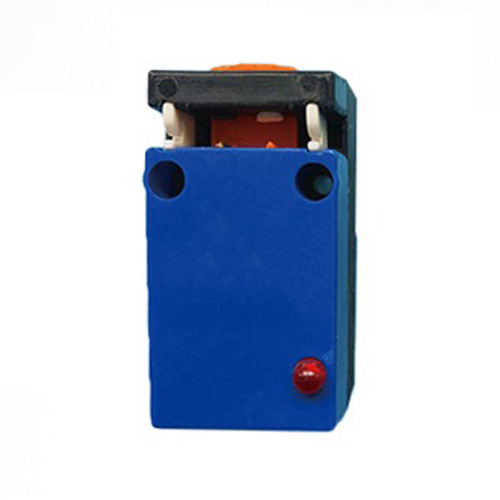
In the demanding world of industrial automation, achieving consistent and reliable measurement is not just a goal—it's a fundamental requirement for efficiency, quality control, and safety. The DL100-23HA2110 laser sensor emerges as a pivotal component in this landscape, offering a blend of high precision, robust construction, and versatile application potential that addresses the core needs of modern manufacturing and process control.
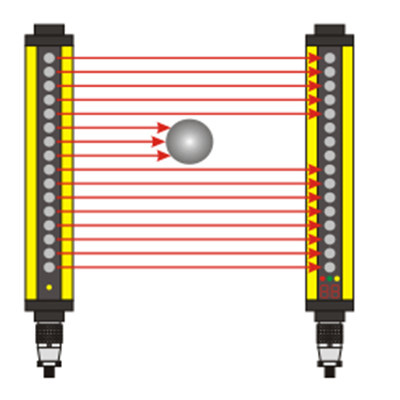
At its heart, the DL100-23HA2110 is a through-beam type laser sensor. This design involves separate units for the transmitter and the receiver. The transmitter projects a focused, coherent laser beam, which is then detected by the receiver positioned opposite. The core measurement principle is straightforward yet exceptionally effective: an object passing between the two units interrupts the beam. This interruption is detected with extreme accuracy, allowing for precise detection of presence, position, or counting. The "23HA2110" designation typically refers to a specific model configuration, often detailing the sensing distance, output type, and connection specifics, making it suitable for integration into standardized control systems.
The advantages of utilizing a laser sensor like the DL100-23HA2110 are numerous. First and foremost is its unparalleled precision. The collimated laser beam provides a sharp, well-defined detection point, enabling the detection of very small objects or precise edges that might be missed by diffuse-reflection or ultrasonic sensors. This is crucial in applications like wafer handling in semiconductor fabrication or precise part placement in assembly lines.
Secondly, its long sensing range and stability are significant benefits. Unlike photoelectric sensors that can be affected by ambient light or color variations of the target, the coherent light of a laser beam maintains its integrity over longer distances and is less susceptible to such interferences. This makes the DL100-23HA2110 ideal for applications where the sensor needs to be mounted away from the target area for protection or due to space constraints, such as in high-temperature environments or on large machinery.
Furthermore, the response time of laser sensors is exceptionally fast. The near-instantaneous detection of the beam interruption allows for high-speed counting and sorting operations. In packaging lines, for instance, this sensor can accurately count products moving at high velocities on a conveyor belt without missing a single item, ensuring accurate inventory and packaging.
Practical applications for the DL100-23HA2110 are vast across various industries. In automotive manufacturing, it is used for precise gap and flush measurement between body panels, ensuring build quality. In the electronics industry, it verifies the presence of tiny components on circuit boards. In logistics and warehousing, it facilitates high-speed parcel dimensioning and sorting. Its robust housing, often designed to meet IP67 ratings for dust and water resistance, ensures reliable operation even in harsh industrial environments, from machine shops to food processing plants.
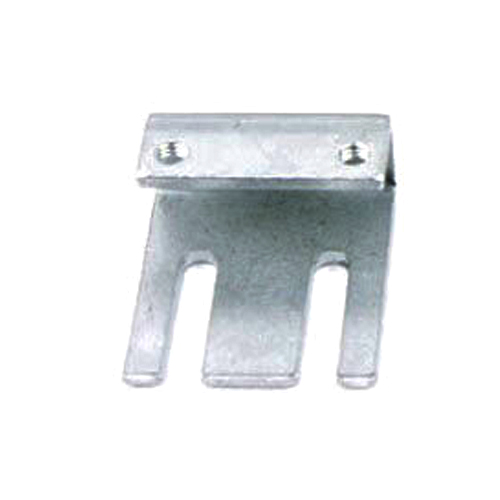
Integration is typically straightforward. The sensor provides clear digital output signals (like NPN or PNP) that connect directly to Programmable Logic Controllers (PLCs), industrial PCs, or other control systems. This plug-and-play capability minimizes setup time and complexity. When installing the DL100-23HA2110, proper alignment of the transmitter and receiver is critical for optimal performance. Mounting brackets designed for stability and fine adjustment are recommended. Regular maintenance involves keeping the lenses clean from dust and debris to prevent false signals or reduced performance.
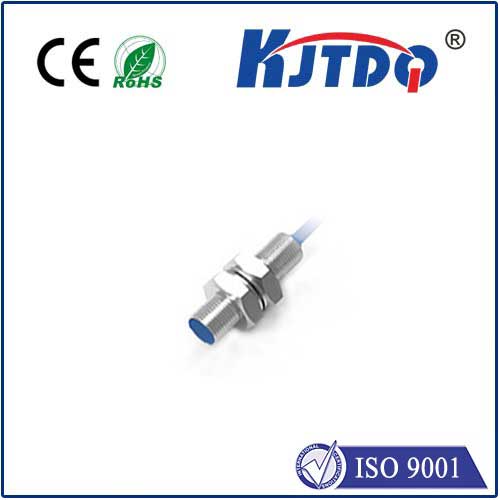
Compared to alternative sensing technologies, the DL100-23HA2110 laser sensor holds a distinct position. While inductive or capacitive sensors are excellent for metal or material-specific detection at close range, they lack the stand-off distance and precision for non-contact, long-range applications. Diffuse-reflection photoelectric sensors are simpler to install as they require only one unit, but their effective range is shorter and their readings can be influenced by the color and surface texture of the target object. Ultrasonic sensors are great for distance measurement and detecting transparent objects, but they are generally slower and can be affected by temperature gradients or air turbulence.
In conclusion, the DL100-23HA2110 laser sensor represents a critical tool for engineers and system integrators seeking to enhance automation processes. Its combination of pinpoint accuracy, long-range capability, high speed, and environmental robustness makes it a reliable solution for countless detection and measurement challenges. By enabling more precise control and providing reliable data, it contributes directly to improved product quality, reduced waste, and increased overall operational efficiency in today's competitive industrial arena. Selecting the right sensor, such as this model, is a strategic decision that underpins the success of automated systems.