sensor photoelectric sensor
- time:2025-09-15 08:34:51
- Click:0
The Unseen Eyes of Industry: Mastering Photoelectric Sensing Technology
Photoelectric Sensors: The Invisible Guiding Light of Modern Automation
Imagine a production line humming with activity. Bottles zip by, filled and capped. Packages slide into place for sealing. Robots move with precision. What prevents chaos? Often, it’s an unassuming device emitting an invisible beam of light: the photoelectric sensor. These ubiquitous and remarkably versatile components act as the eyes of countless automated systems, detecting presence, absence, position, distance, and color with incredible speed and reliability, forming a fundamental pillar of modern industrial automation.
Beyond the Basic Beam: How Photoelectric Sensors Define Detection
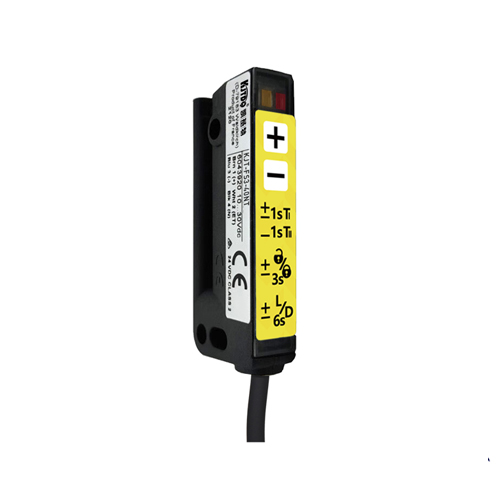
At their essence, photoelectric sensors operate on a brilliantly simple principle: they use light to detect objects. They consist minimally of an emitter (to produce a light beam, often infrared, visible red, or laser) and a receiver. Their magic lies in interpreting what happens to that light beam when an object is present. This seemingly elementary function translates into immense practical power.
Unlike their mechanical switch predecessors, photoelectric sensors offer non-contact detection. This means no physical touch is needed, eliminating wear and tear, reducing maintenance, and enabling detection of fragile or delicate objects. Their high-speed response allows them to track objects moving at velocities impossible for mechanical components, critical for high-throughput lines.
Navigating the Spectrum: Core Operation Modes Unveiled
Not all photoelectric sensors work the same way. The deployment method determines their capabilities and limitations. Understanding these modes is key to selecting the right tool for the job:
- Through-Beam (Opposed Mode): This is the heavyweight champion for long-range detection and reliability. The emitter and receiver are separate units facing each other. The object is detected when it interrupts the light beam traveling directly from emitter to receiver. This mode offers the longest sensing distances (easily several meters) and is highly immune to target surface characteristics, color, or finish. However, installing two separate units requires precise alignment on opposite sides of the target path.
- Retro-Reflective Mode: Here, both emitter and receiver are housed in a single unit. The emitted light beam is directed towards a specially designed retroreflector (a prismatic mirror). This reflector bounces the light beam straight back to the receiver unit. An object is detected when it breaks the path between the sensor and the reflector, preventing the light from returning. This mode simplifies installation compared to through-beam (only one unit to wire and mount, plus the reflector) and still offers good range. However, it can potentially be confused by highly reflective objects mimicking the reflector’s function.
- Diffuse Mode (Proximity Mode): Offering the ultimate installation simplicity, these sensors contain both emitter and receiver in one housing. The sensor detects the object when the emitted light beam reflects off the object’s surface and back to the receiver. There are no reflectors or separate units needed. While convenient and cost-effective for many applications, diffuse sensors have shorter sensing ranges and are inherently more sensitive to the target’s color, texture, and reflectivity. A black, non-reflective object might be significantly harder to detect than a white, reflective one. Advanced background suppression (BGS) techniques help mitigate issues with false triggers from background objects.
The Engine of Efficiency: Where Photoelectric Sensors Drive Industry
The applications for photoelectric sensors are almost limitless, permeating nearly every sector reliant on automation:
- Manufacturing & Assembly: Precise counting of parts on conveyor belts (bottles, cans, widgets), verifying component presence before assembly steps, detecting misaligned parts or jams, controlling robotic pick-and-place operations.
- Packaging: Ensuring cartons are sealed only when full, detecting labels applied correctly, verifying cap presence on bottles, controlling film cutting and wrapping processes.
- Material Handling: Detecting position on palletizers/depalletizers, confirming presence of boxes for sorting systems, triggering conveyor stop/starts, detecting object overflow on chutes.
- Access Control & Safety: Powering automatic doors, implementing safety light curtains that halt machinery when a beam is broken, detecting vehicles at gates or dock doors.
- Printing & Paper: Detecting paper edge, monitoring web breaks, ensuring sheet registration accuracy, verifying print marks (color/contrast sensors).
Choosing Your Champion: Key Considerations for Optimal Performance
Selecting the appropriate photoelectric sensor involves careful evaluation of several factors:
- Object Properties: What are you detecting? Consider its size, shape, material, color, reflectivity, and transparency.
- Required Sensing Distance: How far away is the object from the sensor when detection needs to occur? This dictates the likely mode (through-beam for long range, diffuse for close).
- Environmental Conditions: Will the sensor face dust, dirt, moisture, vibration, extreme temperatures, or intense ambient light? Choose sensors with suitable IP ratings (Ingress Protection) and robust housings. Temperature-resistant variants are essential for harsh foundries or cold storage.
- Electrical Requirements: What output type is needed (PNP/NPN, relay)? What voltage does the system operate on? Does the output need to switch when an object is present (NO - Normally Open) or absent (NC - Normally Closed)?
- Response Time & Switching Frequency: How fast is the object moving? How quickly must the sensor react and send its signal?
The Indispensable Pulse of Precision
From ensuring a single pill is present in every blister pack to safeguarding workers from dangerous machinery, photoelectric sensors operate tirelessly and invisibly. Their ability to provide fast, accurate, non-contact detection across vast distances or minute proximities makes them a cornerstone technology. By mastering the nuances of their operation modes – through-beam, retro-reflective, and diffuse – and carefully matching the sensor to the specific application demands regarding range, environment, and target, engineers and technicians harness light itself to drive efficiency, enhance safety, and maintain the relentless pulse of modern industry. Their silent vigilance is a testament to elegant engineering solving fundamental challenges.