check

check

check

check

check

check
Imagine a world where conveyor belts grind to a halt without warning, where robotic arms flail blindly, and where packaging lines become chaotic jumbles. This is the reality without the silent, vigilant sentinels embedded within modern machinery: photoelectric sensors. Among these, the NPN photoelectric sensor stands as a cornerstone, particularly in countless industrial automation applications. Understanding how they work and why NPN is often the preferred choice is key to unlocking their potential.
Seeing the Unseen: The Core Principle
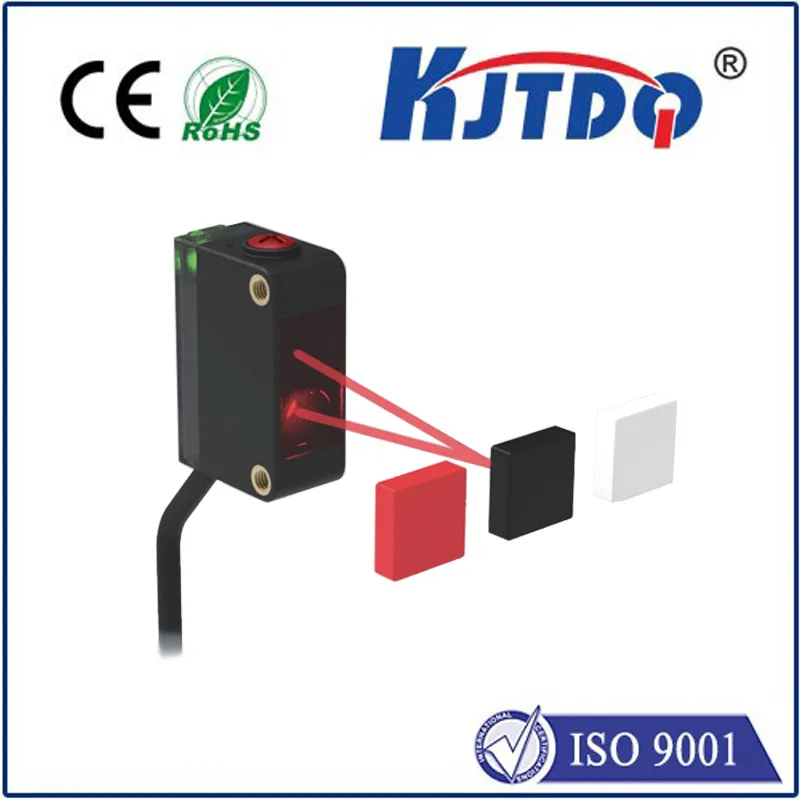
At its heart, a photoelectric sensor operates on a beautifully simple principle: light and detection. It consists of two fundamental parts:
The magic happens when an object interrupts or reflects this light beam, triggering a change in the receiver’s electrical state. This state change is then converted into an electrical signal – essentially a digital output (ON or OFF) – that the control system (like a PLC - Programmable Logic Controller) can understand and act upon. Think of it as the machine’s digital eyes.
NPN vs. PNP: Decoding the Output Signal
This is where the “NPN” designation becomes critically important. It refers to the type of transistor used in the sensor’s output circuit and dictates how the sensor signals its detection state to the controller.
NPN Sensor (Sinking Output):
When the sensor detects its target (beam broken, object present in diffuse mode, etc.), its internal NPN transistor switches on.

This effectively connects the sensor’s output signal wire to the negative (0V or GND) supply line.
In this state, the output acts like a switch to ground. To complete the circuit and activate the load (e.g., a PLC input), the load must be connected to the positive voltage supply (+V). The current sinks from the load, through the sensor output, to ground.
Analogy: Think of the NPN output as a “ground switch.” Active (detection) = Output connected to ground.
PNP Sensor (Sourcing Output):
When active (detection), the internal PNP transistor switches on, connecting the output signal wire to the positive (+V) supply line.
Here, the output acts like a switch to positive voltage. The load must be connected to ground (0V). Current sources from the sensor output, through the load, to ground.
Analogy: The PNP output is a “+V switch.” Active = Output connected to positive voltage.
Why Choose an NPN Photoelectric Sensor?
The choice between NPN and PNP often depends on regional conventions and the specific controller’s input requirements. However, NPN photoelectric sensors hold distinct advantages in many scenarios:
Operating Modes: Tailoring Detection
NPN photoelectric sensors come in diverse operating modes to suit various detection challenges:
The Ubiquitous Applications of NPN Sensors
The robustness and versatility of NPN photoelectric sensors make them indispensable across countless sectors:
Selecting the Right NPN Photoelectric Sensor
Choosing the optimal sensor involves considering several factors:
Integrating Reliability and Flexibility
NPN photoelectric sensors embody a perfect blend of fundamental physics, robust engineering, and practical application focus. Their ability to provide reliable, non-contact object detection – particularly with the inherent safety and compatibility advantages of the sinking (NPN) output configuration – ensures their enduring presence as foundational components in the intricate dance of modern industrial automation. By understanding their operating principles, distinguishing features like the NPN output,