check

check

check

check

check

check

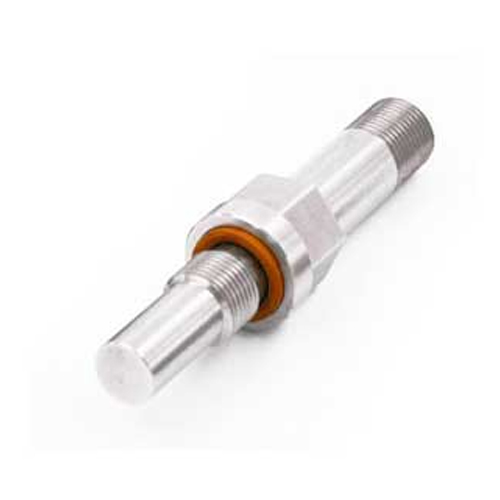
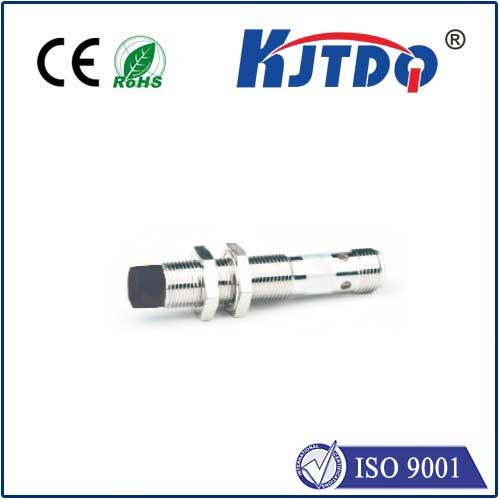
Introduction In the realm of modern technology, the magnetic speed sensor stands as a testament to human ingenuity. It is an instrument that has carved a niche for itself in various applications due to its ability to measure linear or rotational velocity accurately and precisely. This article delves into the world of magnetic speed sensors, exploring their functionality, applications, and the benefits they bring to industries. What is a Magnetic Speed Sensor? A magnetic speed sensor is a device that utilizes magnetic fields to detect changes in position, velocity, or acceleration. It operates based on the principle of electromagnetic induction, where a change in magnetic flux produces an electric current. The sensor comprises a permanent magnet and a coil of wire wrapped around it. As the magnetic field moves past the coil, it induces an alternating current (AC) voltage in the wire, which is directly proportional to the speed at which the field is moving. How Does a Magnetic Speed Sensor Work? The working of a magnetic speed sensor revolves around Faraday’s law of electromagnetic induction. When a conductor cuts across a magnetic field, an induced EMF (electromotive force) is generated. In a magnetic speed sensor, the conductor is the coil of wire, and the magnetic field is produced by the permanent magnet. As the object whose speed needs to be measured moves, it causes a change in the magnetic field lines passing through the coil. This change induces an AC voltage in the coil, which can then be measured and used to calculate the speed. Applications of Magnetic Speed Sensors Magnetic speed sensors have found widespread use in numerous industries due to their precision and reliability. Some common applications include: