check

check

check

check

check

check
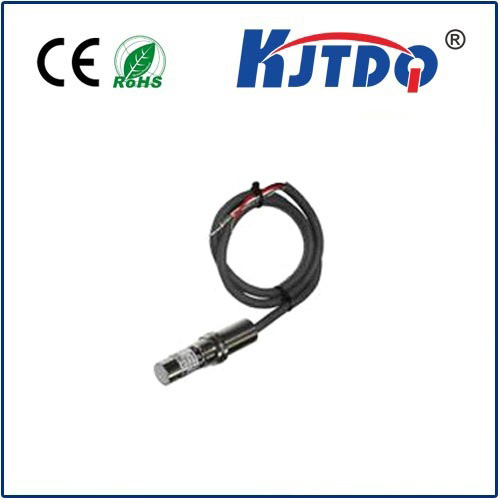
In the relentless world of industrial automation, where machinery operates under extreme pressures and in unforgiving conditions, the reliability of every component is non-negotiable. Sensor failure is not merely an inconvenience; it can lead to catastrophic downtime, compromised safety, and significant financial loss. This is where precision engineering meets rugged durability. The KNYT2-M14-PAH-53 High Pressure Proximity Sensor emerges as a critical component designed to deliver unwavering performance where others falter.
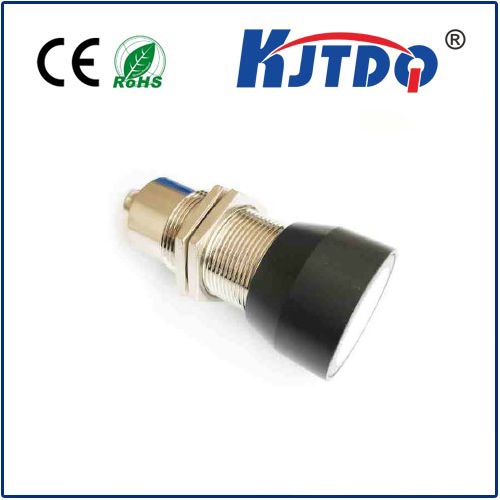
Engineered for applications involving high-pressure washdown, hydraulic systems, and heavy machinery, the KNYT2-M14-PAH-53 is built to withstand environmental challenges that would disable standard sensors. Its robust M14 threaded stainless steel housing provides exceptional resistance to corrosion, mechanical stress, and high-pressure jets of water or cleaning agents. This makes it an ideal choice for industries such as food and beverage processing, chemical manufacturing, marine engineering, and off-highway equipment, where hygiene and durability are paramount.
The core functionality of this inductive proximity sensor lies in its ability to detect metallic targets with high precision, even in the presence of intense pressure fluctuations. Unlike optical or capacitive sensors, the KNYT2-M14-PAH-53 is immune to contaminants like foam, dust, or fluid films that are common in high-pressure environments. Its sensing range is optimized for consistent detection, ensuring accurate feedback for position control, part presence verification, or cycle counting in pneumatic and hydraulic cylinders. The "PAH" designation often indicates a particular resistance rating, typically signifying its suitability for pressures far exceeding those found in standard factory settings.
Installation and integration are streamlined due to its standardized form factor and reliable electrical connections. Many models feature LED status indicators for quick diagnostics, reducing maintenance time. The sensor's design minimizes dead zones, allowing for flexible mounting in tight spaces within complex machinery. Compatibility with common PLC (Programmable Logic Controller) systems ensures it can be seamlessly incorporated into existing automation networks without requiring extensive reprogramming or additional interfaces.
Beyond its physical robustness, the operational longevity of the KNYT2-M14-PAH-53 translates directly into cost savings. By reducing unplanned stoppages and the frequency of sensor replacements, it lowers the total cost of ownership. Facility managers and maintenance engineers report enhanced system uptime and reduced spare parts inventory. In critical processes—such as monitoring the position of a piston in a high-pressure hydraulic press or ensuring a filler valve is correctly seated in a bottling plant—this sensor provides the reliability needed for continuous, efficient production.
Selecting the right sensor for high-pressure applications requires careful consideration. Key factors include the specific pressure rating, the type of metal being detected, the required sensing distance, and the electrical output (e.g., PNP or NPN). The KNYT2-M14-PAH-53 is specifically configured to meet a stringent set of these parameters, offering a specialized solution rather than a generic one. Consulting technical datasheets and application engineers is always recommended to ensure perfect alignment with the operational demands.
In conclusion, for engineering professionals seeking to fortify their automation systems against the rigors of high-pressure environments, the KNYT2-M14-PAH-53 High Pressure Proximity Sensor represents a strategic investment. It is more than just a component; it is a pillar of reliability that supports productivity, ensures safety, and protects valuable capital equipment. By choosing a sensor engineered for extreme duty, companies safeguard their operations against failure, ensuring that their processes run smoothly, efficiently, and without interruption.