check

check

check

check

check

check
In the relentless world of industrial automation, where machinery operates under extreme pressures and within tight tolerances, the reliability of every component is non-negotiable. Sensor failure in a high-pressure system isn't just an inconvenience; it can lead to catastrophic downtime, safety hazards, and significant financial loss. This is where precision engineering meets rugged durability, embodied in solutions like the KGG20H42P High Pressure Proximity Sensor. Designed to perform flawlessly where others falter, this sensor represents a critical advancement for applications involving hydraulic systems, die-casting machines, plastic injection molding, and heavy-duty press operations.
The core challenge in high-pressure environments is the immense physical stress exerted on sensor housings and sensing elements. Standard inductive proximity sensors may deform, leak, or provide erratic signals when subjected to pressures exceeding several hundred bar. The KGG20H42P is specifically engineered to overcome this. Its defining feature is a housing constructed from high-grade, pressure-resistant stainless steel, capable of withstanding continuous exposure to extreme pressures without compromising its structural integrity or sensing accuracy. This robust construction ensures that the sensor's internal electronics and coil system remain perfectly isolated and protected from the external forces that would cripple lesser devices.
Beyond mere survival, the KGG20H42P delivers consistent and precise detection. Utilizing a high-frequency oscillation principle, it can reliably detect the presence or absence of metallic targets—such as piston rods, valve positions, or mold plates—even when they are separated by a non-metallic barrier like a high-pressure seal or a thin layer of paint. This non-contact sensing method eliminates mechanical wear, a common point of failure in limit switches, guaranteeing a long operational life with millions of reliable switching cycles. The sensor's repeat accuracy ensures that machine cycles are consistent, which is paramount for maintaining product quality in manufacturing processes like injection molding, where a few microns of variance can render a part useless.
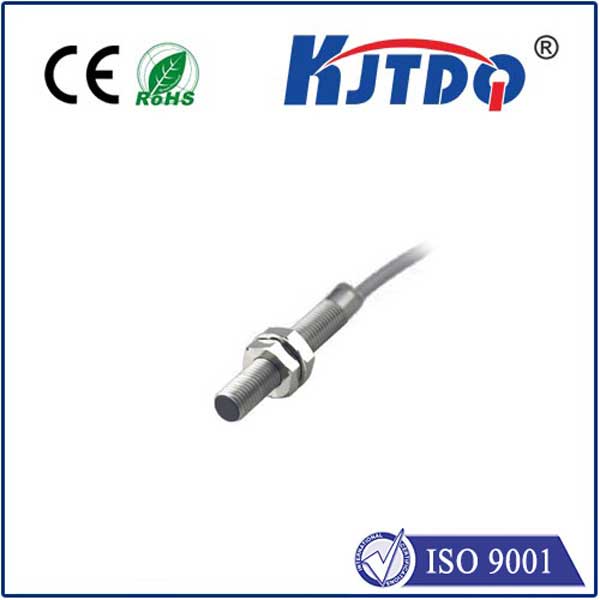
Installation and integration are streamlined for efficiency. The KGG20H42P typically features a compact, cylindrical design with standard mounting threads, allowing for easy integration into existing machine ports or manifolds. Many models come with LED status indicators for quick visual confirmation of operation and switching state, significantly simplifying setup and troubleshooting. This user-friendly design reduces maintenance time and helps technicians quickly diagnose issues, minimizing machine downtime. Compatibility with standard PLC (Programmable Logic Controller) inputs means it can be seamlessly incorporated into modern control systems without requiring special interfaces or complex programming.
The operational benefits translate directly into tangible ROI for plant managers and engineers. First and foremost is enhanced safety. By providing a reliable signal for critical machine states—like confirming a mold is fully closed or a hydraulic cylinder has reached its endpoint—the sensor helps prevent dangerous machine movements that could lead to equipment damage or personal injury. Secondly, it drives productivity. Unplanned stoppages due to sensor failure are drastically reduced, leading to higher overall equipment effectiveness (OEE). The sensor's durability also means a lower total cost of ownership, as replacement intervals are extended, and maintenance schedules become less frequent and less urgent.
When selecting a sensor for a high-pressure application, the KGG20H42P stands out not just as a component but as a strategic asset. Its value proposition lies in its fusion of uncompromising robustness and technological precision. For industries where pressure is a constant and reliability is the benchmark, opting for a purpose-built sensor like this is not an upgrade—it's an essential requirement for modern, efficient, and safe industrial operation. It ensures that the heartbeat of your machinery, the critical feedback loop, remains strong and steady under the most demanding conditions, safeguarding both your process and your bottom line.