check

check

check

check

check

check
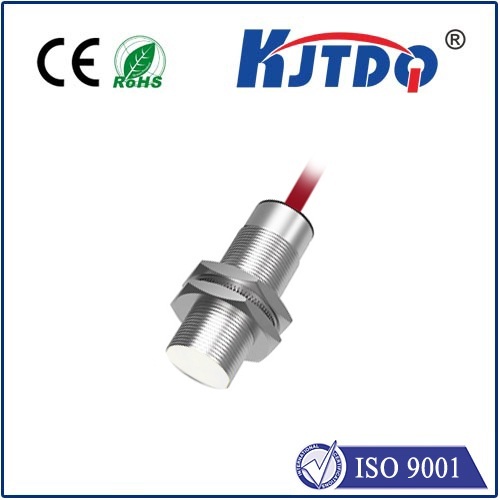
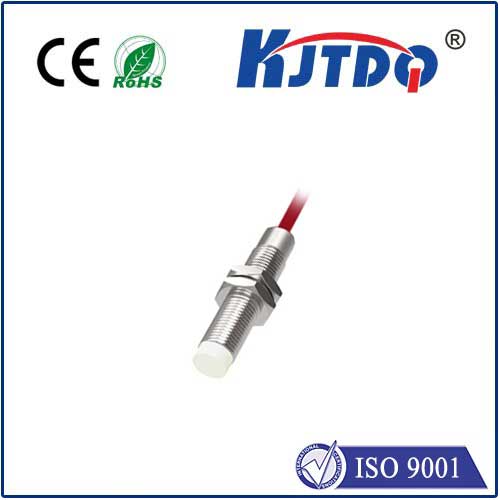
In the demanding world of industrial automation, where machinery operates under extreme pressures and within tight tolerances, the reliability of every component is non-negotiable. Sensor failure can lead to catastrophic downtime, safety hazards, and significant financial loss. This is where the KJTDQ DW-AD and DW-AS-501, 502, 503, 504-P20G series of High Pressure Proximity Sensors establish a new benchmark for performance and durability. Engineered specifically for harsh environments, these sensors deliver unwavering accuracy and longevity where it matters most.
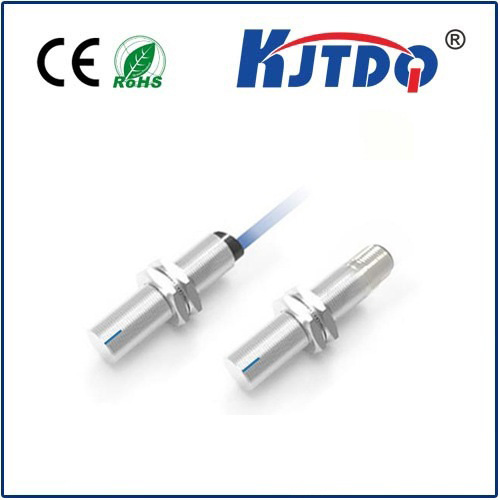
The core challenge in high-pressure applications is the sensor's ability to withstand not just the physical force, but also the associated vibrations, temperature fluctuations, and potential media exposure. The DW-AD/DW-AS-P20G series addresses this with a rugged, stainless-steel housing rated for exceptionally high pressure thresholds. This robust construction ensures that the sensor's internal electronics are completely isolated and protected, maintaining signal integrity even in the presence of intense pulsations or shock pressures common in hydraulic systems, die-casting machines, and plastic injection molding equipment.
Beyond sheer strength, precision is paramount. These inductive proximity sensors offer a consistent and repeatable switching function. Their key feature is the ability to detect the presence of metallic targets with millimeter accuracy, even when separated by high-pressure vessel walls or thick machine components. The "P20G" designation highlights its capability to perform reliably in these pressurized zones where standard sensors would falter. This precise detection is critical for controlling cylinder piston positions, monitoring valve states, or ensuring proper clamping force, thereby enabling seamless automated sequences and preventing machine damage.
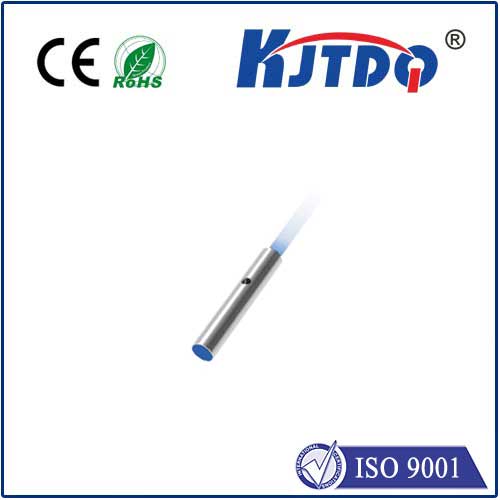
The series offers versatility through its model variations. The DW-AD models typically provide a standard sensing range, while the DW-AS-501 to 504 models offer different sensing distances or output configurations (like NPN or PNP) to fit specific circuit requirements. This flexibility allows engineers to select the exact sensor needed for their application without over-specifying or compromising on functionality. Installation is simplified with their compact, threaded design, allowing for easy integration into existing high-pressure plumbing or machine frames.
Operational stability is further enhanced by advanced sealing technologies that guard against ingress from oils, coolants, and other industrial fluids. Combined with a wide operating temperature range, this makes the KJTDQ sensors suitable for diverse sectors—from offshore oil and gas, where they monitor subsea pressures, to heavy manufacturing and press automation. The result is a dramatic reduction in unplanned maintenance and sensor replacement cycles, translating directly into higher overall equipment effectiveness (OEE) and lower total cost of ownership.
For system integrators and plant managers, choosing a sensor like the KJTDQ DW-AD/DW-AS-P20G series is a strategic decision for risk mitigation. It represents a move away from component fragility toward predictive and reliable operation. By ensuring accurate feedback in the core of high-pressure processes, these sensors form the dependable nerve endings of an automated system, allowing for smarter control, enhanced safety protocols, and optimized production throughput. In essence, they are not just sensors; they are foundational components for building resilient and efficient industrial automation in the most challenging conditions.