check

check

check

check

check

check
In the complex and demanding world of industrial automation, reliable sensing under extreme conditions is not a luxury—it's a necessity. Equipment failure due to undetected pressure changes or component proximity can lead to catastrophic downtime, safety hazards, and significant financial loss. This is where specialized sensors like the KGG12P3KP High Pressure Proximity Sensor step into the spotlight, engineered to deliver unwavering performance where standard sensors would falter.
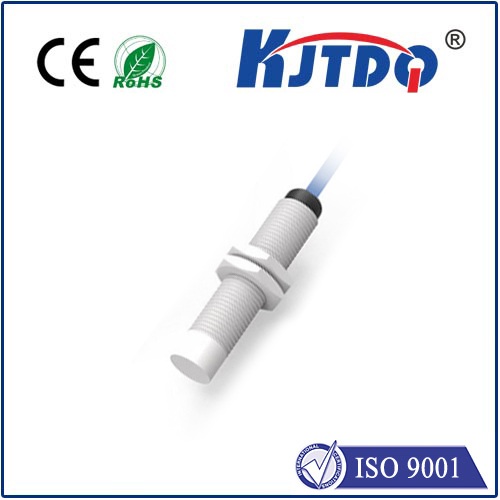
The KGG12P3KP is designed specifically for high-pressure environments, a critical requirement in sectors such as hydraulic systems, heavy machinery, die-casting, plastic injection molding, and oil and gas operations. Its core function is to detect the presence or position of a target object—often a piston, valve, or machine part—within close range, but it does so while being exposed to substantial surrounding fluid or gas pressure. This dual capability of proximity detection and pressure resilience is what sets it apart.
So, how does the KGG12P3KP achieve this robust performance? The answer lies in its construction and sensing technology. Typically housed in a rugged, stainless-steel body, it is built to withstand mechanical stress, vibration, and corrosive media. The sensing face is exceptionally durable, allowing it to operate in direct contact with high-pressure fluids without compromising its inductive or capacitive sensing capabilities. Unlike standard proximity sensors that might deform or leak under high PSI, the KGG12P3KP incorporates specialized seals and a reinforced design that maintains its integrity and sensing accuracy.
The operational principle is based on generating an electromagnetic field from its active face. When a metallic target enters this field, it causes a change in the oscillation amplitude, which the sensor's internal circuitry detects and converts into a clear switching signal. For non-metallic targets in high-pressure scenarios, a capacitive version may be employed. The "High Pressure" rating signifies that the entire sensor assembly, not just the sensing element, is certified to perform reliably at specified pressure levels, often detailed in its technical datasheet (e.g., up to 400 Bar or more).
The benefits of integrating the KGG12P3KP into a system are multifaceted. First and foremost is enhanced reliability. By providing accurate position feedback on critical components within presses, cylinders, or pumps, it enables precise control and prevents machine cycles from proceeding unless conditions are safe and correct. This directly translates to improved safety for both personnel and equipment. Secondly, it boosts productivity. Minimizing false triggers and sensor failures reduces unplanned stoppages, ensuring smoother, more continuous operation. Finally, its durability leads to a lower total cost of ownership. Despite a potentially higher initial investment compared to standard sensors, its long service life and reduced maintenance needs offer superior value over time.
Selecting the right KGG12P3KP sensor requires careful consideration of several application parameters. The maximum operating pressure is paramount—ensure the sensor's rating exceeds the system's peak pressure. The sensing distance, target material (ferrous or non-ferrous metal), and output type (PNP/NPN, analog, or IO-Link) must match the control system's requirements. Environmental factors like temperature range, potential chemical exposure, and required ingress protection (IP) rating are also critical. Consulting the manufacturer's specifications and, if necessary, technical support is essential for optimal selection.
In practical terms, you might find the KGG12P3KP ensuring a hydraulic press ram stops precisely at the correct height, verifying that a safety door on a high-pressure vessel is securely closed, or monitoring the position of a valve actuator in a chemical processing line. Its role is often silent but indispensable, acting as the trustworthy eyes of the control system in punishing conditions.
For engineers and maintenance professionals seeking to upgrade their system's robustness, the KGG12P3KP represents a proven solution. It addresses the core challenge of obtaining reliable proximity data without compromising under physical stress. When operational continuity, safety, and precision are non-negotiable, specifying a sensor designed for the pressure, like the KGG12P3KP, is a strategic decision that safeguards performance and protects valuable industrial assets.