check

check

check

check

check

check
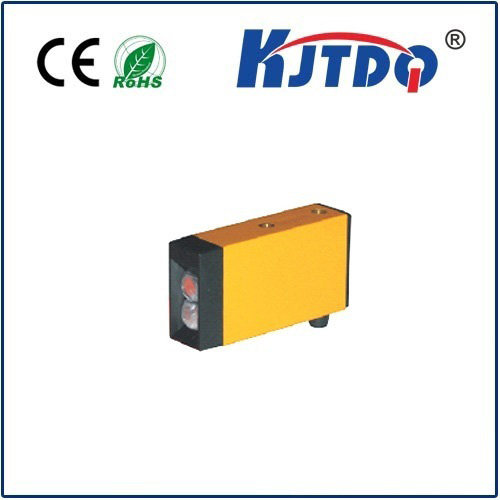
In the world of industrial automation and process control, the ability to detect objects or monitor conditions reliably under extreme pressure is not just an advantage—it's a necessity. This is where specialized components like the BHS004P High Pressure Proximity Sensor come into play, offering a robust solution for applications where standard sensors would fail. This guide delves into the core features, operational principles, and critical applications of this high-performance sensor, providing a comprehensive overview for engineers and procurement specialists.
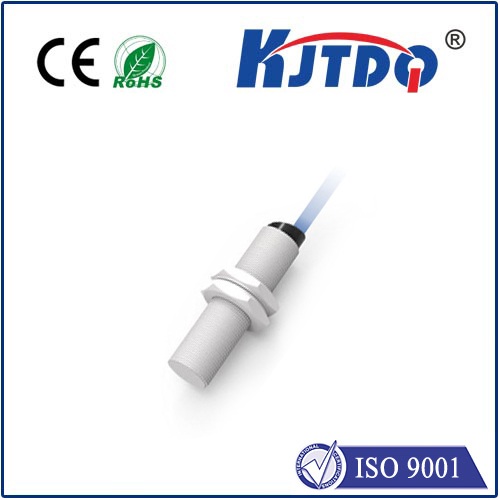
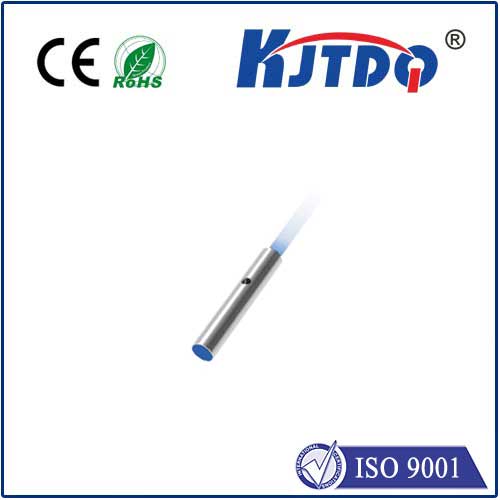
The BHS004P is engineered specifically to operate in environments with significantly elevated pressure levels. Unlike conventional inductive or capacitive proximity sensors, its design incorporates materials and sealing technologies that can withstand external pressures that would compromise the integrity and functionality of standard units. The housing is typically constructed from high-grade stainless steel or other durable alloys, providing exceptional resistance to mechanical stress and corrosion. This robust construction ensures that the sensor's internal electronics, including its oscillator, trigger circuit, and output switching component, remain fully isolated and operational. The sensing face is also specially designed to maintain its sensitivity and detection range despite the constant force exerted by the surrounding high-pressure medium, whether it's hydraulic fluid, compressed gas, or a dense liquid in a processing pipeline.
At its core, the BHS004P operates on the principle of electromagnetic induction. It generates a high-frequency electromagnetic field from its active face. When a metallic target object enters this field, eddy currents are induced on the target's surface. This causes a change in the oscillation amplitude within the sensor's internal coil, which is detected by the trigger circuit. The circuit then commands the output solid-state switch to change state, providing a clear signal—typically a switch from 0 to 24V DC (PNP) or vice versa (NPN)—indicating the presence of the target. What sets the BHS004P apart is its ability to perform this detection sequence consistently while the entire sensor body is subjected to extreme external pressure. Its circuitry is calibrated to ignore the static pressure load, focusing solely on the dynamic change caused by the target's approach.
The applications for such a specialized sensor are found in industries where equipment operates under punishing conditions. In hydraulic systems, for instance, the BHS004P is indispensable for monitoring piston position within high-pressure cylinders, ensuring precise control of heavy machinery in construction, metal forming, and injection molding. The oil and gas industry relies on these sensors for downhole tool positioning, valve status detection in high-pressure manifolds, and safety interlock systems on blowout preventers. In the realm of industrial compressors and pump systems, they are used for shaft position monitoring and seal failure detection, preventing catastrophic equipment damage. Furthermore, they play a vital role in test stands for aerospace and automotive components, where parts are tested under immense pressure, and accurate, fail-safe detection is critical for both data integrity and operator safety.
Selecting and installing the BHS004P requires careful consideration. Key specifications to review include its maximum pressure rating (often specified in bar or PSI), the sensing distance, the type of output (e.g., PNP/NPN, NO/NC), the supply voltage range, and its ingress protection (IP) rating for dust and water. Proper installation is crucial; the sensor must be mounted securely using the correct fittings to handle the pressure, and the electrical connections must be sealed to prevent leakage along the cable conduit. It is also essential to ensure that the target material (usually ferrous or non-ferrous metals) and its size are compatible with the sensor's stated specifications to guarantee reliable switching.
In conclusion, the BHS004P High Pressure Proximity Sensor represents a critical fusion of durability and precision. It fills a vital niche in industrial automation, enabling reliable non-contact detection in environments that are off-limits to ordinary sensors. By providing consistent performance under extreme physical stress, it enhances system safety, improves process reliability, and reduces maintenance downtime. For any application involving high-pressure hydraulics, processing, or testing, integrating a sensor like the BHS004P is a strategic investment in operational resilience and long-term equipment health.