check

check

check

check

check

check
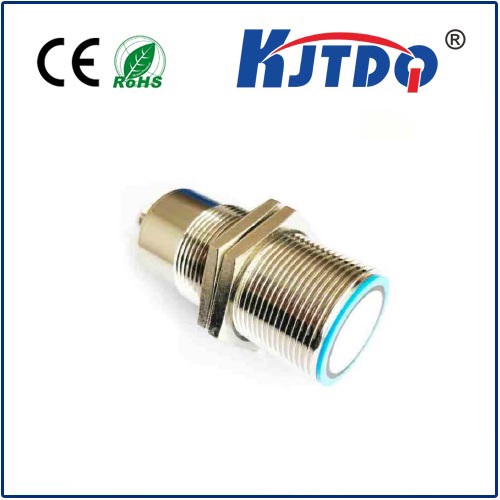
In the demanding world of industrial automation, where machinery operates under extreme pressures and in harsh environments, the reliability of every component is non-negotiable. Sensor failure can lead to catastrophic downtime, safety hazards, and significant financial loss. This is where specialized components like the BD3-P4-M14S-G High Pressure proximity sensor prove their indispensable value. Engineered for resilience and precision, this sensor represents a critical solution for applications where standard inductive or capacitive sensors would falter.
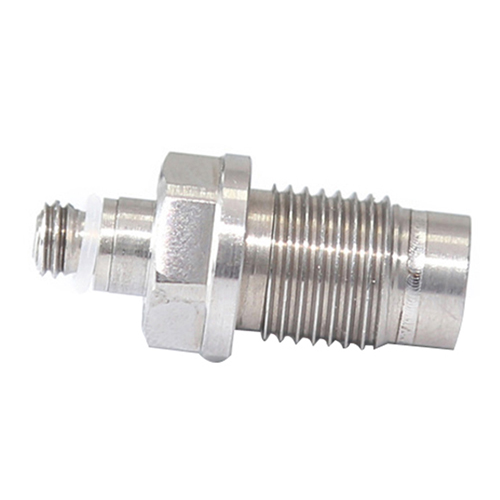
The core challenge in high-pressure environments, such as those found in hydraulic systems, die-casting machines, injection molding, and heavy-duty press lines, is the constant assault of forces that can compromise sensor integrity. The BD3-P4-M14S-G is specifically designed to withstand these conditions. Its robust housing, typically constructed from high-grade stainless steel, is built to resist not only immense physical pressure—often rated for several hundred bar—but also the corrosive effects of oils, coolants, and other industrial fluids. This durability ensures a long operational life, reducing maintenance frequency and replacement costs.
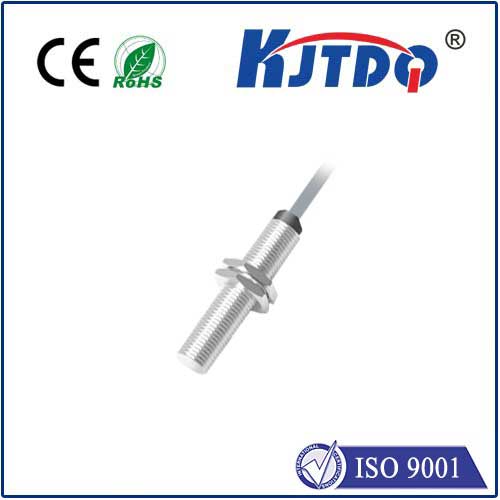
Beyond mere survival, the sensor excels in performance. As a inductive proximity sensor, it detects the presence of metallic targets without physical contact. The "P4" designation often relates to its flush-mounting capability, allowing it to be installed embedded in metal without a loss of sensing range, a crucial feature for space-constrained or high-risk mounting points where protrusions could be damaged. The M14S indicates a standard 14mm threaded cylindrical housing with a short body, a common and versatile form factor for easy integration into existing machine designs. Its sensing distance, while specific to the model variant, is optimized for reliable detection even when targets are moving at high speeds or through layers of grime.
The operational principle is both simple and highly effective. The sensor generates an electromagnetic field. When a ferrous metal target enters this field, it causes a change in the oscillation amplitude within the sensor's coil. This change is detected by the internal circuitry, which then triggers a solid-state switching signal. This signal interfaces seamlessly with Programmable Logic Controllers (PLCs) and other control systems to monitor piston position, confirm part placement, or initiate the next phase of a machine cycle. The "G" suffix frequently denotes a particular output type or connector style, such as a pre-wired cable or a quick-disconnect plug, enhancing installation flexibility.
Implementing the BD3-P4-M14S-G sensor brings tangible benefits to production lines. First and foremost is enhanced safety. By accurately confirming the position of heavy rams, clamps, or guards, it prevents machine operation in unsafe states, protecting both equipment and personnel. Secondly, it boosts productivity. Consistent and reliable detection minimizes false triggers and missed signals, ensuring smooth, uninterrupted machine cycles and maximizing throughput. Finally, it contributes to predictive maintenance strategies. The sensor's inherent reliability and clear operational feedback allow maintenance teams to monitor system health more effectively, planning interventions before failures occur.
Choosing the right sensor for a high-pressure application requires careful consideration. Key specifications to verify include the pressure rating (ensuring it exceeds the maximum system pressure), the housing material compatibility with process fluids, the required sensing distance, the operating voltage (e.g., 10-30V DC), and the output configuration (PNP or NPN, normally open or closed). The BD3-P4-M14S-G series typically offers variants to meet these diverse needs. Proper installation is equally critical; ensuring correct mounting, secure electrical connections, and protection from mechanical shock will guarantee the sensor performs as intended for years.
From monitoring hydraulic cylinder end positions to verifying mold closure in plastic injection machines, the applications are vast. In metal forming, it ensures press tools are correctly positioned before a ton-force is applied. In automated assembly, it verifies the presence of metal components before a robotic weld. Its role is silent but fundamental—the unwavering digital sentinel in a world of physical extremes.
For engineers and maintenance professionals seeking to eliminate a point of failure in their most critical systems, moving beyond generic sensors to purpose-built solutions like the BD3-P4-M14S-G is a strategic decision. It represents an investment not just in a component, but in system-wide reliability, safety, and operational efficiency. In the high-stakes environment of modern manufacturing, such precision tools are not a luxury; they are the foundation of continuous, profitable, and safe production.