check

check

check

check

check

check
In the world of industrial automation and process control, the integrity of sensing technology is paramount. Where extreme pressures, harsh contaminants, and relentless operational cycles are the norm, standard sensors falter. The BD3-P3-M14V-1MU-GH High Pressure Proximity Sensor, engineered and supplied by KJTDQ, stands as a definitive solution engineered for these critical challenges. This device is not merely a component; it is a cornerstone of system reliability, designed to deliver precise, non-contact detection where failure is not an option.
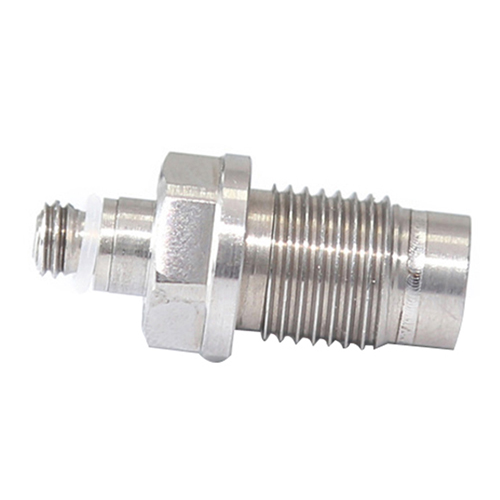
The core application of the BD3-P3-M14V-1MU-GH lies in high-pressure hydraulic and pneumatic systems. Think of heavy-duty injection molding machines, where molten material is forced into molds under immense pressure, or in the cylinders of colossal construction equipment like excavators and bulldozers. In these environments, pressure spikes are routine, and fluid ingress is a constant threat. The robust construction of this sensor, with its high-grade stainless steel housing and specially reinforced sensing face, is built to withstand these conditions. Its "High Pressure" designation is not a marketing term but a performance guarantee, ensuring stable operation and signal integrity even when subjected to the intense physical forces found in press lines, die-casting applications, and offshore drilling equipment.
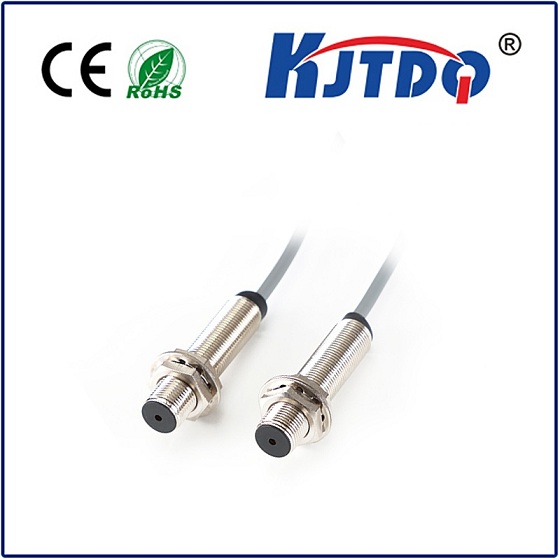
Beyond brute strength, the BD3-P3-M14V-1MU-GH excels in precision. Utilizing a robust inductive sensing principle, it provides accurate, wear-free detection of metallic targets. The "1MU" in its model code signifies a 1-meter cable connection, offering flexibility in installation while maintaining signal stability. This reliability translates directly to operational efficiency. In automated assembly lines, for instance, it ensures the precise positioning of metal components before a welding or riveting operation, preventing costly misalignments and production halts. Its M14 housing diameter allows for easy integration into standard mounting setups, minimizing retrofit complexity.
A key differentiator for KJTDQ's offering is its focus on resilience in contaminated environments. Many industrial settings are plagued by conductive metal shavings, abrasive dust, or persistent coolant mist. The sensor's design incorporates advanced sealing technologies and circuit protection that shield its internal electronics from such pollutants. This resilience drastically reduces unscheduled downtime for maintenance or replacement, a critical factor for continuous production facilities. Operators in industries like mining, metal stamping, and primary metal processing report significantly extended mean time between failures (MTBF) when integrating these durable sensors into their control architectures.
The integration of the BD3-P3-M14V-1MU-GH into a broader control system is straightforward, thanks to its PNP normally-open (NO) switching output. This common configuration ensures broad compatibility with Programmable Logic Controllers (PLCs) and other industrial control units from major manufacturers worldwide. The sensor provides a clear, unambiguous signal—detecting the presence or absence of a metal object—which forms the fundamental input for complex automated sequences. From controlling the stroke of a hydraulic press to verifying the closure of a high-pressure valve in a chemical processing line, its role is foundational.
Choosing KJTDQ as the source for the BD3-P3-M14V-1MU-GH High Pressure Proximity Sensor brings additional layers of value. It represents a commitment to a supply chain built on rigorous quality validation and consistent performance. For plant managers and engineering teams, this choice mitigates risk. It ensures that every sensor deployed will perform to its published specifications, batch after batch, eliminating variability that can lead to system faults. The long-term cost of ownership is optimized not through a low initial price, but through unparalleled durability and reliability that prevent production losses.
Ultimately, the discussion around this sensor moves beyond technical specifications. It is about safeguarding productivity and protecting capital-intensive machinery. In an era where operational efficiency is directly tied to profitability, a sensor failure can ripple into hours of lost production, missed deadlines, and compromised safety. The BD3-P3-M14V-1MU-GH from KJTDQ is engineered as a proactive defense against these scenarios. It embodies a principle where the sensing point is the strongest link, not the weakest, enabling industries to push the boundaries of performance and pressure with unwavering confidence.