check

check

check

check

check

check
In the relentless world of industrial automation, where machinery operates under extreme conditions, the reliability of every component is non-negotiable. Sensors, acting as the nervous system of modern production lines, face constant challenges from high pressure, temperature fluctuations, and physical stress. The failure of a single sensor can lead to costly downtime, safety hazards, and compromised product quality. This is where the KGG12F Series High Pressure Proximity Sensor steps in, engineered not just to survive but to excel in the most demanding applications.
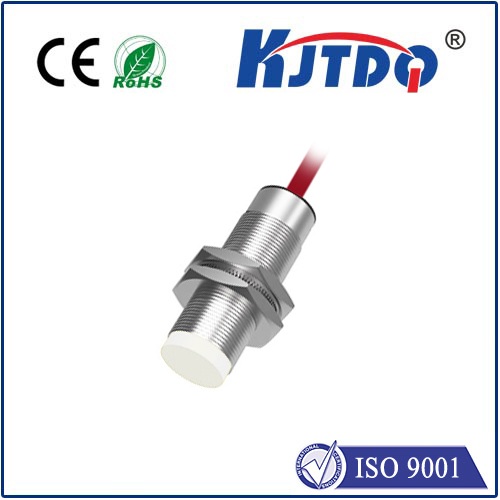
Traditional inductive proximity sensors often reach their limits when confronted with sustained high-pressure environments, such as those found in hydraulic systems, die-casting machines, plastic injection molding, and heavy-duty press operations. The immense force can deform housings, damage sensing faces, and lead to premature failure. The KGG12F Series is specifically designed to overcome this fundamental weakness. Its core innovation lies in its ruggedized construction. Featuring a housing machined from high-grade stainless steel or similarly robust materials, it is built to withstand direct exposure to pressures that would cripple standard models. The sensing face is specially reinforced and sealed, ensuring that internal electronics remain completely isolated from external mechanical stress and potential fluid ingress.
Beyond brute strength, the KGG12F delivers exceptional sensing performance. Utilizing a high-frequency oscillation principle, it provides stable, repeatable detection of metallic targets—ferrous and non-ferrous alike—with pinpoint accuracy. This consistency is critical in high-pressure cycles where even millimeter-level variance can affect process control. The sensor offers various sensing ranges and output configurations (e.g., PNP, NPN, analog) to integrate seamlessly into diverse control systems. Its high switching frequency ensures it can keep pace with fast-moving components in automated presses or rapid-cycle molding machines.
The operational benefits for engineers and plant managers are substantial. First and foremost is unparalleled durability. By specifying the KGG12F for high-pressure points, maintenance intervals are extended dramatically, reducing spare part inventories and labor costs associated with frequent replacements. This robustness directly translates to increased Overall Equipment Effectiveness (OEE) by minimizing unplanned stoppages. Secondly, its reliability ensures process stability. Consistent detection means consistent operation of cylinders, valves, and clamps, leading to fewer production rejects and higher quality output. In safety-critical applications, such as monitoring the position of a press ram or a mold clamp, its fail-safe reliability is indispensable for protecting both personnel and capital equipment.
Installation and integration are straightforward. The sensor is designed with standard mounting threads and connection styles, allowing for a direct upgrade path from less capable units. Many variants in the series also feature advanced diagnostics, such as LED status indicators that provide clear visual confirmation of operation and aid in rapid troubleshooting. This user-centric design philosophy minimizes integration time and helps technicians quickly identify and resolve any peripheral issues.
From foundries dealing with molten metal to offshore platforms managing hydraulic winches, the KGG12F Series proves its mettle. It is the sensor of choice for monitoring piston position in high-pressure hydraulic cylinders, ensuring mold safety in injection molding, verifying part ejection in stamping presses, and confirming the closure of high-pressure valves. In every instance, it provides a layer of certainty in uncertain environments.
In conclusion, the KGG12F Series High Pressure Proximity Sensor is more than just a component; it is a strategic asset for any operation facing the challenges of pressure-intensive automation. It represents a shift from reactive maintenance to predictive, reliable operation. By investing in this engineered solution, industries secure not only the integrity of their sensing points but also the smooth, efficient, and safe flow of their entire production process. For those who cannot afford compromise, the choice is clear.