check

check

check

check
check
check
check
check

check

check
In the intricate world of industrial automation, precision and reliability are not just desirable; they are absolute necessities. The heartbeat of countless automated systems relies on the flawless performance of sensing components. Among these, the photoelectric switch stands as a cornerstone technology, and the ZL33-3022NH model exemplifies the pinnacle of design and functionality for demanding applications. This guide delves into the core features, operational principles, and critical advantages of this advanced sensor, providing a comprehensive understanding of why it is a preferred choice for engineers and system integrators worldwide.
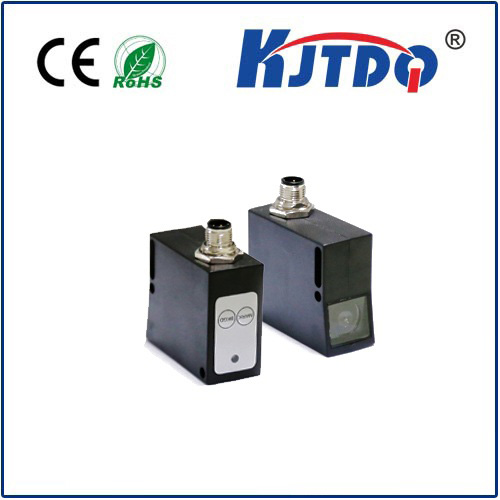
At its essence, the ZL33-3022NH is a through-beam photoelectric sensor. This design involves two separate units: a transmitter and a receiver. The transmitter emits a focused beam of light, typically from an LED source. The receiver, positioned directly opposite, is tasked with detecting this beam. An object is sensed when it physically interrupts the light path between these two units. This fundamental principle offers distinct benefits, primarily exceptional sensing ranges and high immunity to environmental interferences such as dust, steam, or target object color and reflectivity. The "NH" designation often relates to specific housing materials or connector types designed for enhanced durability.
The operational reliability of the ZL33-3022NH stems from several key engineering features. First is its robust construction. Housed in a casing designed to withstand industrial environments, it offers significant resistance to impacts, vibrations, and exposure to oils or coolants. Many models come with an IP67 or higher ingress protection rating, meaning they are dust-tight and can withstand temporary immersion in water, making them suitable for washdown areas in food processing or pharmaceutical plants.
Secondly, its performance specifications are tailored for precision. With a fast response time, it can detect objects moving at high speeds on conveyor lines, ensuring no item goes uncounted or unregistered. The sensing range is another critical factor; the through-beam design of the ZL33-3022NH allows for long-distance detection, often spanning several meters, which is ideal for large machinery or warehouse automation systems where objects need to be detected from afar.
A significant advantage of this photoelectric switch is its simplified installation and alignment. While through-beam sensors require careful initial alignment of the transmitter and receiver, models like the ZL33-3022NH often incorporate visual or auditory alignment aids, such as signal strength indicators. Once aligned, the system provides extremely stable operation because it is less sensitive to minor misalignments or buildup on the lens compared to reflective sensor types. The output is typically a clean, digital signal (PNP or NPN) that interfaces seamlessly with Programmable Logic Controllers (PLCs), relays, and other control systems.
The application spectrum for the ZL33-3022NH photoelectric switch is vast. It is indispensable in packaging lines for detecting the presence or absence of products, ensuring correct filling and sealing operations. In material handling, it counts boxes, monitors stack heights, and verifies the position of pallets. Within the automotive industry, it plays a role in robotic assembly, part verification, and safety curtain monitoring. Its reliability is also crucial in harsh outdoor applications, such as in agricultural machinery or mining equipment, where it must perform flawlessly despite exposure to dirt, moisture, and extreme temperatures.
When selecting a sensor for a critical application, factors beyond basic function come into play. The ZL33-3022NH addresses these through features like a stable, temperature-compensated light source that prevents drift over time and across operating temperatures. Many variants also offer selectable light-on/dark-on operation, providing flexibility in logic control. The use of a modulated infrared or visible red light beam makes it immune to ambient light interference from factory lighting, a common challenge in industrial settings.
Maintenance and longevity are further compelling reasons for its adoption. With no moving mechanical parts subject to wear, the ZL33-3022NH offers a long operational life. Its solid-state design translates to minimal maintenance, reducing downtime and total cost of ownership. When integration into complex networks is required, its compatibility with standard M12 or M8 connectors simplifies wiring and connection to industrial bus systems.
In conclusion, the ZL33-3022NH photoelectric switch represents more than just a component; it is a reliability solution. Its through-beam sensing method, combined with rugged construction, precise performance, and environmental resilience, makes it an authoritative choice for engineers tasked with building robust and efficient automated systems. By ensuring accurate object detection under challenging conditions, it enhances productivity, safety, and quality control across a diverse range of industries. For system designers seeking a proven and dependable sensing technology, the ZL33-3022NH provides a foundation of confidence upon which automated processes can reliably operate.