check

check

check

check
check
check
check
check

check

check
In the world of industrial automation, precision, reliability, and durability are non-negotiable. The quest for a sensing component that consistently delivers under demanding conditions often leads engineers and system integrators to a specific category: photoelectric sensors. Among these, the MLV41-55/25/115/136 photoelectric switch stands out as a benchmark for performance in diverse and challenging applications. This device is not merely a component; it is a critical enabler of efficiency, safety, and seamless operation in modern manufacturing, packaging, material handling, and logistics systems.
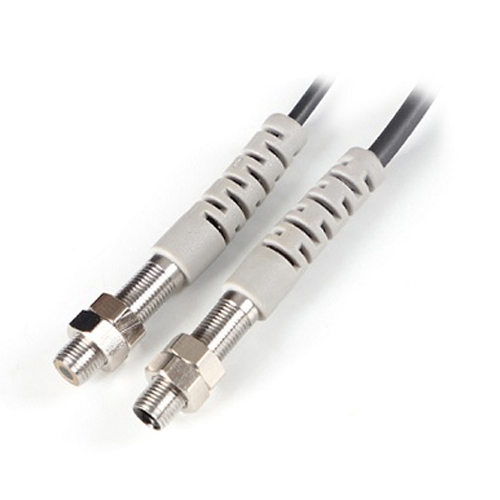
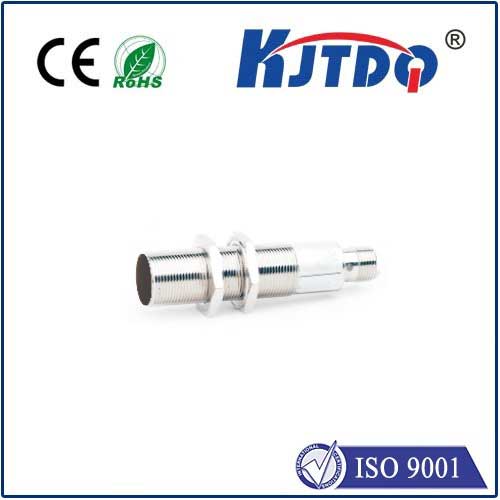
The MLV41-55/25/115/136 model represents a sophisticated through-beam photoelectric sensor. Its operational principle is elegantly simple yet profoundly effective. The unit consists of two separate components: a transmitter and a receiver. The transmitter emits a focused beam of light, typically infrared or laser, across a defined path. The receiver, positioned opposite, continuously monitors for this light signal. When an object passes between the two units, it interrupts the beam. This interruption is instantly detected by the receiver, which triggers a switching signal. This method offers significant advantages, including very long sensing ranges, high positional accuracy, and exceptional immunity to environmental factors like dust, color, or surface finish of the target object. The "through-beam" design is renowned for its reliability, making the MLV41-55/25/115/136 a preferred choice for applications where failure is not an option.
Decoding the model number MLV41-55/25/115/136 provides direct insight into its key technical specifications and configuration. This nomenclature is a concise data sheet. The "MLV41" series indicates a robust, industrial-grade housing designed to withstand harsh environments. The "55" often refers to the sensing distance or a specific housing dimension. "25" typically denotes the light source type or beam characteristics. "115" and "136" are frequently associated with the electrical specifications, such as the operating voltage range (e.g., 10-30V DC) and the output type (e.g., NPN or PNP transistor output). This precise configuration ensures the sensor is perfectly matched for tasks requiring detection over a considerable distance with a stable, noise-resistant electrical signal compatible with standard Programmable Logic Controllers (PLCs) and control systems.
The real-world applications for the MLV41-55/25/115/136 photoelectric switch are vast and critical. In automated packaging lines, it ensures precise carton counting and verifies the presence of products before sealing. Within the automotive industry, it is used for precise positioning of parts on assembly robots or detecting vehicles on conveyor systems. In warehouse and logistics automation, these sensors monitor the flow of parcels on high-speed sorters, preventing jams and ensuring accurate routing. They are also indispensable in security systems for perimeter guarding or door monitoring. Their ability to function reliably in environments with vibration, temperature fluctuations, and airborne particles makes them a cornerstone of Industry 4.0 and smart factory initiatives.
Selecting and implementing the MLV41-55/25/115/136 requires careful consideration. While its through-beam design offers superior range and reliability, it necessitates precise alignment during installation, which can be more time-consuming than retro-reflective or diffuse sensors. Maintenance involves periodic cleaning of the lenses on both transmitter and receiver to prevent false triggers caused by dirt buildup. Furthermore, ensuring a stable power supply within the specified voltage range is crucial for long-term performance. For system designers, the key is to leverage its strengths—long-range, high-precision object detection—in applications where these benefits outweigh the installation complexity.
Ultimately, the MLV41-55/25/115/136 photoelectric switch embodies the engineering excellence required for today's automated environments. It translates a basic physical event—an object breaking a light beam—into a flawless, digital command that drives machinery, ensures quality, and optimizes processes. For professionals seeking a proven, reliable, and high-performance sensing solution, understanding and specifying this precise model can be the difference between a system that operates and one that excels. Its continued prevalence in technical documentation and procurement lists is a testament to its established role as a fundamental building block in industrial automation.