check

check

check

check
check
check
check
check

check

check
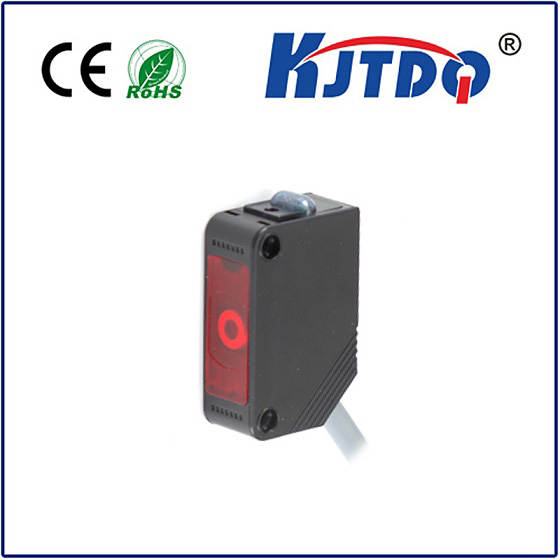
In the rapidly evolving landscape of industrial automation, precision, reliability, and durability are non-negotiable. The QS303E photoelectric switch stands as a testament to engineering excellence, designed to meet the rigorous demands of modern manufacturing and control systems. This advanced sensor technology offers a seamless integration solution for a wide array of applications, from conveyor belt monitoring and packaging machinery to material handling and safety light curtains.
The core principle behind the QS303E lies in its sophisticated photoelectric sensing mechanism. It operates by emitting a beam of light—typically infrared, red, or laser—from its transmitter. The receiver then detects the presence or absence of this light beam. Changes in the received light signal, caused by an object interrupting or reflecting the beam, are converted into an electrical switching signal. This simple yet highly effective principle allows for non-contact detection, making it ideal for counting, positioning, and inspecting objects without physical wear and tear.
One of the defining features of the QS303E is its robust construction. Housed in a rugged, often metal or high-grade polymer casing, it is built to withstand harsh industrial environments. It boasts impressive resistance to dust, moisture, and vibrations, ensuring consistent performance in settings where other sensors might fail. Many models come with an IP67 or higher ingress protection rating, meaning they are completely protected against dust and can withstand temporary immersion in water. This resilience translates directly into reduced downtime and lower maintenance costs, a critical factor for continuous production lines.
Versatility is another key strength. The QS303E is available in various sensing modes to suit specific needs. The through-beam type, with separate transmitter and receiver units, offers the longest sensing range and highest reliability for direct interruption detection. The retro-reflective type uses a reflector to bounce the light back to the receiver, simplifying installation for medium-range applications. Finally, the diffuse reflective type has the transmitter and receiver in one housing, detecting objects by the light they reflect, perfect for close-range detection and recognizing different surface properties.
Installation and setup are remarkably straightforward. Engineers appreciate the clear LED indicators for power and output status, which facilitate quick alignment and troubleshooting. The device often features adjustable sensitivity, allowing fine-tuning to ignore background objects or detect transparent materials. Compatibility with standard industrial voltages (like 10-30V DC) and output types (PNP/NPN) ensures it can be easily integrated into existing PLC (Programmable Logic Controller) systems or relay circuits without requiring complex interfaces.
Beyond basic detection, the QS303E photoelectric switch enhances system intelligence and safety. It plays a pivotal role in automated quality control by verifying part presence, correct orientation, or fill levels. In assembly lines, it ensures precise positioning of components for robotic arms. As a safety device, it can be part of an interlock system to halt machinery when a protective guard is opened or when a worker enters a hazardous zone, thereby preventing accidents and ensuring compliance with industrial safety regulations.
For businesses aiming to optimize efficiency, the QS303E represents a smart investment. Its high switching speed enables fast-paced production cycles, while its accuracy minimizes errors and material waste. The non-contact nature eliminates mechanical fatigue, granting it a significantly longer operational lifespan compared to mechanical limit switches. This durability, combined with its low power consumption, contributes to a lower total cost of ownership over time.
In conclusion, the QS303E photoelectric switch is far more than just a simple sensor; it is a fundamental component driving the intelligence and reliability of automated systems. Its blend of robust design, operational flexibility, and precise detection capabilities makes it an indispensable tool for engineers and system integrators across diverse industries. By choosing the QS303E, companies are not just installing a component—they are investing in enhanced productivity, improved safety, and the foundational technology for the smart factories of today and tomorrow.