check

check

check

check
check
check
check
check

check

check
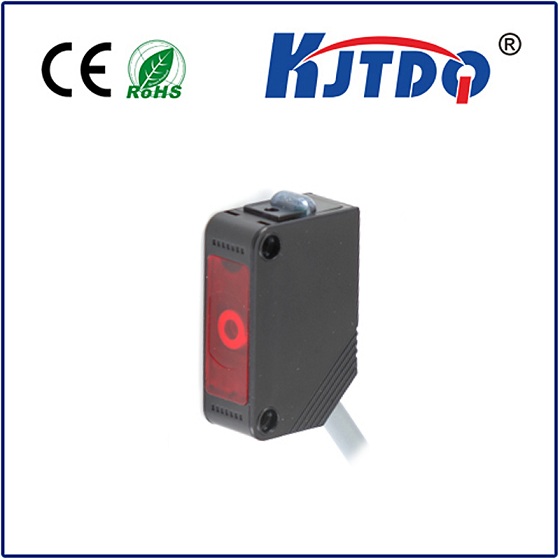
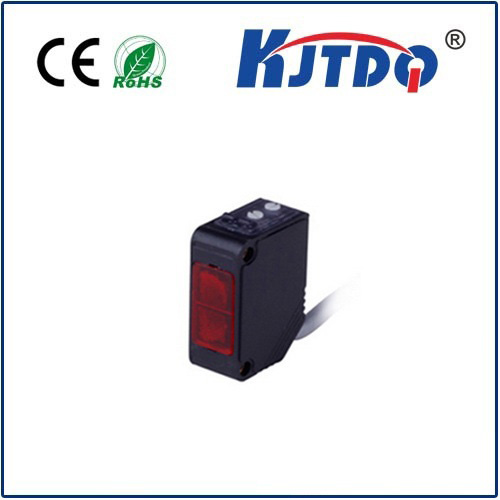
In the world of industrial automation and machine control, precision and reliability are non-negotiable. The E3FA-TP12-D photoelectric switch stands as a testament to this principle, offering a robust solution for countless detection applications. This through-beam type sensor is engineered to deliver consistent performance in demanding environments, making it a preferred choice for engineers and system integrators globally.
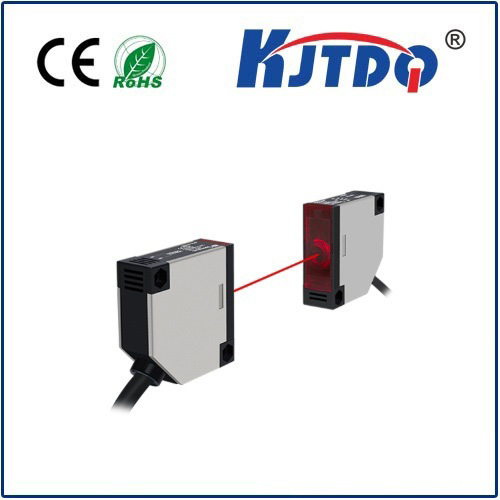
The core functionality of the E3FA-TP12-D lies in its through-beam sensing method. It consists of two separate units: a transmitter and a receiver. The transmitter emits a focused beam of light, typically infrared or red visible light, which is then captured by the receiver unit positioned directly opposite. When an object passes between these two units, it interrupts the light beam, triggering a clear output signal. This design offers significant advantages, most notably its long sensing distance and high immunity to environmental interferences like dust, steam, or target object color and surface finish. The E3FA-TP12-D model is specifically calibrated for reliable operation over extended ranges, providing a dependable "on" or "off" signal critical for processes such as object counting, positioning, and presence verification on conveyor lines.
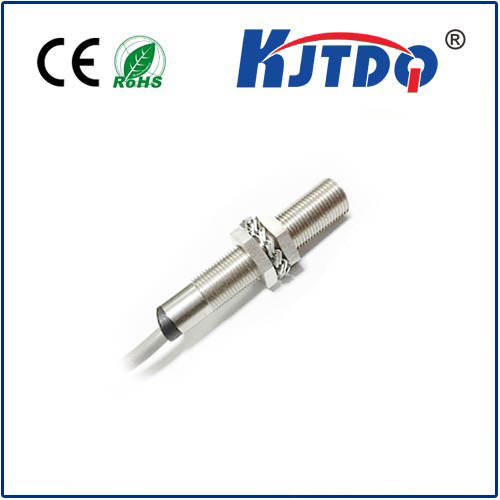
Durability is a hallmark of the E3FA-TP12-D construction. Housed in a sturdy, cylindrical metal casing, it is built to withstand the rigors of industrial settings. Its IP67 protection rating guarantees resistance against dust ingress and temporary immersion in water, ensuring operational continuity in washdown areas or outdoor installations. The device operates effectively across a wide voltage range, simplifying integration into existing DC control systems. Furthermore, its stable performance is maintained despite fluctuations in supply voltage or ambient temperature, a crucial factor for maintaining production line uptime.
Installation and alignment of the E3FA-TP12-D are straightforward, yet attention to detail yields optimal results. For through-beam sensors, precise alignment of the transmitter and receiver is paramount. Many models feature alignment indicators, such as a status LED that changes color or intensity when the beam is properly received. Securely mounting both units on stable surfaces minimizes vibration-induced misalignment. It is also essential to consider the application environment; ensuring the lens remains clean from obstructions like dirt, oil, or debris preserves sensing accuracy. For long-range applications, using a mounting bracket can enhance stability.
The versatility of the E3FA-TP12-D photoelectric switch unlocks its potential across diverse sectors. In packaging machinery, it accurately detects product presence to trigger sealing or labeling operations. Within the automotive assembly sector, it ensures components are correctly positioned for robotic welding or assembly. Logistics and material handling systems rely on such sensors for parcel sorting and palletizing by detecting items on high-speed conveyors. Even in food and beverage production, its sealed construction allows for detection tasks in hygienic, wet conditions. This wide applicability stems from its fundamental reliability—it performs a simple task with unwavering consistency, which is the bedrock of complex automation.
Selecting the right sensor for a specific task involves evaluating several parameters. The E3FA-TP12-D's specifications, including its sensing distance, response time, output configuration (like NPN or PNP), and connection type, must align with the application's requirements. Understanding the nature of the target object—its size, material, and the required sensing precision—is equally important. For instance, detecting a small, transparent object would demand a different sensor specification compared to detecting large, opaque boxes. Consulting technical datasheets and, when in doubt, engaging with sensor specialists can prevent operational issues and ensure a perfect fit for the intended use case.
In conclusion, the E3FA-TP12-D photoelectric switch embodies the essential qualities needed for modern industrial sensing: reliability, durability, and precision. Its through-beam design provides a robust solution for clear-cut object detection challenges. By understanding its operating principles, installation best practices, and broad application scope, technicians and engineers can leverage this component to enhance system efficiency, reduce downtime, and build more resilient automated processes. As automation continues to evolve, dependable foundational components like the E3FA-TP12-D remain indispensable in driving productivity and innovation on the factory floor.